EVERY ENGAGEMENT.
every RESULT.
Eighty-eight case studies. Nineteen years of work. Every engagement measured, every claim backed by a number — across home services, healthcare, ecommerce, B2B, and beyond. Click any case to expand the full story.
88 ENGAGEMENTS.
88 results.
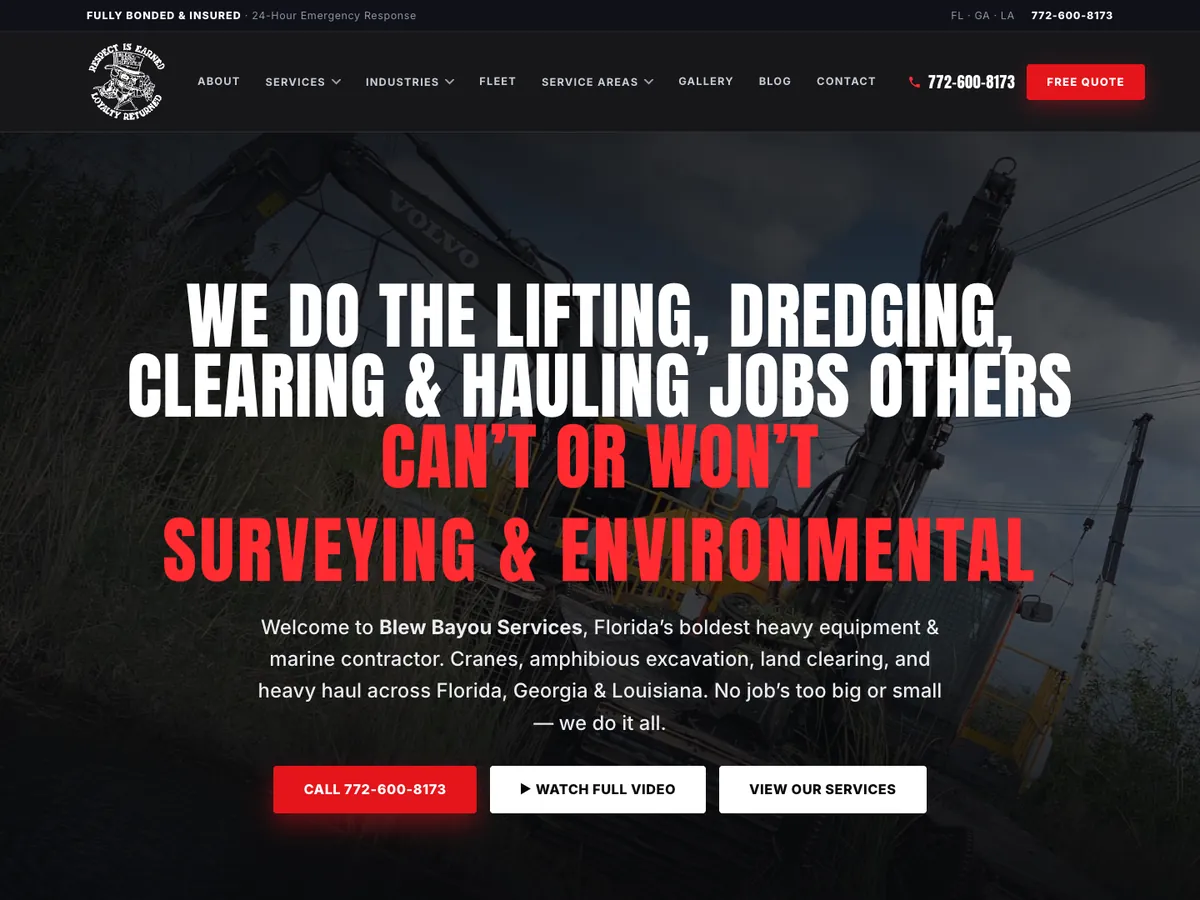
OWNING THE MIDNIGHT SEARCH WHEN A PIPE BURSTS
The Problem
The company was spending $8,000/month on Google Ads but losing jobs to national franchise competitors who showed up first in maps and paid results. 97% of their leads came from insurance adjuster referrals — a channel they didn't control and couldn't scale. When homeowners searched at 2am, this company was on page two.
When something breaks at 2am, nobody comparison-shops — they call whoever shows up first. The status quo wasn't just underperforming — it was actively training the team to accept worse outcomes as normal. The status quo wasn't just underperforming — it was actively training the team to accept worse outcomes as normal.
Our Approach
We rebuilt their Google Business Profile, added 24/7 call tracking with a dedicated emergency line, and restructured their paid search around emergency-intent keywords with time-of-day bid adjustments that doubled bids between 10pm–6am. A review generation campaign pushed them to 4.8 stars in 90 days. Local SEO content targeted city-specific flood and fire damage queries across their full service radius.
We sequenced the work to deliver early wins inside 30 days while building the longer-arc foundation in parallel. Senior strategists ran the account directly. No layers, no account-coordinator handoffs — the operators making decisions were the ones reviewing the data.
FILLING CHAIRS ACROSS 9 LOCATIONS WITHOUT A CORPORATE FEEL
The Problem
Each location was running its own Facebook ads with no shared creative, targeting, or budget discipline. Three locations had fewer than 50 Google reviews. Patient acquisition cost ranged from $38 to $214 across locations with no explanation. The group-level brand was invisible — patients were choosing competitors who looked more established online.
Healthcare buyers don't behave like consumer buyers — trust signals matter more than promotions, and one bad review can undo a quarter of marketing. Internal pressure was building. Sales blamed marketing. Marketing blamed the channel mix. Nobody had a clear thesis on what was actually broken. The status quo wasn't just underperforming — it was actively training the team to accept worse outcomes as normal.
Our Approach
We built a unified paid media strategy across all 9 locations with location-specific landing pages, consolidated review management, and a new patient onboarding sequence via SMS. A shared creative system let each location feel local while running from one playbook. We introduced a 'morning huddle data feed' — each location manager got a daily text showing yesterday's leads, booked appointments, and review score.
We met weekly with leadership to review what was moving, kill what wasn't, and reallocate budget to the surfaces showing genuine momentum. We sequenced the work to deliver early wins inside 30 days while building the longer-arc foundation in parallel.
TWO LOCATIONS, ONE BRAND, ZERO ONLINE PRESENCE
The Problem
The practice was relying entirely on physician referrals from a shrinking network of PCPs. Their website had no SSL certificate, no mobile layout, and loaded in 9.4 seconds. Google had deindexed their secondary location entirely. When patients searched for a podiatrist within 10 miles, this practice didn't appear — even when they searched the doctor's name.
Healthcare buyers don't behave like consumer buyers — trust signals matter more than promotions, and one bad review can undo a quarter of marketing. Visitors weren't just bouncing — they were forming a lasting impression that made re-engagement harder, not easier. Even small lifts on traffic quality couldn't move the needle because the conversion environment itself was the bottleneck.
Our Approach
We rebuilt both location pages with condition-specific content written by the physicians (then edited by us for SEO and readability), added online booking integrated directly with their practice management software, and launched a Google Ads campaign targeting high-intent terms like 'plantar fasciitis treatment near me.' Schema markup for both locations pushed them into the local map pack within 60 days.
We didn't redesign — we re-engineered. Every page was mapped to a single conversion goal, then built around the friction points the data exposed. Post-launch we kept a 90-day CRO sprint running — heatmaps, scroll-depth, form analytics, A/B tests — because launching isn't finishing.
FROM WORD-OF-MOUTH TO WAITLIST IN ONE MARKET
The Problem
The practice was full — but fragile. One bad month of referrals and the schedule hollowed out. There was no email list, no Google Business Profile, and no way for a new patient to book online. The doctor was doing everything right clinically and nothing strategically. The website was a PDF brochure in HTML form.
Healthcare buyers don't behave like consumer buyers — trust signals matter more than promotions, and one bad review can undo a quarter of marketing. The brand had a content library but no content engine. Every piece felt like the first one — disconnected from anything before it. The brand had a content library but no content engine. Every piece felt like the first one — disconnected from anything before it.
Our Approach
We built a content strategy around the top 10 conditions the practice treated, creating one long-form guide per condition optimized for local search. A pre-qualification quiz on the home page converted casual browsers into booked consultations. We launched a referral program that rewarded existing patients with priority scheduling — turning the word-of-mouth engine into something systematic. Within 6 weeks, the practice had its first waitlist.
Distribution was treated as 50% of the work. Every pillar got a 6-week amplification plan: paid social, email, sales enablement, and earned-media outreach. Existing content was audited before any new content was commissioned. Half of what got published was consolidation and re-write — not new production.
LAUNCHING A CELEBRITY HAIRCARE COLLAB THAT ACTUALLY CONVERTED
The Problem
The brand had strong retail distribution but a weak DTC channel — their Shopify store converted at 0.9%. The Snooki collaboration had genuine celebrity pull but no paid media infrastructure to capture demand at launch. A previous influencer collab had generated buzz and no revenue. The team was planning to rely on Snooki's Instagram posts and hoping for the best.
DTC physics are unforgiving — acquisition costs rise every quarter and the only sustainable lever is what you do after the first click. The brand was acquiring well but retaining poorly, meaning every dollar of growth required another dollar of acquisition right behind it. The brand was acquiring well but retaining poorly, meaning every dollar of growth required another dollar of acquisition right behind it.
Our Approach
We built a launch funnel in three phases: a pre-launch waitlist campaign that captured 24,000 emails in 3 weeks, a launch-day paid media blitz across Meta and TikTok with creative featuring Snooki's own content reformatted for direct response, and a post-purchase sequence that cross-sold the core product line to new customers. The product page was rebuilt around social proof and ingredient education. Cart abandonment flows went live 72 hours before launch.
Lifecycle automation was rebuilt around real purchase behavior — not generic 'welcome / abandonment / win-back' templates. We segmented the customer base by actual value tiers, then designed retention programs that matched what each tier responded to.
MAKING A SUGAR SUBSTITUTE THE CATEGORY THAT GOOGLE TRUSTS
The Problem
Consumers were searching for 'is xylitol safe,' 'xylitol vs. stevia,' and 'best sugar substitute for baking' hundreds of thousands of times per month — and landing on competitor content and Amazon listings. The brand had a blog with 11 posts, none ranking on page one. Their product category was medically complex and required E-E-A-T-quality content to rank. They had neither the content nor the authority.
DTC physics are unforgiving — acquisition costs rise every quarter and the only sustainable lever is what you do after the first click. Search visibility was eroding quarterly as competitors built genuine topical authority while this brand published surface-level posts. The brand had a content library but no content engine. Every piece felt like the first one — disconnected from anything before it.
Our Approach
We built a topical authority cluster around xylitol's medical, culinary, and dental benefits — working with the brand's in-house dietitian to produce physician-reviewed long-form guides that met Google's YMYL content standards. A digital PR campaign placed studies and expert quotes in health publications, earning 47 editorial backlinks in the first 6 months. Product pages were restructured with ingredient education, comparison tools, and FAQ schema.
We built a pillar-and-cluster architecture mapped to actual buyer questions, then ran a publishing rhythm the team could sustain. Distribution was treated as 50% of the work. Every pillar got a 6-week amplification plan: paid social, email, sales enablement, and earned-media outreach.
WINNING FIRST-TIME PARENTS BEFORE THE HOSPITAL BAG IS PACKED
The Problem
The brand's DTC site converted at 1.1% — half the category average. New parents found them via word-of-mouth, bought once, and didn't come back because there was no subscription option, no loyalty program, and no post-purchase communication beyond a shipping confirmation. They were losing repeat business to Amazon, where a competitor had copied their positioning.
DTC physics are unforgiving — acquisition costs rise every quarter and the only sustainable lever is what you do after the first click. The brand was acquiring well but retaining poorly, meaning every dollar of growth required another dollar of acquisition right behind it. Margins were compressing as the brand competed on platforms that weren't optimized for their actual buyer profile.
Our Approach
We rebuilt the product pages around the anxieties of first-time parents — ingredient transparency, pediatrician endorsement content, and safety certifications front and center. A subscription model was introduced with flexible timing and a first-box discount. The post-purchase flow became a new parent education sequence that built trust while cross-selling complementary products at the right developmental stage. Mommy blogger outreach seeded authentic reviews.
We segmented the customer base by actual value tiers, then designed retention programs that matched what each tier responded to. Lifecycle automation was rebuilt around real purchase behavior — not generic 'welcome / abandonment / win-back' templates.
REPOSITIONING A PROTEIN-INFUSED VODKA FROM GIMMICK TO LIFESTYLE BRAND
The Problem
The brand had a product story that resonated deeply with fitness-conscious drinkers — but the marketing was talking to everyone and reaching no one. Retail buyers were skeptical because the brand didn't look premium on shelf. The DTC site was a product catalog with no brand narrative. Social content was inconsistent and generating under 0.5% engagement.
Food and beverage is a category where shelf attention and on-pack moments matter as much as anything happening in digital. Without a clear position, every campaign worked harder than it needed to. Awareness was high; preference wasn't. The brand had drifted into category convention — looking, sounding, and selling like everyone else in the space.
Our Approach
We ran a full brand positioning engagement to define the specific consumer: the person who works out and still goes out. Every creative decision ran through that filter. We rebuilt the visual identity for shelf presence, produced a bar kit for on-premise accounts that told the story to bartenders, and launched a content series featuring athlete-influencers mixing the product post-workout. DTC email flows were rebuilt around occasion and lifestyle triggers.
We started with stakeholder interviews and competitive deconstruction before touching a single brand asset. The new positioning was tested with sales, customer success, and a sample of real buyers before any visual work began.
WHEN YOUR CELEBRITY PARTNERSHIP IS BIGGER THAN YOUR INFRASTRUCTURE
The Problem
The partnership announcement generated press coverage in 40 publications in 48 hours. The brand was not ready for it. The website crashed twice. The DTC store had no inventory management that connected to their 3PL. Their Meta ad account had been dormant for 4 months. There was no email capture on the homepage. The celebrity's team wanted confirmation of a performance plan within 72 hours.
Food and beverage is a category where shelf attention and on-pack moments matter as much as anything happening in digital. Internal pressure was building. Sales blamed marketing. Marketing blamed the channel mix. Nobody had a clear thesis on what was actually broken. Every month the gap widened, with competitors steadily eating into market share that should have been theirs.
Our Approach
We stood up a launch war room — simultaneously rebuilding the landing page on a CDN, launching an email capture pop-up that offered a free case to 100 winners, briefing a creative team on 6 ad concepts by hour 18, and working with their 3PL to throttle orders against real inventory. By hour 72 we had a functioning paid media campaign, an email list growing at 800 subscribers/hour, and a performance dashboard the celebrity's team could check in real time.
Every workstream was instrumented from day one — channel-level attribution, funnel-stage conversion, and revenue tracking — so we could distinguish real lift from noise. We sequenced the work to deliver early wins inside 30 days while building the longer-arc foundation in parallel.
MAKING A GLOBAL DIRECT SALES SKINCARE BRAND COMPETITIVE IN THE DTC ERA
The Problem
The brand had decades of clinical proof and a loyal distributor network — but its consumer-facing digital experience was built for the distributor, not the end customer. The product pages were technical data sheets. The UX assumed the visitor already knew the brand. Against Glossier, Drunk Elephant, and every well-funded DTC skincare challenger, the brand was losing the first impression at every touchpoint.
DTC physics are unforgiving — acquisition costs rise every quarter and the only sustainable lever is what you do after the first click. The product itself was the bottleneck — strong fundamentals, but a buying experience that didn't match the brand's quality claim. The product itself was the bottleneck — strong fundamentals, but a buying experience that didn't match the brand's quality claim.
Our Approach
We rebuilt the customer-facing product experience starting with how new consumers discover the brand — not distributors. Product pages were redesigned around skin concern navigation (acne, aging, dullness) rather than product category. Clinical proof was repackaged as approachable before/after storytelling. A quiz-based skin assessment replaced the category menu as the primary entry point. Conversion lift was measured against the existing experience via A/B test.
We rebuilt the experience from the buyer's path backwards — every screen, every decision, every friction point removed unless it served the user. We rebuilt the experience from the buyer's path backwards — every screen, every decision, every friction point removed unless it served the user.
TURNING SINGLE-WASH CUSTOMERS INTO MONTHLY MEMBERS
The Problem
The car wash had 11,000 monthly transactions across 4 locations. Membership conversion was 3.2% — industry average is 18-22% for well-run operations. The membership page was a static FAQ with no pricing visible and a paper sign-up form at the register. Staff were not trained to pitch membership. The biggest missed opportunity: 8,400 customers paid cash or card monthly with no captured contact information.
Automotive shoppers research for weeks and decide in minutes. Visibility during the consideration window is everything. Every month the gap widened, with competitors steadily eating into market share that should have been theirs. Every month the gap widened, with competitors steadily eating into market share that should have been theirs.
Our Approach
We designed a membership funnel that started at the kiosk, not the website — a tablet-based signup flow installed at point of payment, reducing friction to under 90 seconds. We launched a license plate recognition campaign that identified return visitors and triggered a membership offer via SMS after their third visit. Email campaigns were built around breakeven math: 'You've visited 3 times this month — a membership would have saved you $12.' The conversion argument was made in dollars, not features.
We sequenced the work to deliver early wins inside 30 days while building the longer-arc foundation in parallel. Every workstream was instrumented from day one — channel-level attribution, funnel-stage conversion, and revenue tracking — so we could distinguish real lift from noise.
THE BEST ELECTRICIAN IN THE MARKET THAT NOBODY COULD FIND
The Problem
The contractor was winning 100% of jobs they bid on — because they were only getting referred jobs they were guaranteed to win. Their website was a 2015 WordPress theme with stock photos of light switches. No project portfolio. No licensing credentials displayed. No commercial capability page. When general contractors and property managers searched for licensed commercial electricians in the market, this company's 22 years of expertise was completely invisible.
When something breaks at 2am, nobody comparison-shops — they call whoever shows up first. Visitors weren't just bouncing — they were forming a lasting impression that made re-engagement harder, not easier. The site had become an excuse, not an asset. Every campaign was working against a foundation that was actively repelling buyers.
Our Approach
We rebuilt the site around the trust signals commercial buyers actually need: license numbers, insurance certificates, union affiliation, service area maps, and a project portfolio built from photos the owner had on his phone. A commercial services page targeted general contractors explicitly, with a fast-response RFQ form and a promise of 4-hour quote turnaround. Local SEO content targeted commercial electrical terms across the service geography. Google Business Profile was rebuilt from scratch.
Post-launch we kept a 90-day CRO sprint running — heatmaps, scroll-depth, form analytics, A/B tests — because launching isn't finishing. We didn't redesign — we re-engineered. Every page was mapped to a single conversion goal, then built around the friction points the data exposed.
TURNING A SEASONAL BUSINESS INTO A YEAR-ROUND MACHINE
The Problem
Revenue dropped 60% in spring and fall. No maintenance plan marketing, no air quality messaging, no seasonal transition campaigns. Their website mentioned "heating and cooling" but never explained why homeowners should call outside an emergency.
When something breaks at 2am, nobody comparison-shops — they call whoever shows up first. The status quo wasn't just underperforming — it was actively training the team to accept worse outcomes as normal. Every month the gap widened, with competitors steadily eating into market share that should have been theirs.
Our Approach
We built seasonal campaign sequences: spring AC tune-ups, fall furnace inspections, indoor air quality assessments, and duct cleaning promotions. A maintenance membership program was marketed via email and retargeting. Google Ads shifted from emergency-only keywords to preventive maintenance terms. Content marketing targeted "when to replace your AC" and "signs your furnace is dying" queries.
Senior strategists ran the account directly. No layers, no account-coordinator handoffs — the operators making decisions were the ones reviewing the data. We sequenced the work to deliver early wins inside 30 days while building the longer-arc foundation in parallel.
FROM AMBULANCE CHASER STIGMA TO TRUSTED ADVOCATE ONLINE
The Problem
The firm spent $12K/month on TV ads and $6K on Google Ads but their website converted at 0.8% — well below the 3-5% legal industry average. Visitors landed, saw generic content, and left to find a firm that felt more trustworthy. No case results displayed, no attorney bios with personality, no client testimonials.
Legal services live and die by intent timing and trust signals. The right message at the wrong moment is the same as the wrong message. Every paid channel was pouring traffic into a leaking funnel. The math worked against any amount of additional spend. Even small lifts on traffic quality couldn't move the needle because the conversion environment itself was the bottleneck.
Our Approach
Complete website redesign centered on real case results, video testimonials from actual clients, and attorney bios that showed them as real humans. We added a case value estimator tool, live chat with after-hours answering, and restructured the site around specific injury types (car accidents, slip and fall, medical malpractice) with dedicated landing pages for each.
Performance budgets were set before a single component was designed. Core Web Vitals targets, accessibility benchmarks, and conversion benchmarks all gated the launch. Post-launch we kept a 90-day CRO sprint running — heatmaps, scroll-depth, form analytics, A/B tests — because launching isn't finishing.
FULL CLASSES BY 6AM WITHOUT DISCOUNTING
The Problem
Discount-dependent member acquisition was destroying margins. The studio attracted deal-seekers who never became loyal members. Average member lifetime was 2.3 months. Staff was demoralized by the revolving door.
Fitness is a category where intent is seasonal, churn is fast, and every brand looks the same after the first 30 seconds of scrolling. Every month the gap widened, with competitors steadily eating into market share that should have been theirs. Marketing spend was effectively subsidizing the broader category — generating intent that was being captured by someone else.
Our Approach
We killed all discounts and replaced them with a free trial class + community onboarding sequence. New members got a welcome text from their assigned coach, a goal-setting session, and weekly progress check-ins via automated SMS. Social proof campaigns featured real member transformations. Google Ads targeted fitness-intent keywords within a 5-mile radius. Referral rewards gave existing members free merch, not free months.
Every workstream was instrumented from day one — channel-level attribution, funnel-stage conversion, and revenue tracking — so we could distinguish real lift from noise. We sequenced the work to deliver early wins inside 30 days while building the longer-arc foundation in parallel.
FROM FARMERS MARKET TABLE TO 7-FIGURE DTC BRAND
The Problem
The founder was making $3K/weekend at farmers markets but couldn't scale beyond physical presence. No ecommerce site, no email list, no subscription model. Customers kept asking "can I order online?" and the answer was no.
DTC physics are unforgiving — acquisition costs rise every quarter and the only sustainable lever is what you do after the first click. Margins were compressing as the brand competed on platforms that weren't optimized for their actual buyer profile. The brand was acquiring well but retaining poorly, meaning every dollar of growth required another dollar of acquisition right behind it.
Our Approach
Built a Shopify store with subscription-first architecture — every product page defaulted to subscribe-and-save. Photography featured real dogs (customers submitted photos for a chance to be featured). Email flows educated pet owners on nutrition while cross-selling. Facebook and Instagram ads targeted pet owners within a 200-mile radius first, then expanded nationally. Influencer partnerships with pet Instagram accounts seeded organic growth.
Lifecycle automation was rebuilt around real purchase behavior — not generic 'welcome / abandonment / win-back' templates. Every channel — paid, email, SMS, organic — was tied into a unified attribution model so we could see which combinations actually drove repeat revenue.
THE PLUMBER WHO BECAME THE MOST REVIEWED BUSINESS IN TOWN
The Problem
The owner had 15 years of happy customers but never asked a single one for a review. Meanwhile, a younger competitor was running an automated review request system after every job. The result: Google ranked the new kid higher despite less experience.
When something breaks at 2am, nobody comparison-shops — they call whoever shows up first. Marketing spend was effectively subsidizing the broader category — generating intent that was being captured by someone else. Every month the gap widened, with competitors steadily eating into market share that should have been theirs.
Our Approach
Implemented Koto CRM with automated post-service review requests via text. Every completed job triggered a text 2 hours later with a direct Google review link. Techs were trained to mention "you'll get a quick text to share your experience." We rebuilt their Google Business Profile with service-specific categories, posted weekly updates, and answered every review. Local SEO content targeted "emergency plumber near me" and 40+ service-specific queries.
Senior strategists ran the account directly. No layers, no account-coordinator handoffs — the operators making decisions were the ones reviewing the data. We met weekly with leadership to review what was moving, kill what wasn't, and reallocate budget to the surfaces showing genuine momentum.
MAKING WAVES IN A SATURATED MARKET
The Problem
No online presence. 100% referral dependent.
When something breaks at 2am, nobody comparison-shops — they call whoever shows up first. Marketing spend was effectively subsidizing the broader category — generating intent that was being captured by someone else. Marketing spend was effectively subsidizing the broader category — generating intent that was being captured by someone else.
Our Approach
Google Business Profile optimization, seasonal content (opening/closing guides), automated service reminder campaigns, and a subscription pool care model marketed through email and local SEO.
Senior strategists ran the account directly. No layers, no account-coordinator handoffs — the operators making decisions were the ones reviewing the data. Every workstream was instrumented from day one — channel-level attribution, funnel-stage conversion, and revenue tracking — so we could distinguish real lift from noise.
FROM ETSY SIDE HUSTLE TO $3M DTC BRAND
The Problem
Etsy took 20% of every sale. No customer data ownership.
DTC physics are unforgiving — acquisition costs rise every quarter and the only sustainable lever is what you do after the first click. Margins were compressing as the brand competed on platforms that weren't optimized for their actual buyer profile. Cart abandonment had quietly become the largest line item in the P&L — invisible because it never showed up on a report.
Our Approach
Shopify Plus migration, paid social campaigns with UGC (user-generated content), email flows for abandoned carts and post-purchase cross-sells, influencer partnerships with mid-tier fashion creators.
Lifecycle automation was rebuilt around real purchase behavior — not generic 'welcome / abandonment / win-back' templates. Every channel — paid, email, SMS, organic — was tied into a unified attribution model so we could see which combinations actually drove repeat revenue.
FILLING BEDS WITHOUT FEELING LIKE A SALES PITCH
The Problem
Website felt institutional. Zero personality or warmth.
Real estate is local, relational, and brutally lead-quality-sensitive — volume without qualification is just noise. Even small lifts on traffic quality couldn't move the needle because the conversion environment itself was the bottleneck. Visitors weren't just bouncing — they were forming a lasting impression that made re-engagement harder, not easier.
Our Approach
Redesigned with real resident photos and stories. Virtual tour capability. Family resource center with guides on making the transition. Automated nurture sequence for families in the research phase. Google Ads targeting adult children searching for parents.
Performance budgets were set before a single component was designed. Core Web Vitals targets, accessibility benchmarks, and conversion benchmarks all gated the launch. Post-launch we kept a 90-day CRO sprint running — heatmaps, scroll-depth, form analytics, A/B tests — because launching isn't finishing.
FROM SHOWROOM FOOT TRAFFIC TO DIGITAL DOMINATION
The Problem
Walk-in dependent model couldn't compete with big box stores.
When something breaks at 2am, nobody comparison-shops — they call whoever shows up first. The status quo wasn't just underperforming — it was actively training the team to accept worse outcomes as normal. The status quo wasn't just underperforming — it was actively training the team to accept worse outcomes as normal.
Our Approach
Product visualization tool on website (upload room photo, see flooring options), Google Ads for 'flooring installation near me,' review generation showcasing installation quality, and retargeting campaigns to website visitors with financing offers.
We sequenced the work to deliver early wins inside 30 days while building the longer-arc foundation in parallel. Senior strategists ran the account directly. No layers, no account-coordinator handoffs — the operators making decisions were the ones reviewing the data.
TURNING A BLOG INTO A $4M PIPELINE
The Problem
Over-reliance on paid channels with increasing CPAs.
DTC physics are unforgiving — acquisition costs rise every quarter and the only sustainable lever is what you do after the first click. Sales kept asking for assets the marketing team thought already existed — because no one had a map of what had actually been published. Search visibility was eroding quarterly as competitors built genuine topical authority while this brand published surface-level posts.
Our Approach
Comprehensive content strategy targeting every stage of the buyer journey. Pillar pages for core topics. Comparison content targeting competitor brand searches. Gated resources generating email leads. SEO-optimized case studies ranking for industry problem keywords.
Existing content was audited before any new content was commissioned. Half of what got published was consolidation and re-write — not new production. Existing content was audited before any new content was commissioned. Half of what got published was consolidation and re-write — not new production.
YOUR CHALLENGE.
YOUR specifics. YOUR CALL.
You've scrolled through enough to know if we're a fit. Let's talk — 20 minutes, no commitment. We'll tell you whether your situation maps to work we've actually done.
FROM CRAIGSLIST ADS TO 6-FIGURE MONTHS
The Problem
Zero professional online presence. Competing with unlicensed cleaners.
When something breaks at 2am, nobody comparison-shops — they call whoever shows up first. Every month the gap widened, with competitors steadily eating into market share that should have been theirs. Marketing spend was effectively subsidizing the broader category — generating intent that was being captured by someone else.
Our Approach
Professional website with online booking, Google Ads for 'house cleaning service,' automated booking confirmations and reminders, post-clean review request via text, and a recurring service subscription model.
Senior strategists ran the account directly. No layers, no account-coordinator handoffs — the operators making decisions were the ones reviewing the data. We met weekly with leadership to review what was moving, kill what wasn't, and reallocate budget to the surfaces showing genuine momentum.
FULL ENROLLMENT WITH A 47-FAMILY WAITLIST
The Problem
No online presence. Parents couldn't find them in search.
Education buyers are evaluating safety, outcomes, and fit — three things that don't get communicated by a pretty hero image alone. Every month the gap widened, with competitors steadily eating into market share that should have been theirs. Every month the gap widened, with competitors steadily eating into market share that should have been theirs.
Our Approach
Google Business Profile with photos of the actual facility. Website with virtual tour, curriculum details, and easy inquiry form. Google Ads targeting 'daycare near me' and 'preschool enrollment.' Automated tour scheduling. Review generation from current families.
We sequenced the work to deliver early wins inside 30 days while building the longer-arc foundation in parallel. Every workstream was instrumented from day one — channel-level attribution, funnel-stage conversion, and revenue tracking — so we could distinguish real lift from noise.
COMPASSION MEETS CONVERSION (RESPECTFULLY)
The Problem
Outdated website alienating grieving families.
Professional services don't get bought on impulse — pipeline cycles are long, the buyer set is small, and every touchpoint has to earn the next one. Even small lifts on traffic quality couldn't move the needle because the conversion environment itself was the bottleneck. The site had become an excuse, not an asset. Every campaign was working against a foundation that was actively repelling buyers.
Our Approach
Warm, dignified redesign with real staff photos. Online arrangement scheduling. Resource center for families with checklists and guides. Gentle SEO targeting 'funeral services near me' with compassionate ad copy. Automated follow-up for pre-need inquiries with educational content.
Performance budgets were set before a single component was designed. Core Web Vitals targets, accessibility benchmarks, and conversion benchmarks all gated the launch. We didn't redesign — we re-engineered. Every page was mapped to a single conversion goal, then built around the friction points the data exposed.
FROM OIL CHANGES TO $200 AVERAGE TICKETS
The Problem
Low-value reputation preventing upselling.
Automotive shoppers research for weeks and decide in minutes. Visibility during the consideration window is everything. The status quo wasn't just underperforming — it was actively training the team to accept worse outcomes as normal. Marketing spend was effectively subsidizing the broader category — generating intent that was being captured by someone else.
Our Approach
Repositioned as a full-service auto care center. New website showcasing all services. Google Ads targeting tire and brake keywords. Digital vehicle inspection reports sent to customers with photos. Automated maintenance reminders based on mileage estimates.
Senior strategists ran the account directly. No layers, no account-coordinator handoffs — the operators making decisions were the ones reviewing the data. Every workstream was instrumented from day one — channel-level attribution, funnel-stage conversion, and revenue tracking — so we could distinguish real lift from noise.
COMPETING WITH STARBUCKS FROM A GARAGE
The Problem
Tiny brand competing against billion-dollar coffee companies.
Food and beverage is a category where shelf attention and on-pack moments matter as much as anything happening in digital. Without a clear position, every campaign worked harder than it needed to. Awareness was high; preference wasn't. The brand had drifted into category convention — looking, sounding, and selling like everyone else in the space.
Our Approach
Subscription-first model with personalized flavor profiles. TikTok content showing the roasting process. Email education series turning coffee drinkers into coffee nerds. Limited-edition drops creating urgency. Refer-a-friend program with free bags.
The new positioning was tested with sales, customer success, and a sample of real buyers before any visual work began. The new positioning was tested with sales, customer success, and a sample of real buyers before any visual work began.
BOOKED 3 MONTHS OUT WITH ZERO ADS
The Problem
Walk-in model attracted small tattoos only.
Fitness is a category where intent is seasonal, churn is fast, and every brand looks the same after the first 30 seconds of scrolling. The status quo wasn't just underperforming — it was actively training the team to accept worse outcomes as normal. Every month the gap widened, with competitors steadily eating into market share that should have been theirs.
Our Approach
Instagram portfolio optimization with hashtag strategy. Website with artist portfolios and style categories. Automated booking system with deposit collection. Email collection from consultations for follow-up. Google SEO targeting 'custom tattoo artist' + city.
We met weekly with leadership to review what was moving, kill what wasn't, and reallocate budget to the surfaces showing genuine momentum. Every workstream was instrumented from day one — channel-level attribution, funnel-stage conversion, and revenue tracking — so we could distinguish real lift from noise.
THE MOST BORING INDUSTRY, THE MOST EXCITING GROWTH
The Problem
Believed their industry was too boring for digital marketing.
When something breaks at 2am, nobody comparison-shops — they call whoever shows up first. Marketing spend was effectively subsidizing the broader category — generating intent that was being captured by someone else. Every month the gap widened, with competitors steadily eating into market share that should have been theirs.
Our Approach
Google Ads targeting emergency repair keywords. Before/after photo gallery on website. Review generation after every install. Local SEO content targeting specific garage door brands and problems. Automated 'annual maintenance reminder' campaigns.
We sequenced the work to deliver early wins inside 30 days while building the longer-arc foundation in parallel. Every workstream was instrumented from day one — channel-level attribution, funnel-stage conversion, and revenue tracking — so we could distinguish real lift from noise.
FROM AMAZON DEPENDENT TO DTC DOMINANT
The Problem
Amazon dependency destroying margins and brand control.
DTC physics are unforgiving — acquisition costs rise every quarter and the only sustainable lever is what you do after the first click. The brand was acquiring well but retaining poorly, meaning every dollar of growth required another dollar of acquisition right behind it. Repeat purchase rate was the metric nobody wanted to look at. Acquisition was working — the rest of the funnel wasn't.
Our Approach
DTC Shopify store with exclusive colorways not on Amazon. Email list built from Amazon package inserts with DTC discount code. Facebook/Instagram ads with athletic influencer UGC. Loyalty program exclusive to DTC customers. Gradually shifting best sellers to DTC-exclusive.
We segmented the customer base by actual value tiers, then designed retention programs that matched what each tier responded to. Lifecycle automation was rebuilt around real purchase behavior — not generic 'welcome / abandonment / win-back' templates.
$150K/YEAR FROM A TRUCK AND A FACEBOOK PAGE
The Problem
Solo operator, no budget, no website, no marketing knowledge.
When something breaks at 2am, nobody comparison-shops — they call whoever shows up first. Internal pressure was building. Sales blamed marketing. Marketing blamed the channel mix. Nobody had a clear thesis on what was actually broken. Every month the gap widened, with competitors steadily eating into market share that should have been theirs.
Our Approach
Free Google Business Profile optimization. Facebook before/after posts with boosted posts ($5/day). Simple one-page website with click-to-call. Automated review requests after every job. Nextdoor presence. Seasonal promotions for driveways and decks.
We met weekly with leadership to review what was moving, kill what wasn't, and reallocate budget to the surfaces showing genuine momentum. Senior strategists ran the account directly. No layers, no account-coordinator handoffs — the operators making decisions were the ones reviewing the data.
SELLING OUT BY 10AM EVERY DAY
The Problem
No way to predict demand. Massive daily waste.
Food and beverage is a category where shelf attention and on-pack moments matter as much as anything happening in digital. The status quo wasn't just underperforming — it was actively training the team to accept worse outcomes as normal. Marketing spend was effectively subsidizing the broader category — generating intent that was being captured by someone else.
Our Approach
Online pre-order system with next-day pickup. SMS subscriber list for daily flavor announcements. Instagram content showing the baking process at 4am. Google Maps optimization. Catering page for corporate events and weddings.
Senior strategists ran the account directly. No layers, no account-coordinator handoffs — the operators making decisions were the ones reviewing the data. We met weekly with leadership to review what was moving, kill what wasn't, and reallocate budget to the surfaces showing genuine momentum.
$50K IMPLANT CASES FROM GOOGLE
The Problem
Losing high-value cases to cheaper alternatives.
Healthcare buyers don't behave like consumer buyers — trust signals matter more than promotions, and one bad review can undo a quarter of marketing. The status quo wasn't just underperforming — it was actively training the team to accept worse outcomes as normal. Every month the gap widened, with competitors steadily eating into market share that should have been theirs.
Our Approach
Educational content addressing implant fears. Google Ads targeting 'dental implants near me.' Virtual consultation booking. Financing calculator. Patient testimonial videos showing transformation stories.
Every workstream was instrumented from day one — channel-level attribution, funnel-stage conversion, and revenue tracking — so we could distinguish real lift from noise. Senior strategists ran the account directly. No layers, no account-coordinator handoffs — the operators making decisions were the ones reviewing the data.
WINNING $500K PROJECTS FROM A PORTFOLIO WEBSITE
The Problem
Website didn't reflect actual capabilities.
Professional services don't get bought on impulse — pipeline cycles are long, the buyer set is small, and every touchpoint has to earn the next one. Visitors weren't just bouncing — they were forming a lasting impression that made re-engagement harder, not easier. Even small lifts on traffic quality couldn't move the needle because the conversion environment itself was the bottleneck.
Our Approach
Portfolio-driven redesign with professional project photography. Case study format for each project. SEO targeting commercial architecture terms. Thought leadership content on sustainable design trends.
Post-launch we kept a 90-day CRO sprint running — heatmaps, scroll-depth, form analytics, A/B tests — because launching isn't finishing. Performance budgets were set before a single component was designed. Core Web Vitals targets, accessibility benchmarks, and conversion benchmarks all gated the launch.
FILLING THE COSMETIC CHAIR WITHOUT FEELING SALESY
The Problem
Doctors uncomfortable with 'selling' cosmetic procedures.
Healthcare buyers don't behave like consumer buyers — trust signals matter more than promotions, and one bad review can undo a quarter of marketing. Every month the gap widened, with competitors steadily eating into market share that should have been theirs. The status quo wasn't just underperforming — it was actively training the team to accept worse outcomes as normal.
Our Approach
Educational content positioning treatments as self-care, not vanity. Before/after galleries. Google Ads for specific treatment keywords. Automated nurture for consultation leads with treatment guides and financing info.
We sequenced the work to deliver early wins inside 30 days while building the longer-arc foundation in parallel. Senior strategists ran the account directly. No layers, no account-coordinator handoffs — the operators making decisions were the ones reviewing the data.
FIRST CALL WHEN THE CAR WON'T START
The Problem
Losing to AAA and roadside apps.
Automotive shoppers research for weeks and decide in minutes. Visibility during the consideration window is everything. Every month the gap widened, with competitors steadily eating into market share that should have been theirs. Internal pressure was building. Sales blamed marketing. Marketing blamed the channel mix. Nobody had a clear thesis on what was actually broken.
Our Approach
Google Ads with click-to-call targeting 'tow truck near me.' Response time guarantee marketed prominently. Review generation after every tow. Google Business Profile with 24/7 hours and service area. Partnerships with auto shops for referrals.
We sequenced the work to deliver early wins inside 30 days while building the longer-arc foundation in parallel. Senior strategists ran the account directly. No layers, no account-coordinator handoffs — the operators making decisions were the ones reviewing the data.
LIGHTING UP DTC WITH SCENT SUBSCRIPTIONS
The Problem
Wholesale margins too thin to grow.
DTC physics are unforgiving — acquisition costs rise every quarter and the only sustainable lever is what you do after the first click. Cart abandonment had quietly become the largest line item in the P&L — invisible because it never showed up on a report. Margins were compressing as the brand competed on platforms that weren't optimized for their actual buyer profile.
Our Approach
Shopify store with scent quiz matching customers to candles. Subscription box model. Instagram content creation partnerships. Email flows with seasonal scent recommendations. Limited-edition drops creating urgency.
We segmented the customer base by actual value tiers, then designed retention programs that matched what each tier responded to. Every channel — paid, email, SMS, organic — was tied into a unified attribution model so we could see which combinations actually drove repeat revenue.
CRYSTAL CLEAR MARKETING FOR A CRYSTAL CLEAR VIEW
The Problem
Zero digital presence. Flyer-only marketing.
When something breaks at 2am, nobody comparison-shops — they call whoever shows up first. The status quo wasn't just underperforming — it was actively training the team to accept worse outcomes as normal. The status quo wasn't just underperforming — it was actively training the team to accept worse outcomes as normal.
Our Approach
Google Business Profile, simple website with online booking, seasonal campaign emails, subscription cleaning plans, and review requests after every job. Google Ads for commercial window cleaning.
We met weekly with leadership to review what was moving, kill what wasn't, and reallocate budget to the surfaces showing genuine momentum. Senior strategists ran the account directly. No layers, no account-coordinator handoffs — the operators making decisions were the ones reviewing the data.
PINNING THEIR WAY TO $2M IN SALES
The Problem
Amazon dependency with no brand building.
DTC physics are unforgiving — acquisition costs rise every quarter and the only sustainable lever is what you do after the first click. Search visibility was eroding quarterly as competitors built genuine topical authority while this brand published surface-level posts. The brand had a content library but no content engine. Every piece felt like the first one — disconnected from anything before it.
Our Approach
Pinterest strategy with shoppable pins. Lifestyle photography styled for Pinterest's aesthetic. Blog content targeting 'living room ideas' and 'home office decor' keywords driving both Pinterest and Google traffic. Email capture via design inspiration guides.
Existing content was audited before any new content was commissioned. Half of what got published was consolidation and re-write — not new production. Distribution was treated as 50% of the work. Every pillar got a 6-week amplification plan: paid social, email, sales enablement, and earned-media outreach.
PATIENTS CHOOSING THEM OVER THE HOSPITAL SYSTEM
The Problem
Hospital systems getting all the orthopedic surgeon referrals.
Healthcare buyers don't behave like consumer buyers — trust signals matter more than promotions, and one bad review can undo a quarter of marketing. Marketing spend was effectively subsidizing the broader category — generating intent that was being captured by someone else. The status quo wasn't just underperforming — it was actively training the team to accept worse outcomes as normal.
Our Approach
Direct-access marketing educating patients they don't need a referral. Google Ads targeting 'physical therapy near me' and specific condition keywords. Video content showing exercises and treatment approaches. Review generation and provider profile optimization.
We met weekly with leadership to review what was moving, kill what wasn't, and reallocate budget to the surfaces showing genuine momentum. Senior strategists ran the account directly. No layers, no account-coordinator handoffs — the operators making decisions were the ones reviewing the data.
UNLOCKING REVENUE IN A SCAM-PLAGUED INDUSTRY
The Problem
Fake Google listings stealing calls from legitimate locksmiths.
When something breaks at 2am, nobody comparison-shops — they call whoever shows up first. Internal pressure was building. Sales blamed marketing. Marketing blamed the channel mix. Nobody had a clear thesis on what was actually broken. The status quo wasn't just underperforming — it was actively training the team to accept worse outcomes as normal.
Our Approach
Verified Google Business Profile with license numbers displayed. Trust-building website with real technician photos, license info, and transparent pricing. Google Guaranteed badge. Review campaign emphasizing honesty and fair pricing. Content exposing common locksmith scams to build trust.
Senior strategists ran the account directly. No layers, no account-coordinator handoffs — the operators making decisions were the ones reviewing the data. We sequenced the work to deliver early wins inside 30 days while building the longer-arc foundation in parallel.
FULL ENROLLMENT BEFORE SCHOOL EVEN STARTS
The Problem
Parents didn't know they existed despite being 2 miles away.
Education buyers are evaluating safety, outcomes, and fit — three things that don't get communicated by a pretty hero image alone. The status quo wasn't just underperforming — it was actively training the team to accept worse outcomes as normal. Marketing spend was effectively subsidizing the broader category — generating intent that was being captured by someone else.
Our Approach
Facebook ads targeting parents by school district. Google Ads for 'math tutor near me' and 'SAT prep.' Free assessment offer as lead magnet. Automated enrollment sequence. Review requests from parents showing grade improvements.
We met weekly with leadership to review what was moving, kill what wasn't, and reallocate budget to the surfaces showing genuine momentum. We met weekly with leadership to review what was moving, kill what wasn't, and reallocate budget to the surfaces showing genuine momentum.
$8M IN CONTRACTS FROM A WEBSITE REDESIGN
The Problem
Website didn't match the quality of their construction work.
Real estate is local, relational, and brutally lead-quality-sensitive — volume without qualification is just noise. The site had become an excuse, not an asset. Every campaign was working against a foundation that was actively repelling buyers. Even small lifts on traffic quality couldn't move the needle because the conversion environment itself was the bottleneck.
Our Approach
Cinematic portfolio website with professional photography and drone footage. Project case studies with budgets and timelines. Client testimonial videos. Google SEO targeting 'custom home builder' + city. Retargeting ads to website visitors with portfolio showcases.
Post-launch we kept a 90-day CRO sprint running — heatmaps, scroll-depth, form analytics, A/B tests — because launching isn't finishing. Performance budgets were set before a single component was designed. Core Web Vitals targets, accessibility benchmarks, and conversion benchmarks all gated the launch.
THE GROOMER WITH A 6-WEEK WAITLIST
The Problem
Empty appointment books despite great grooming skills.
Professional services don't get bought on impulse — pipeline cycles are long, the buyer set is small, and every touchpoint has to earn the next one. Every month the gap widened, with competitors steadily eating into market share that should have been theirs. Marketing spend was effectively subsidizing the broader category — generating intent that was being captured by someone else.
Our Approach
Google Business Profile with adorable before/after dog photos. Instagram content showing grooming transformations. Automated booking system. Post-groom photo texted to owners (who shared on social). Review generation. Google Ads for 'dog grooming near me.'
Every workstream was instrumented from day one — channel-level attribution, funnel-stage conversion, and revenue tracking — so we could distinguish real lift from noise. Senior strategists ran the account directly. No layers, no account-coordinator handoffs — the operators making decisions were the ones reviewing the data.
STILL scrolling?
WE LIKE THAT.
Forty-four more cases waiting below. Or — skip the scroll and talk to a senior strategist who can pattern-match your business in 20 minutes flat.
FROM SIDE HUSTLE TO $40K MONTHS
The Problem
Side hustle income couldn't replace day job.
When something breaks at 2am, nobody comparison-shops — they call whoever shows up first. Every month the gap widened, with competitors steadily eating into market share that should have been theirs. The status quo wasn't just underperforming — it was actively training the team to accept worse outcomes as normal.
Our Approach
Professional website with instant quote calculator. Google Ads for 'junk removal near me.' Before/after photos of cleanouts. Automated review requests. Commercial cleanout page targeting property managers and realtors. Seasonal campaigns for spring cleaning and estate cleanouts.
Senior strategists ran the account directly. No layers, no account-coordinator handoffs — the operators making decisions were the ones reviewing the data. We sequenced the work to deliver early wins inside 30 days while building the longer-arc foundation in parallel.
SURVIVING THE MEAL KIT WARS
The Problem
Subscriber churn was killing growth.
Food and beverage is a category where shelf attention and on-pack moments matter as much as anything happening in digital. The brand had drifted into category convention — looking, sounding, and selling like everyone else in the space. Without a clear position, every campaign worked harder than it needed to. Awareness was high; preference wasn't.
Our Approach
Focused on retention over acquisition. Personalized meal recommendations based on past orders. Surprise bonus items in boxes. Community Facebook group for recipe sharing. Referral program giving both parties free meals. Win-back email sequence for churned subscribers.
We started with stakeholder interviews and competitive deconstruction before touching a single brand asset. The new positioning was tested with sales, customer success, and a sample of real buyers before any visual work began.
FILLING UNITS IN A MARKET WITH 12 COMPETITORS
The Problem
Price wars with 12 competitors in 5 miles.
When something breaks at 2am, nobody comparison-shops — they call whoever shows up first. Marketing spend was effectively subsidizing the broader category — generating intent that was being captured by someone else. Internal pressure was building. Sales blamed marketing. Marketing blamed the channel mix. Nobody had a clear thesis on what was actually broken.
Our Approach
Value messaging instead of price (climate control, security cameras, 24/7 access). Google Ads targeting people in moving/life-transition moments. Automated follow-up for quote requests. Partnership with local moving companies for referrals. Review generation campaign.
Senior strategists ran the account directly. No layers, no account-coordinator handoffs — the operators making decisions were the ones reviewing the data. We sequenced the work to deliver early wins inside 30 days while building the longer-arc foundation in parallel.
FILLING POSITIONS BEFORE THE REQUISITION HITS THE DESK
The Problem
Couldn't compete with job board speed.
Professional services don't get bought on impulse — pipeline cycles are long, the buyer set is small, and every touchpoint has to earn the next one. Marketing spend was effectively subsidizing the broader category — generating intent that was being captured by someone else. Every month the gap widened, with competitors steadily eating into market share that should have been theirs.
Our Approach
Content marketing attracting passive candidates. LinkedIn thought leadership for the staffing team. Automated candidate nurture campaigns keeping warm candidates engaged. Client-facing dashboard showing real-time pipeline. Google Ads targeting companies searching for staffing solutions.
Every workstream was instrumented from day one — channel-level attribution, funnel-stage conversion, and revenue tracking — so we could distinguish real lift from noise. We sequenced the work to deliver early wins inside 30 days while building the longer-arc foundation in parallel.
BOOKED SOLID WITHOUT GROUPON
The Problem
Discount-dependent model attracting deal-seekers only.
Fitness is a category where intent is seasonal, churn is fast, and every brand looks the same after the first 30 seconds of scrolling. Every month the gap widened, with competitors steadily eating into market share that should have been theirs. Internal pressure was building. Sales blamed marketing. Marketing blamed the channel mix. Nobody had a clear thesis on what was actually broken.
Our Approach
Eliminated Groupon. Built online booking with membership model. Google Ads for 'massage near me.' Automated rebooking reminders. Review generation. Wellness content blog driving organic traffic.
Senior strategists ran the account directly. No layers, no account-coordinator handoffs — the operators making decisions were the ones reviewing the data. Every workstream was instrumented from day one — channel-level attribution, funnel-stage conversion, and revenue tracking — so we could distinguish real lift from noise.
BOOKING $5K WEDDINGS FROM INSTAGRAM
The Problem
Website didn't match portfolio quality.
Professional services don't get bought on impulse — pipeline cycles are long, the buyer set is small, and every touchpoint has to earn the next one. Every paid channel was pouring traffic into a leaking funnel. The math worked against any amount of additional spend. The site had become an excuse, not an asset. Every campaign was working against a foundation that was actively repelling buyers.
Our Approach
Stunning portfolio website with fullscreen galleries. Investment page instead of pricing page. Inquiry form capturing wedding details. Automated nurture sequence for leads. SEO targeting 'wedding photographer' + city.
Post-launch we kept a 90-day CRO sprint running — heatmaps, scroll-depth, form analytics, A/B tests — because launching isn't finishing. We didn't redesign — we re-engineered. Every page was mapped to a single conversion goal, then built around the friction points the data exposed.
FROM YELLOW PAGES TO GOOGLE'S FIRST PAGE
The Problem
Marketing stuck in 1998.
When something breaks at 2am, nobody comparison-shops — they call whoever shows up first. Every month the gap widened, with competitors steadily eating into market share that should have been theirs. Internal pressure was building. Sales blamed marketing. Marketing blamed the channel mix. Nobody had a clear thesis on what was actually broken.
Our Approach
Google Business Profile, website with online booking, Google Ads for emergency and routine cleaning, review generation after every job, and a commercial services page targeting property managers.
Every workstream was instrumented from day one — channel-level attribution, funnel-stage conversion, and revenue tracking — so we could distinguish real lift from noise. Every workstream was instrumented from day one — channel-level attribution, funnel-stage conversion, and revenue tracking — so we could distinguish real lift from noise.
FULL CLASSES FOR EVERY AGE GROUP
The Problem
20 hours of empty studio time per week.
Fitness is a category where intent is seasonal, churn is fast, and every brand looks the same after the first 30 seconds of scrolling. The status quo wasn't just underperforming — it was actively training the team to accept worse outcomes as normal. Every month the gap widened, with competitors steadily eating into market share that should have been theirs.
Our Approach
Targeted Facebook ads for adult dance fitness. Google Ads for 'dance classes near me.' Free trial class campaign. Wedding first dance lesson marketing. Corporate team building dance workshops. Instagram Reels showing class energy.
We sequenced the work to deliver early wins inside 30 days while building the longer-arc foundation in parallel. Senior strategists ran the account directly. No layers, no account-coordinator handoffs — the operators making decisions were the ones reviewing the data.
FROM KITCHEN TABLE TO WHOLE FOODS SHELVES
The Problem
No ecommerce, no retail relationships, no brand identity.
Food and beverage is a category where shelf attention and on-pack moments matter as much as anything happening in digital. Margins were compressing as the brand competed on platforms that weren't optimized for their actual buyer profile. Margins were compressing as the brand competed on platforms that weren't optimized for their actual buyer profile.
Our Approach
Bold brand identity and packaging redesign. Shopify DTC store with subscription. Heat-level quiz for product recommendations. Social media content featuring extreme taste tests. Retail pitch deck built from DTC sales data proving demand.
Lifecycle automation was rebuilt around real purchase behavior — not generic 'welcome / abandonment / win-back' templates. Every channel — paid, email, SMS, organic — was tied into a unified attribution model so we could see which combinations actually drove repeat revenue.
BUILDING FENCES AND TEARING DOWN COMPETITORS
The Problem
Newer competitor dominating online despite less experience.
When something breaks at 2am, nobody comparison-shops — they call whoever shows up first. Marketing spend was effectively subsidizing the broader category — generating intent that was being captured by someone else. The status quo wasn't just underperforming — it was actively training the team to accept worse outcomes as normal.
Our Approach
Professional website with project gallery. Google Ads targeting fence installation keywords. Automated quote follow-up via text. Review requests after every installation. Seasonal campaigns for spring fence projects.
We met weekly with leadership to review what was moving, kill what wasn't, and reallocate budget to the surfaces showing genuine momentum. Every workstream was instrumented from day one — channel-level attribution, funnel-stage conversion, and revenue tracking — so we could distinguish real lift from noise.
BLACK BELT IN MARKETING
The Problem
Word of mouth couldn't defend against a well-marketed competitor.
Fitness is a category where intent is seasonal, churn is fast, and every brand looks the same after the first 30 seconds of scrolling. Internal pressure was building. Sales blamed marketing. Marketing blamed the channel mix. Nobody had a clear thesis on what was actually broken. Every month the gap widened, with competitors steadily eating into market share that should have been theirs.
Our Approach
Google Ads for 'martial arts near me' and 'kids karate.' Free trial class landing page. Automated follow-up for trial students. Belt testing event marketing creating urgency. Review requests from parents. Before/after confidence videos of students.
We met weekly with leadership to review what was moving, kill what wasn't, and reallocate budget to the surfaces showing genuine momentum. We sequenced the work to deliver early wins inside 30 days while building the longer-arc foundation in parallel.
CONTENT THAT SELLS WITHOUT SELLING
The Problem
Over-reliance on paid with zero organic strategy.
DTC physics are unforgiving — acquisition costs rise every quarter and the only sustainable lever is what you do after the first click. Sales kept asking for assets the marketing team thought already existed — because no one had a map of what had actually been published. Search visibility was eroding quarterly as competitors built genuine topical authority while this brand published surface-level posts.
Our Approach
Adventure content hub featuring real customer stories. Gear guide SEO content targeting every product category. YouTube channel with gear reviews and outdoor tips. Email capture via trip planning tools. Organic social featuring UGC from customers on adventures.
We built a pillar-and-cluster architecture mapped to actual buyer questions, then ran a publishing rhythm the team could sustain. We built a pillar-and-cluster architecture mapped to actual buyer questions, then ran a publishing rhythm the team could sustain.
THE REPAIRMAN WHO ANSWERS ON THE FIRST RING
The Problem
Missing calls during service jobs losing 60% of leads.
When something breaks at 2am, nobody comparison-shops — they call whoever shows up first. The status quo wasn't just underperforming — it was actively training the team to accept worse outcomes as normal. Every month the gap widened, with competitors steadily eating into market share that should have been theirs.
Our Approach
Koto CRM with auto-text on missed calls, live answering service during business hours, automated booking confirmation, and post-service review requests. Google Ads for emergency appliance repair. Website with online scheduling.
We met weekly with leadership to review what was moving, kill what wasn't, and reallocate budget to the surfaces showing genuine momentum. We sequenced the work to deliver early wins inside 30 days while building the longer-arc foundation in parallel.
CHAIR RENTAL TO EMPIRE
The Problem
Solo chair renter with no brand or digital presence.
Fitness is a category where intent is seasonal, churn is fast, and every brand looks the same after the first 30 seconds of scrolling. The status quo wasn't just underperforming — it was actively training the team to accept worse outcomes as normal. Every month the gap widened, with competitors steadily eating into market share that should have been theirs.
Our Approach
Built personal brand on Instagram before opening. Email/SMS waitlist for new location. Grand opening campaign with Google Ads. Automated booking with deposit. Review generation from day one. Referral program giving free product samples.
We met weekly with leadership to review what was moving, kill what wasn't, and reallocate budget to the surfaces showing genuine momentum. Senior strategists ran the account directly. No layers, no account-coordinator handoffs — the operators making decisions were the ones reviewing the data.
SELLING SUNSHINE IN A SKEPTICAL MARKET
The Problem
Industry reputation for pushy sales hurting conversions.
When something breaks at 2am, nobody comparison-shops — they call whoever shows up first. Internal pressure was building. Sales blamed marketing. Marketing blamed the channel mix. Nobody had a clear thesis on what was actually broken. The status quo wasn't just underperforming — it was actively training the team to accept worse outcomes as normal.
Our Approach
Trust-first marketing with transparent pricing calculators on website. Customer video testimonials showing real savings. Educational content on how solar actually works and realistic ROI expectations. Google Ads targeting 'solar panels cost' and 'solar savings calculator.' No-pressure virtual consultations.
We sequenced the work to deliver early wins inside 30 days while building the longer-arc foundation in parallel. Every workstream was instrumented from day one — channel-level attribution, funnel-stage conversion, and revenue tracking — so we could distinguish real lift from noise.
THE LAUNDROMAT THAT BECAME A LIFESTYLE BRAND
The Problem
Built a modern space but marketed like a traditional laundromat.
When something breaks at 2am, nobody comparison-shops — they call whoever shows up first. Every month the gap widened, with competitors steadily eating into market share that should have been theirs. The status quo wasn't just underperforming — it was actively training the team to accept worse outcomes as normal.
Our Approach
Rebranded on social media as a co-working/laundry hybrid. Instagram content featuring the coffee bar and workspace vibe. Google Ads for 'laundromat near me' with lifestyle photos. Loyalty app with wash tracking. Events like 'Laundry & Latte' networking mornings.
We met weekly with leadership to review what was moving, kill what wasn't, and reallocate budget to the surfaces showing genuine momentum. Every workstream was instrumented from day one — channel-level attribution, funnel-stage conversion, and revenue tracking — so we could distinguish real lift from noise.
SOLVING THE PUZZLE OF EMPTY ROOMS
The Problem
Low bookings and Groupon dependency destroying margins.
Fitness is a category where intent is seasonal, churn is fast, and every brand looks the same after the first 30 seconds of scrolling. The status quo wasn't just underperforming — it was actively training the team to accept worse outcomes as normal. Marketing spend was effectively subsidizing the broader category — generating intent that was being captured by someone else.
Our Approach
Google Ads for 'things to do' and 'escape room near me.' Corporate team building page targeting HR managers. Birthday party packages. Social media with video clips of reactions. TripAdvisor and Google review campaigns. Automated birthday email offers.
We met weekly with leadership to review what was moving, kill what wasn't, and reallocate budget to the surfaces showing genuine momentum. Every workstream was instrumented from day one — channel-level attribution, funnel-stage conversion, and revenue tracking — so we could distinguish real lift from noise.
MAKING IT RAIN (LEADS, NOT WATER)
The Problem
100% dependent on one referral source.
When something breaks at 2am, nobody comparison-shops — they call whoever shows up first. Marketing spend was effectively subsidizing the broader category — generating intent that was being captured by someone else. Every month the gap widened, with competitors steadily eating into market share that should have been theirs.
Our Approach
Google Ads targeting 'sprinkler installation' and 'irrigation repair.' Seasonal campaigns for spring startups and winterization. Website with online scheduling. Google Business Profile optimization. Automated seasonal reminder campaigns to existing customers.
Every workstream was instrumented from day one — channel-level attribution, funnel-stage conversion, and revenue tracking — so we could distinguish real lift from noise. We met weekly with leadership to review what was moving, kill what wasn't, and reallocate budget to the surfaces showing genuine momentum.
47 DAYCARE CENTERS, ONE MARKETING ENGINE, EVERY SEAT FILLED
The Problem
Each location was independently managing their own Facebook page, Google listing, and (sometimes) website. 22 of 47 locations had fewer than 20 Google reviews. Parent acquisition cost ranged from $18 to $340 across locations with no one asking why. The franchise corporate office had no visibility into which locations were thriving and which were struggling. Three locations were at risk of closing due to under-enrollment.
Education buyers are evaluating safety, outcomes, and fit — three things that don't get communicated by a pretty hero image alone. Every month the gap widened, with competitors steadily eating into market share that should have been theirs. The status quo wasn't just underperforming — it was actively training the team to accept worse outcomes as normal.
Our Approach
We built a centralized marketing command center for all 47 locations. Each location received a templated-but-customizable landing page with local SEO optimization, unique Google Business Profile management, and location-specific Facebook ad campaigns targeting parents within a 5-mile radius. A standardized launch playbook was created so new locations could go from lease signing to full marketing presence in 14 days. KotoCRM powered automated tour scheduling, parent follow-up sequences, and review generation after enrollment. A monthly performance scorecard ranked all 47 locations — driving friendly competition among center directors. Underperforming locations received targeted "rescue campaigns" with boosted ad spend and community event marketing.
Senior strategists ran the account directly. No layers, no account-coordinator handoffs — the operators making decisions were the ones reviewing the data. We sequenced the work to deliver early wins inside 30 days while building the longer-arc foundation in parallel.
HOW KOTOCRM TURNED MISSED CALLS INTO $340K IN REVENUE
The Problem
40% of incoming calls went to voicemail. The owner estimated they were losing 15-20 jobs per week — worth $200-$800 each — simply because they couldn't answer the phone while working on a job. Callbacks happened 2-4 hours later, by which time the customer had already found another plumber.
When something breaks at 2am, nobody comparison-shops — they call whoever shows up first. The status quo wasn't just underperforming — it was actively training the team to accept worse outcomes as normal. Marketing spend was effectively subsidizing the broader category — generating intent that was being captured by someone else.
Our Approach
KotoCRM's missed call text-back was implemented: every missed call triggered an instant automated text within 5 seconds — "Hey, sorry we missed your call! We're on a job right now. What can we help with?" This kept the conversation alive until a human could respond. Automated follow-up sequences ensured no lead was ever forgotten. Post-service review requests were triggered automatically 2 hours after job completion. A unified inbox consolidated calls, texts, emails, and Facebook messages into one dashboard so nothing fell through the cracks.
Senior strategists ran the account directly. No layers, no account-coordinator handoffs — the operators making decisions were the ones reviewing the data. Senior strategists ran the account directly. No layers, no account-coordinator handoffs — the operators making decisions were the ones reviewing the data.
$1.4M IN YEAR ONE FROM A CRM THAT NEVER SLEEPS
The Problem
Brand new practice. Zero patients. Eleven competitors. The med spa needed to generate demand before opening day and build a self-sustaining rebooking engine to maximize lifetime patient value from day one.
Healthcare buyers don't behave like consumer buyers — trust signals matter more than promotions, and one bad review can undo a quarter of marketing. Internal pressure was building. Sales blamed marketing. Marketing blamed the channel mix. Nobody had a clear thesis on what was actually broken. Marketing spend was effectively subsidizing the broader category — generating intent that was being captured by someone else.
Our Approach
KotoCRM powered a pre-opening waitlist campaign that captured 1,200 interested prospects before the doors opened. Automated email and text sequences kept them engaged with behind-the-scenes content, early-bird booking offers, and practitioner introductions. After launch, every new patient entered an automated lifecycle: appointment reminders, post-treatment check-in texts, satisfaction surveys, rebooking nudges timed to treatment intervals, and review requests. A birthday campaign and VIP loyalty tier drove repeat visits. The unified inbox handled Instagram DMs, Google messages, texts, calls, and emails — all in one place.
We sequenced the work to deliver early wins inside 30 days while building the longer-arc foundation in parallel. Senior strategists ran the account directly. No layers, no account-coordinator handoffs — the operators making decisions were the ones reviewing the data.
4-MINUTE RESPONSE TIME IN AN INDUSTRY WHERE MINUTES MATTER
The Problem
In restoration, the company that responds first gets the job — period. Homeowners with a flooded basement at 2am call 3-4 companies. Whoever answers or calls back first wins. This company's average response time was 47 minutes. Their competitors averaged 20.
When something breaks at 2am, nobody comparison-shops — they call whoever shows up first. Marketing spend was effectively subsidizing the broader category — generating intent that was being captured by someone else. Internal pressure was building. Sales blamed marketing. Marketing blamed the channel mix. Nobody had a clear thesis on what was actually broken.
Our Approach
KotoCRM's instant lead routing sent every form fill, call, and text to the on-call technician's phone within seconds — with automated escalation if no response in 2 minutes. After-hours calls triggered an immediate text: "We received your emergency request. A technician is being dispatched now." This bought time while the actual human responded. Post-job review requests, automated insurance follow-up reminders, and a referral program for insurance adjusters were all managed through the CRM.
We sequenced the work to deliver early wins inside 30 days while building the longer-arc foundation in parallel. We met weekly with leadership to review what was moving, kill what wasn't, and reallocate budget to the surfaces showing genuine momentum.
520 NEW GOOGLE REVIEWS IN 6 MONTHS ACROSS 11 DENTAL OFFICES
The Problem
New locations opened with zero reviews, zero reputation, and zero patient trust. Existing locations had inconsistent review profiles — some at 4.8 stars with 200+ reviews, others at 3.9 stars with 30. Corporate had no centralized way to manage reputation across the group.
Healthcare buyers don't behave like consumer buyers — trust signals matter more than promotions, and one bad review can undo a quarter of marketing. The status quo wasn't just underperforming — it was actively training the team to accept worse outcomes as normal. Marketing spend was effectively subsidizing the broader category — generating intent that was being captured by someone else.
Our Approach
KotoCRM deployed a standardized post-appointment review workflow across all 11 locations. Every patient received a text 1 hour after checkout with a direct Google review link. If the rating was 4+ stars, they were directed to Google. If below 4, they were routed to an internal feedback form for the office manager to address privately. A centralized dashboard gave corporate real-time visibility into review velocity, ratings, and response compliance at every location. New locations launched with a "Founding Patient" campaign that generated 50+ reviews in the first 30 days.
Senior strategists ran the account directly. No layers, no account-coordinator handoffs — the operators making decisions were the ones reviewing the data. Senior strategists ran the account directly. No layers, no account-coordinator handoffs — the operators making decisions were the ones reviewing the data.
$8.4M IN PREMIUM WRITTEN FROM LEADS THAT USED TO DIE IN AN INBOX
The Problem
200+ monthly leads, 8% conversion. Agents were cherry-picking the easiest quotes and ignoring the rest. Follow-up averaged 3-4 business days. By then, prospects had already bound with a competitor. No tracking on which leads were contacted, which weren't, or where deals were dying.
Professional services don't get bought on impulse — pipeline cycles are long, the buyer set is small, and every touchpoint has to earn the next one. Internal pressure was building. Sales blamed marketing. Marketing blamed the channel mix. Nobody had a clear thesis on what was actually broken. Every month the gap widened, with competitors steadily eating into market share that should have been theirs.
Our Approach
KotoCRM implemented a 7-touch automated follow-up sequence over 14 days for every quote request. Leads received an instant text confirmation, a personalized email within 5 minutes, and 5 additional touches over 2 weeks including quote comparison content, customer testimonials, and "last chance" urgency messages. Agent dashboards showed exactly which leads needed attention, which were in sequence, and which had gone cold. Pipeline tracking gave the agency owner full visibility into conversion at every stage.
We sequenced the work to deliver early wins inside 30 days while building the longer-arc foundation in parallel. Senior strategists ran the account directly. No layers, no account-coordinator handoffs — the operators making decisions were the ones reviewing the data.
$420K FROM PATIENTS WHO HADN'T WALKED IN FOR 2+ YEARS
The Problem
4,200 patients hadn't been seen in 2+ years. The practice was spending $180/patient to acquire new patients while sitting on thousands of people who already knew, liked, and trusted them. No one had reached out. Not a single email. Not a single text. These patients didn't leave — they were just never asked to come back.
Healthcare buyers don't behave like consumer buyers — trust signals matter more than promotions, and one bad review can undo a quarter of marketing. The customer list was the brand's most underused asset — sitting in a CRM no one logged into, doing zero work toward revenue. Years of acquisition spend had built a list that nothing was being done with. Every quarter, more of it went cold.
Our Approach
KotoCRM powered a 5-touch reactivation sequence over 21 days. Text 1: "We miss you! It's been a while — your smile deserves a check-up." Text 2: A personalized message from their specific dentist. Email 1: "What's changed since your last visit" with new services and technology updates. Text 3: A limited-time offer for a complimentary cleaning upgrade. Final text: "Last chance — we're holding a spot for you this week." Each message felt personal, not mass-marketed. Patients who booked entered an automated recare sequence to prevent future dormancy.
Segmentation rebuilt the list by recency and prior engagement, then matched a different message strategy to each segment. Reactivation campaigns ran in cohorts so we could measure which message tracks actually re-engaged dormant contacts versus burning them out.
$890K FROM CUSTOMERS WHO ALREADY LOVED THEM
The Problem
6,800 past customers. Zero ongoing communication. The company installed an AC unit, collected payment, and never spoke to the customer again — unless the customer called them. Meanwhile, competitors were sending seasonal reminders, maintenance offers, and upgrade promotions to the same homeowners.
When something breaks at 2am, nobody comparison-shops — they call whoever shows up first. Reactivation was being treated as a 'someday' project. Meanwhile competitors were earning back-of-mind preference with the same audience. The customer list was the brand's most underused asset — sitting in a CRM no one logged into, doing zero work toward revenue.
Our Approach
We imported the entire customer database into KotoCRM and launched a seasonal reactivation campaign: pre-summer AC tune-up offers, fall furnace inspection reminders, and winter "is your system ready?" check-ins. A maintenance membership was promoted to past customers at a discounted "loyal customer" rate. Customers whose systems were 8+ years old received targeted upgrade messaging with financing options. Every campaign used personalized text and email — addressing them by name and referencing their last service date.
Reactivation campaigns ran in cohorts so we could measure which message tracks actually re-engaged dormant contacts versus burning them out. We started with hygiene — bounce cleanup, suppression rules, deliverability fixes — before sending a single reactivation message.
$680K IN BOTOX AND FILLER FROM CLIENTS WHO GHOSTED
The Problem
2,800 lapsed clients. Average treatment value: $450. That's $1.26M in potential revenue sitting in a database untouched. The med spa was spending $62/lead on new client acquisition while ignoring thousands of people who already trusted them, knew the staff, and had their credit card on file.
Healthcare buyers don't behave like consumer buyers — trust signals matter more than promotions, and one bad review can undo a quarter of marketing. Years of acquisition spend had built a list that nothing was being done with. Every quarter, more of it went cold. The customer list was the brand's most underused asset — sitting in a CRM no one logged into, doing zero work toward revenue.
Our Approach
KotoCRM segmented the lapsed database by last treatment type, time since last visit, and total lifetime spend. High-value lapsed clients (spent $2K+) received a personal text from their injector. Mid-tier received a "we miss you" campaign with a complimentary skin analysis offer. All segments received treatment-specific reminders: "It's been 5 months since your last Botox — most patients rebook at 3-4 months for optimal results." A VIP loyalty tier was introduced exclusively for reactivated clients. Automated rebooking reminders prevented future lapsing.
Segmentation rebuilt the list by recency and prior engagement, then matched a different message strategy to each segment. Reactivation campaigns ran in cohorts so we could measure which message tracks actually re-engaged dormant contacts versus burning them out.
$240K FROM OIL CHANGE CUSTOMERS WHO NEVER CAME BACK
The Problem
7,400 one-time customers sitting in a POS system. The shop had names, phone numbers, vehicle info, and service history — but never used it. No reminders, no follow-ups, no seasonal offers. These customers went to Jiffy Lube next time because it was easier, not because it was better.
Automotive shoppers research for weeks and decide in minutes. Visibility during the consideration window is everything. Reactivation was being treated as a 'someday' project. Meanwhile competitors were earning back-of-mind preference with the same audience. Years of acquisition spend had built a list that nothing was being done with. Every quarter, more of it went cold.
Our Approach
KotoCRM imported the POS database and launched mileage-based service reminders calculated from last visit date and average driving patterns. "Your [vehicle make/model] is probably due for an oil change — book in 30 seconds" texts went out at the right interval. Seasonal campaigns promoted brake inspections in fall, AC checks in spring, and tire rotations year-round. A "bring a friend" referral offer gave both parties $20 off. Customers who hadn't visited in 18+ months received a "we want you back" offer with a complimentary vehicle inspection.
Reactivation campaigns ran in cohorts so we could measure which message tracks actually re-engaged dormant contacts versus burning them out. Segmentation rebuilt the list by recency and prior engagement, then matched a different message strategy to each segment.
42 LISTINGS FROM PEOPLE WHO ALREADY BOUGHT THROUGH HER
The Problem
380 past clients and zero ongoing communication. No anniversary emails, no market updates, no home value check-ins. These were people who trusted her with the biggest purchase of their life — and then never heard from her again. Meanwhile, other agents were nurturing their databases and capturing the referrals.
Real estate is local, relational, and brutally lead-quality-sensitive — volume without qualification is just noise. Reactivation was being treated as a 'someday' project. Meanwhile competitors were earning back-of-mind preference with the same audience. The customer list was the brand's most underused asset — sitting in a CRM no one logged into, doing zero work toward revenue.
Our Approach
KotoCRM launched a multi-channel nurture program for all 380 past clients. Monthly market update emails with neighborhood-specific data. Automated home purchase anniversary texts ("Happy 3-year homeiversary!"). Quarterly home value estimate emails driving engagement. A referral program offering a $500 closing gift for every referred buyer or seller. Seasonal touchpoints — holiday greetings, spring home maintenance tips, back-to-school neighborhood guides. Every touchpoint was automated but felt personal.
Segmentation rebuilt the list by recency and prior engagement, then matched a different message strategy to each segment. Reactivation campaigns ran in cohorts so we could measure which message tracks actually re-engaged dormant contacts versus burning them out.
FROM CHAINSAW TO CLICKS — A WEBSITE THAT ACTUALLY LOOKS PROFESSIONAL
The Problem
The website looked like it was built during the dial-up era. No project photos, no service descriptions beyond "we cut trees," and a phone number that was actually wrong. The owner had been in business 18 years with zero online credibility despite being the most experienced arborist in the county.
When something breaks at 2am, nobody comparison-shops — they call whoever shows up first. Visitors weren't just bouncing — they were forming a lasting impression that made re-engagement harder, not easier. The site had become an excuse, not an asset. Every campaign was working against a foundation that was actively repelling buyers.
Our Approach
Complete website rebuild with professional before/after photography of removals, stump grinding, and storm damage cleanups. Dedicated service pages for each offering — tree removal, trimming, stump grinding, emergency storm response, and lot clearing. Drone footage of large-scale removals embedded on the homepage. ISA certification and insurance credentials displayed prominently. Online quote request form with photo upload so homeowners could send pictures of the tree. Google Business Profile rebuilt with 18 years of project photos the owner had on his phone.
Post-launch we kept a 90-day CRO sprint running — heatmaps, scroll-depth, form analytics, A/B tests — because launching isn't finishing. We didn't redesign — we re-engineered. Every page was mapped to a single conversion goal, then built around the friction points the data exposed.
TURNING HOPE INTO APPOINTMENTS FOR THE MOST EMOTIONAL SEARCH ON GOOGLE
The Problem
The website read like a medical textbook. Couples searching "IVF near me" at midnight — scared, hopeful, overwhelmed — landed on a page full of clinical jargon, stock photos of microscopes, and zero patient stories. Conversion rate was 0.6%. Meanwhile, a competing practice with half the success rate had 3x the patient volume because their website felt human.
Healthcare buyers don't behave like consumer buyers — trust signals matter more than promotions, and one bad review can undo a quarter of marketing. The site had become an excuse, not an asset. Every campaign was working against a foundation that was actively repelling buyers. Every paid channel was pouring traffic into a leaking funnel. The math worked against any amount of additional spend.
Our Approach
Full website redesign centered on empathy, outcomes, and trust. Patient success story videos (with consent) became the homepage hero. Each treatment — IVF, IUI, egg freezing, genetic testing — got a dedicated page written for real people, not doctors. A "What to Expect" timeline visualization walked patients through the process step by step. Online consultation booking with insurance verification. Location-specific landing pages for Manhattan, Brooklyn, North Jersey, and Central Jersey. Google Ads targeting high-intent fertility queries. KotoCRM powered sensitive, compassionate follow-up sequences for consultation leads.
Post-launch we kept a 90-day CRO sprint running — heatmaps, scroll-depth, form analytics, A/B tests — because launching isn't finishing. We didn't redesign — we re-engineered. Every page was mapped to a single conversion goal, then built around the friction points the data exposed.
MAKING HEART HEALTH APPROACHABLE IN A SEA OF CLINICAL WEBSITES
The Problem
Patients were terrified before they even called. The website used words like "cardiac catheterization" on the homepage without explaining what it meant. No doctor bios with personality, no patient testimonials, no explanation of what a first visit looks like. Patients chose the hospital-affiliated competitor because it "seemed safer."
Healthcare buyers don't behave like consumer buyers — trust signals matter more than promotions, and one bad review can undo a quarter of marketing. Even small lifts on traffic quality couldn't move the needle because the conversion environment itself was the bottleneck. The site had become an excuse, not an asset. Every campaign was working against a foundation that was actively repelling buyers.
Our Approach
Redesigned around approachability and education. Each cardiologist got a warm bio with personal interests and a welcome video. Condition pages explained symptoms in plain English with "should I be worried?" framing. A heart health risk assessment quiz captured leads and provided personalized recommendations. Location-specific pages for all 3 offices. Google Ads targeting symptom-based searches. KotoCRM handled appointment reminders and post-visit follow-ups.
Post-launch we kept a 90-day CRO sprint running — heatmaps, scroll-depth, form analytics, A/B tests — because launching isn't finishing. Performance budgets were set before a single component was designed. Core Web Vitals targets, accessibility benchmarks, and conversion benchmarks all gated the launch.
BOOKED OUT 3 MONTHS BEFORE THE RIBBON WAS CUT
The Problem
New practice, zero reputation, 14 competitors. The med spa needed a luxury brand identity, a conversion-optimized website, and a full digital launch strategy that could generate demand before the lease was even signed.
Healthcare buyers don't behave like consumer buyers — trust signals matter more than promotions, and one bad review can undo a quarter of marketing. The site had become an excuse, not an asset. Every campaign was working against a foundation that was actively repelling buyers. Visitors weren't just bouncing — they were forming a lasting impression that made re-engagement harder, not easier.
Our Approach
Built everything from scratch: luxury brand identity, conversion-focused website with online booking, and a multi-channel launch campaign. A pre-opening landing page captured 1,400 waitlist signups through Instagram teasers, Google Ads, and local influencer partnerships. KotoCRM powered the waitlist nurture sequence — behind-the-scenes construction updates, practitioner introductions, and exclusive founding member offers. On opening day, the first 3 months were already booked. Post-launch, automated treatment reminder sequences and review generation maintained momentum.
We didn't redesign — we re-engineered. Every page was mapped to a single conversion goal, then built around the friction points the data exposed. Performance budgets were set before a single component was designed. Core Web Vitals targets, accessibility benchmarks, and conversion benchmarks all gated the launch.
SELLING $200K VEHICLES FROM A WEBSITE THAT FINALLY MATCHED THE SHOWROOM
The Problem
The website looked like every other dealership — except these cars cost 10x more. No cinematic vehicle photography, no lifestyle imagery, no concierge experience online. Ultra-high-net-worth buyers expected a digital experience that matched a $200K purchase. They were getting a generic inventory grid.
Automotive shoppers research for weeks and decide in minutes. Visibility during the consideration window is everything. The site had become an excuse, not an asset. Every campaign was working against a foundation that was actively repelling buyers. Even small lifts on traffic quality couldn't move the needle because the conversion environment itself was the bottleneck.
Our Approach
Cinematic website redesign with professional studio photography, 360° vehicle tours, and a white-glove digital experience. Each vehicle listing became a story — heritage, performance specs, ownership experience. A private inquiry form replaced the generic "contact us" with a concierge-style experience. YouTube and Instagram content featuring vehicle walkthroughs targeted luxury enthusiasts. An exclusive email list gave VIP clients first access to new arrivals.
We didn't redesign — we re-engineered. Every page was mapped to a single conversion goal, then built around the friction points the data exposed. We didn't redesign — we re-engineered. Every page was mapped to a single conversion goal, then built around the friction points the data exposed.
THE MOST OVERLOOKED LEGAL SERVICE — NOW THE MOST BOOKED
The Problem
Attorneys couldn't schedule a court reporter online. The process required a phone call, an email chain, and a faxed confirmation. In 2024. Competing agencies had online portals. This firm had a PDF you had to download, print, and fax back.
Legal services live and die by intent timing and trust signals. The right message at the wrong moment is the same as the wrong message. Every paid channel was pouring traffic into a leaking funnel. The math worked against any amount of additional spend. The site had become an excuse, not an asset. Every campaign was working against a foundation that was actively repelling buyers.
Our Approach
Modern website with real-time online scheduling portal where attorneys could book reporters, videographers, and interpreters in 60 seconds. Service pages targeting deposition, arbitration, and trial coverage. Attorney portal for transcript access and invoice management. Google Ads targeting "court reporter near me" and "deposition services." LinkedIn outreach to law firm office managers. KotoCRM automated booking confirmations, reminders, and post-deposition satisfaction surveys.
Performance budgets were set before a single component was designed. Core Web Vitals targets, accessibility benchmarks, and conversion benchmarks all gated the launch. Performance budgets were set before a single component was designed. Core Web Vitals targets, accessibility benchmarks, and conversion benchmarks all gated the launch.
$6.2M IN POOL PROJECTS FROM A WEBSITE PEOPLE ACTUALLY WANTED TO BROWSE
The Problem
CAD renders instead of real photos. Service locations with no individual web presence. The construction division and service division were on the same confusing website. Homeowners looking for a $80K pool build were landing on a page about weekly chemical testing. Service customers looking for a leak repair couldn't find a phone number.
When something breaks at 2am, nobody comparison-shops — they call whoever shows up first. Even small lifts on traffic quality couldn't move the needle because the conversion environment itself was the bottleneck. Even small lifts on traffic quality couldn't move the needle because the conversion environment itself was the bottleneck.
Our Approach
Split the website into two clear experiences: pool construction with a cinematic portfolio (drone footage, underwater shots, lifestyle photography) and pool service with location-specific pages for each of the 4 markets. Construction portfolio organized by project type — infinity edge, natural stone, resort-style, compact urban. Each service location got its own Google Business Profile, local landing page, and review generation campaign. Google Ads separated construction-intent from service-intent keywords.
Post-launch we kept a 90-day CRO sprint running — heatmaps, scroll-depth, form analytics, A/B tests — because launching isn't finishing. We didn't redesign — we re-engineered. Every page was mapped to a single conversion goal, then built around the friction points the data exposed.
B2B LEADS FROM A WEBSITE THAT FINALLY EXPLAINED WHAT THEY ACTUALLY DO
The Problem
The website said nothing a practice administrator couldn't find in a 2-minute Google search. No specialty-specific pages, no first-pass claim rate displayed, no compliance certifications, no case studies showing revenue recovery results. Competing billing companies had detailed ROI calculators and specialty pages for every medical discipline.
Professional services don't get bought on impulse — pipeline cycles are long, the buyer set is small, and every touchpoint has to earn the next one. Even small lifts on traffic quality couldn't move the needle because the conversion environment itself was the bottleneck. Even small lifts on traffic quality couldn't move the needle because the conversion environment itself was the bottleneck.
Our Approach
Rebuilt around specialty-specific service pages — cardiology billing, orthopedic billing, dermatology billing — each addressing the unique coding challenges of that specialty. A revenue recovery calculator let practice managers input their current metrics and see projected improvement. Case studies with real (anonymized) revenue recovery numbers built credibility. Google Ads targeted "medical billing company" + specialty. LinkedIn outreach to practice administrators. KotoCRM managed the long B2B sales cycle with educational email nurture.
We didn't redesign — we re-engineered. Every page was mapped to a single conversion goal, then built around the friction points the data exposed. Performance budgets were set before a single component was designed. Core Web Vitals targets, accessibility benchmarks, and conversion benchmarks all gated the launch.
FROM CATALOG PDF TO $4.8M ECOMMERCE OPERATION
The Problem
Orders required a phone call, a faxed PO, and a prayer. No online catalog, no ecommerce, no reorder capability. Existing customers were loyal but frustrated. New customers went to competitors who let them order at 2am without talking to anyone. The PDF catalog was 340 pages and took 2 minutes to load.
Professional services don't get bought on impulse — pipeline cycles are long, the buyer set is small, and every touchpoint has to earn the next one. Every paid channel was pouring traffic into a leaking funnel. The math worked against any amount of additional spend. Visitors weren't just bouncing — they were forming a lasting impression that made re-engagement harder, not easier.
Our Approach
Full B2B ecommerce build with 2,400+ SKUs, customer-specific pricing tiers, PO-based purchasing, and automated reorder reminders. Product pages optimized for medical supply searches. Integration with their existing inventory system for real-time stock levels. Net-30 terms for approved accounts. KotoCRM powered reorder reminder campaigns based on average consumption rates — "Your facility typically reorders exam gloves every 6 weeks. Need a refill?" Email campaigns introduced the new ordering platform to all 800 existing accounts.
We didn't redesign — we re-engineered. Every page was mapped to a single conversion goal, then built around the friction points the data exposed. Post-launch we kept a 90-day CRO sprint running — heatmaps, scroll-depth, form analytics, A/B tests — because launching isn't finishing.
FROM KITCHEN EXPERIMENTS TO 1,200 RETAIL SHELVES
The Problem
Amazing product, no brand. Hand-written labels, no consistent visual identity, no brand story beyond "grandma's recipe." Retail buyers wouldn't take a meeting because the packaging looked homemade. DTC didn't exist because there was no website beyond a Facebook page with 340 followers.
Food and beverage is a category where shelf attention and on-pack moments matter as much as anything happening in digital. Without a clear position, every campaign worked harder than it needed to. Awareness was high; preference wasn't. The brand had drifted into category convention — looking, sounding, and selling like everyone else in the space.
Our Approach
Complete brand identity from scratch: brand name refinement, visual identity system, packaging design for retail shelf impact, brand story development connecting the family heritage to modern food culture. DTC Shopify store with subscription bundles and recipe content. Social media strategy featuring cooking videos using the sauces. Retail pitch deck built using DTC sales data as proof of demand. Trade show presence designed to stand out. PR campaign landing features in food publications and local news.
We started with stakeholder interviews and competitive deconstruction before touching a single brand asset. We started with stakeholder interviews and competitive deconstruction before touching a single brand asset.
TAKING A EUROPEAN HAIRCARE BRAND FROM UNKNOWN TO UNSTOPPABLE IN THE US
The Problem
Strong international brand, zero US infrastructure. American consumers had never heard of them. Salons had no distribution channel. The European website didn't resonate with US beauty consumers. The brand story — rooted in Nordic ingredients — was compelling but completely untold in the American market.
DTC physics are unforgiving — acquisition costs rise every quarter and the only sustainable lever is what you do after the first click. Without a clear position, every campaign worked harder than it needed to. Awareness was high; preference wasn't. The brand had drifted into category convention — looking, sounding, and selling like everyone else in the space.
Our Approach
Full US market entry strategy: localized brand positioning emphasizing Nordic purity and sustainability for the American clean-beauty audience. US-specific DTC website with localized content, pricing, and shipping. Influencer seeding program with 200 beauty creators. Salon distribution outreach targeting premium independent salons. Instagram and TikTok content strategy featuring transformation videos and ingredient education. PR campaign landing features in Allure, Byrdie, and Cosmopolitan. Amazon storefront as a secondary DTC channel.
We started with stakeholder interviews and competitive deconstruction before touching a single brand asset. We started with stakeholder interviews and competitive deconstruction before touching a single brand asset.
FEEDING 50,000 PEOPLE A MONTH ACROSS 7 MARKETS
The Problem
7 locations, 7 different brands, zero consistency. A corporate client in Atlanta couldn't order the same menu they loved in Chicago. Each location had different photography, different pricing, and different ordering processes. National accounts were impossible to manage.
Food and beverage is a category where shelf attention and on-pack moments matter as much as anything happening in digital. Marketing spend was effectively subsidizing the broader category — generating intent that was being captured by someone else. The status quo wasn't just underperforming — it was actively training the team to accept worse outcomes as normal.
Our Approach
Unified website with location-specific menus under one brand. Online ordering system with corporate account management. National sales team supported by KotoCRM tracking multi-location corporate opportunities. Google Ads targeting "corporate catering" + city for each market. LinkedIn outreach to office managers and event planners. Email nurture for corporate leads with seasonal menu updates and volume discounts. Each location got local SEO optimization while maintaining brand consistency.
We met weekly with leadership to review what was moving, kill what wasn't, and reallocate budget to the surfaces showing genuine momentum. We met weekly with leadership to review what was moving, kill what wasn't, and reallocate budget to the surfaces showing genuine momentum.
EVERY SATURDAY BOOKED THROUGH NEXT YEAR
The Problem
Saturdays were golden. Everything else was dead. The venues were beautiful but the website showed the same 6 photos from 2019. No virtual tours, no real event galleries, no pricing transparency. Couples visited 4-5 venues before deciding. The venue with the best website won — and it wasn't this one.
Food and beverage is a category where shelf attention and on-pack moments matter as much as anything happening in digital. Every month the gap widened, with competitors steadily eating into market share that should have been theirs. Internal pressure was building. Sales blamed marketing. Marketing blamed the channel mix. Nobody had a clear thesis on what was actually broken.
Our Approach
Stunning website redesign with real event photography from 50+ past events. Virtual tour capability for all 3 venues. Transparent package pricing with customization options. Google Ads targeting "wedding venue near me" and "event space" + city. Instagram strategy featuring real weddings and events. Non-Saturday promotions with discounted packages for Fridays, Sundays, and corporate events. KotoCRM managed the long bridal sales cycle with automated tour reminders, follow-ups, and venue comparison content. Review generation from every event.
Every workstream was instrumented from day one — channel-level attribution, funnel-stage conversion, and revenue tracking — so we could distinguish real lift from noise. We met weekly with leadership to review what was moving, kill what wasn't, and reallocate budget to the surfaces showing genuine momentum.
FULL ROSTERS AND A WAITLIST BEFORE TRYOUT SEASON
The Problem
Better program, worse marketing. Competing travel baseball organizations had slick websites, Instagram highlight reels, and parent communities. This program had a WordPress site from 2017 and a Facebook page the coach's wife updated occasionally. Parents choosing between programs picked the one that looked more professional online — even when the coaching was inferior.
Fitness is a category where intent is seasonal, churn is fast, and every brand looks the same after the first 30 seconds of scrolling. The status quo wasn't just underperforming — it was actively training the team to accept worse outcomes as normal. Every month the gap widened, with competitors steadily eating into market share that should have been theirs.
Our Approach
New website showcasing college placement record, coaching credentials, player development philosophy, and alumni success stories. Instagram and TikTok content featuring practice footage, game highlights, and player spotlights. Facebook community group for current families. Google Ads targeting "travel baseball NJ" and "club baseball tryouts" during registration season. Email campaigns to feeder league families introducing the program. KotoCRM managed tryout registrations, family communication, and seasonal enrollment reminders. Parent testimonial video campaign highlighting the development culture.
We sequenced the work to deliver early wins inside 30 days while building the longer-arc foundation in parallel. Every workstream was instrumented from day one — channel-level attribution, funnel-stage conversion, and revenue tracking — so we could distinguish real lift from noise.
OUTQUOTING THE GECKO ACROSS 3 NEW JERSEY COUNTIES
The Problem
Competing against billion-dollar ad budgets with a $2K/month marketing spend. The agency had 3 locations, 22 years of experience, and access to 40+ carriers — but their website said "we offer great rates" and nothing else. GEICO's gecko had more personality than their entire online presence. Younger consumers didn't even know independent agents existed.
Professional services don't get bought on impulse — pipeline cycles are long, the buyer set is small, and every touchpoint has to earn the next one. Every month the gap widened, with competitors steadily eating into market share that should have been theirs. Internal pressure was building. Sales blamed marketing. Marketing blamed the channel mix. Nobody had a clear thesis on what was actually broken.
Our Approach
Location-specific landing pages for each NJ county with instant quote widgets and carrier comparison content. Educational content targeting "is GEICO actually cheaper" and "independent vs captive insurance agent" — the exact queries their ideal customer was Googling. Google Ads targeting commercial lines (contractors, restaurants, fleet) where margins were highest. KotoCRM automated a 7-touch follow-up for every quote request. Review generation campaign highlighting savings stories. Monthly email newsletter with NJ-specific insurance tips and rate change alerts.
Senior strategists ran the account directly. No layers, no account-coordinator handoffs — the operators making decisions were the ones reviewing the data. Every workstream was instrumented from day one — channel-level attribution, funnel-stage conversion, and revenue tracking — so we could distinguish real lift from noise.
REAL OPERATORS.
REAL results.
Six industries. Six different problems. One playbook. Below is what our clients actually said — operator to operator. We've kept the company names off (their data, their call). The numbers, however, are theirs.
They killed two channels that were burning budget and tripled what we were spending on the ones that actually worked. Inside 90 days, our cost per new patient was down 38% and our chairs were full.
We were invisible at 2am when homeowners needed us most. Their team rebuilt our Google Business Profile, restructured paid search around emergency intent, and got us to 4.8 stars in 90 days. Inbound calls tripled.
Senior strategists in every meeting. No account managers. The person making decisions on our Meta and TikTok spend was the person who actually built the strategy. Repeat purchase rate up 47% in two quarters.
Most agencies sell you on a 60-slide deck. Unified showed up to the first call with a forensic audit and specific, dollar-quantified findings. We knew exactly what we were buying — and they delivered every number they promised.
They told us to stop spending on a channel that had been our biggest line item for two years. Cost us nothing to test their thesis. They were right. We've redeployed that budget and our patient acquisition cost is down 31%.
Real strategists, real decisions, real accountability. Every check-in produced clear next steps — no status meetings, no 'we'll get back to you.' First time we've worked with an agency that operates the way we do.
CONTEXT ON THE
numbers.
Common questions about the results documented above — what to expect, how long it typically takes, and which industries we serve.
// 01 What kind of results can Unified Marketing produce?
// 02 How long does it take to see results from Unified Marketing?
// 03 What industries does Unified Marketing serve?
// 04 Are these case study results typical?
// 05 How do you decide which case studies to feature?
// 06 Can I see references from current clients?
// 07 What does success look like in the first 30 days?
YOUR RESULT
IS NEXT on the list.
Complimentary strategy audit. We'll show you exactly what we'd do in your seat — drawing on the patterns from 88 case studies and 19 years of operating experience.