


Search · AI Search
Be the answer the AI picks.
 Reviewed by Adam Segall, Founder & CEOUpdated
Get quoted and cited by ChatGPT, Perplexity, and Google AI Overviews before your competitors even know it is a channel.
01The problem
Your customers are asking AI, not Google.
A growing share of buyers now ask ChatGPT for a recommendation or read Google's AI Overview and never scroll to the blue links. If the model has no clean, trusted signal that you exist, you are absent from the exact sentence where a customer decides who to trust.
Answer engines quote sources they can retrieve, parse, and verify. Content structured as clear, attributable facts, marked up with schema, and reinforced by third-party citations gets named in answers. Everything else gets summarized around. Most of your competitors have done nothing here, which is precisely the opening.
02Why it matters
Why getting cited changes the game.
First-mover advantage
The category is young and most businesses have not touched it. Establish yourself as the cited source now and you are cheaper to rank and far harder to displace when your market catches on.
Visibility past the click
Even when an engine answers with no link, your name inside that answer carries the recommendation. The buyer arrives already told you are the one to call.
Cited across every engine
We optimize for ChatGPT, Perplexity, and Google AI Overviews together, because your buyer does not care which model they happen to open.
Your facts, corrected and controlled
We fix and structure what the web says about you, so the models repeat accurate, current information instead of an outdated or invented guess.
03How we do it
How we get your name into the answer.
A repeatable process, run by the same in-house team from kickoff to launch.
- Step 01
Map the prompts
We find the real questions your buyers put to AI tools, then test what each engine returns today and who it cites, so we know precisely which answers to win.
- Step 02
Structure for retrieval
We shape your content into clear, attributable claims, implement the right schema.org types, publish an llms.txt, and clean your entity data so models can retrieve and quote you without ambiguity.
- Step 03
Build citations and authority
We strengthen the third-party mentions, listings, and sources the engines draw from, so your business becomes the trusted, repeated answer across models.
04What you get
What you get.
- 01
AI visibility baseline
A documented read of what ChatGPT, Perplexity, and Google AI Overviews say about you today, which prompts you already win, and where competitors are cited in your place.
- 02
Answer-first content and schema
Pages rewritten to be quotable and self-contained, plus the schema.org markup and llms.txt that let engines retrieve and trust your facts.
- 03
Citation and entity building
Work on the third-party sources, structured listings, and mentions models rely on, aligning your entity across the web so the answer resolves to you.
05Results
Proof, not promises.
Verified results from live client builds: rankings, AI citations and tracked inquiries, not projections.
-
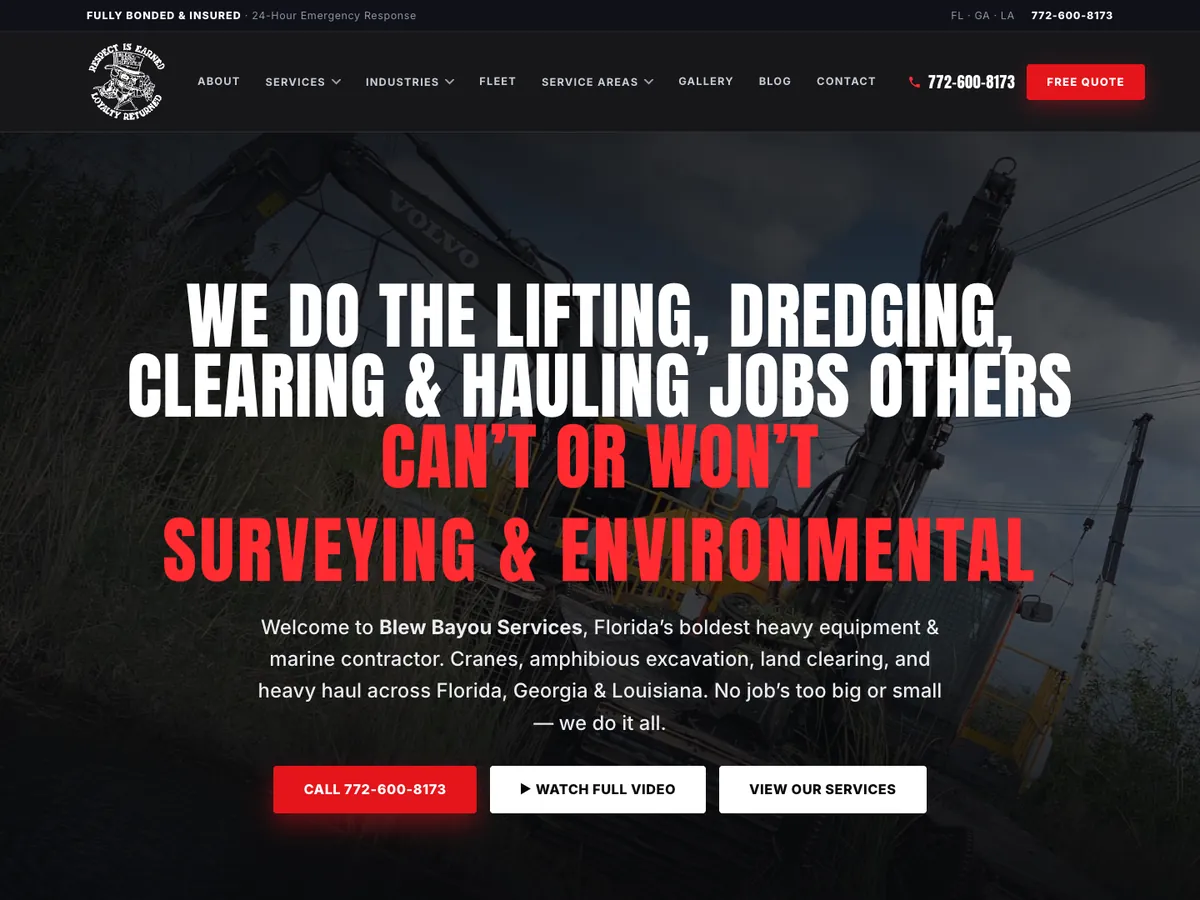 Heavy equipment & marine contracting · FloridaBlew Bayou Services
Rebuilt from scratch after the old site was lost, and now the answer Google's AI gives.
867Pages, up from 403#1Google + Maps, amphibious excavation FL
Read the case study
Heavy equipment & marine contracting · FloridaBlew Bayou Services
Rebuilt from scratch after the old site was lost, and now the answer Google's AI gives.
867Pages, up from 403#1Google + Maps, amphibious excavation FL
Read the case study -
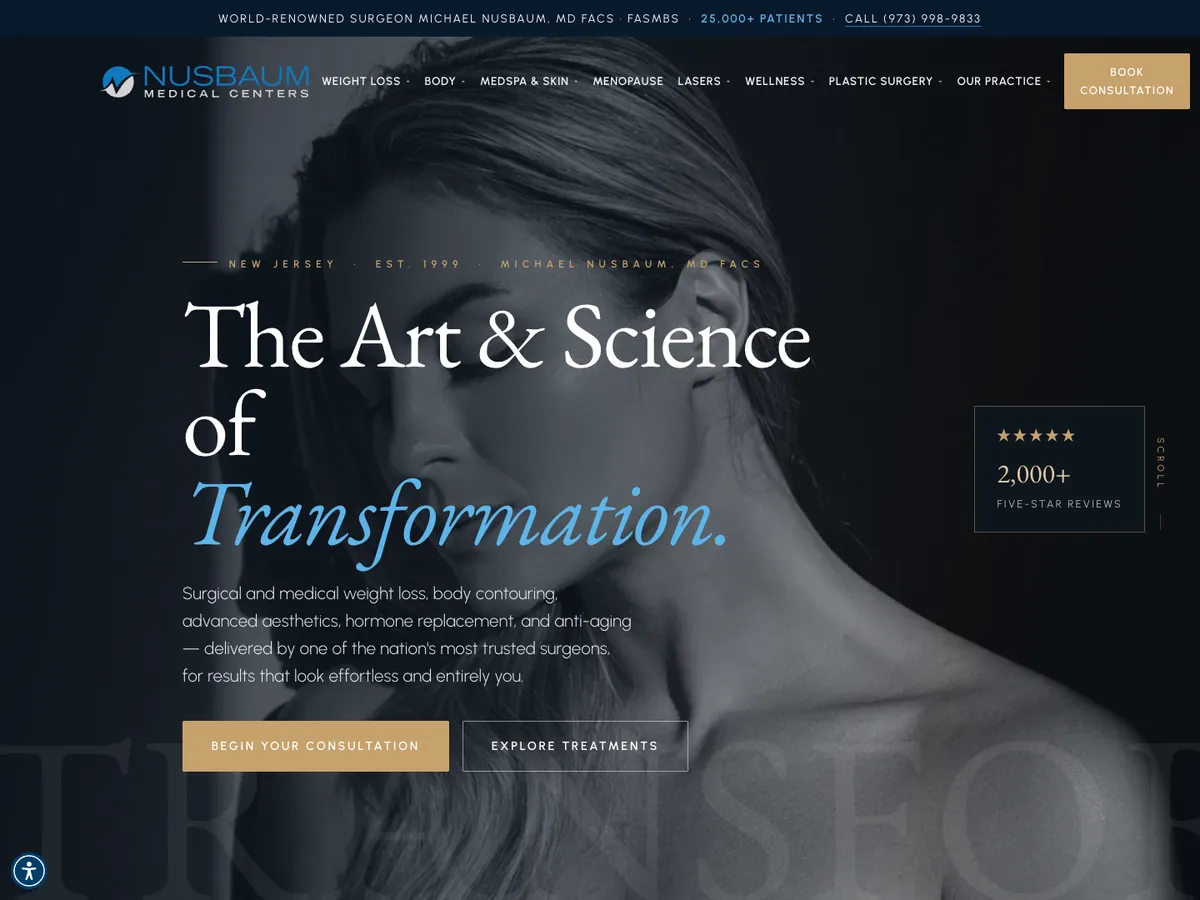 Medical weight loss & aesthetics · New JerseyNusbaum Medical Centers
A 3,000-page medical authority that Google ranks first and ChatGPT recommends by name.
3,115Pages live1,285Ranking search terms
Read the case study
Medical weight loss & aesthetics · New JerseyNusbaum Medical Centers
A 3,000-page medical authority that Google ranks first and ChatGPT recommends by name.
3,115Pages live1,285Ranking search terms
Read the case study -
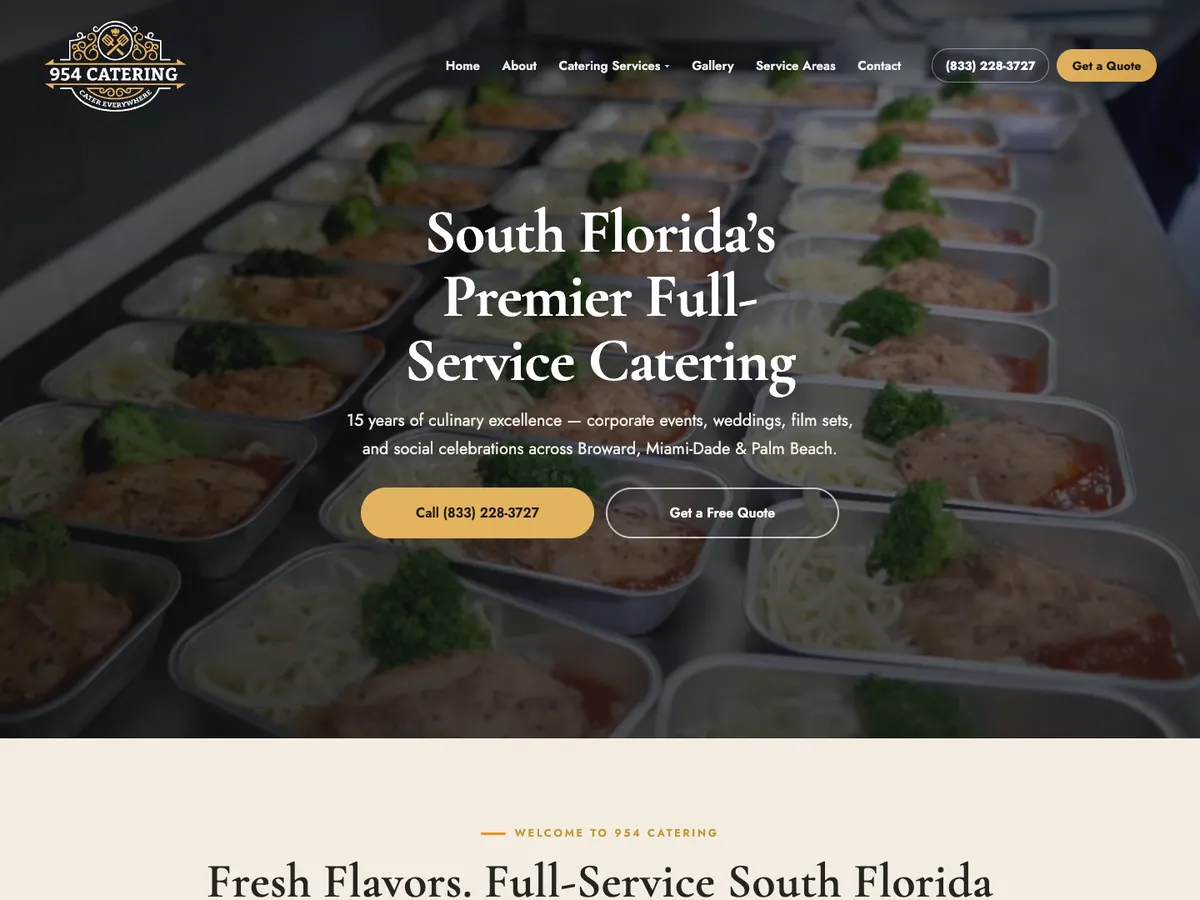 Catering · South Florida954 Catering
From a cluttered page-builder site to the catering company South Florida's map pack and AI name first.
100City + occasion pages532Legacy URLs preserved
Read the case study
Catering · South Florida954 Catering
From a cluttered page-builder site to the catering company South Florida's map pack and AI name first.
100City + occasion pages532Legacy URLs preserved
Read the case study
06Questions
AI search questions we hear every week.
What is GEO and AEO?
GEO stands for generative engine optimization and AEO for answer engine optimization. They describe the same goal: getting your business named and cited by AI tools like ChatGPT, Perplexity, and Google AI Overviews when someone asks a question you can answer. It is the discipline of being the source the model quotes, not just a link it might list.
How is AI search optimization different from regular SEO?
Regular SEO competes for a ranking in a list of links. AI optimization competes to be the source a model quotes inside its written answer. The technical foundation overlaps, but answer engines weigh clear factual structure, schema, entity clarity, and third-party citations even more heavily than a classic ranking would.
Can you actually influence what ChatGPT says about my business?
You can influence it, not command it. By structuring your content as retrievable facts, correcting your information across the web, implementing schema and llms.txt, and building trusted citations, we make it materially more likely the models pull your business into their answers instead of skipping you. No one controls a model's output outright, and any agency claiming to is bluffing.
How long does AI search optimization take?
Some wins are fast: once your facts and schema are clean, engines can start citing you within weeks. Deeper authority and consistent citation across models build over a few months, on a similar curve to SEO. We baseline what the engines say now so you can watch it change.
Is it too early to invest in AI search?
Early is the advantage. The businesses structuring for AI answers today are the ones getting cited while competitors wait for it to feel safe. Early positions cost less to establish and are harder for a latecomer to take from you.
One team. Every channel.
Websites, search, ads, content, CRM and AI software built by one in-house team, so every piece works with the others.
Get cited before your competitors do.
Ask us to run your business through the AI engines and see exactly what they say about you, and what they leave out.