


AI Software · AI Consulting
AI advice from people who build it.
 Reviewed by Adam Segall, Founder & CEOUpdated
We score your use cases, tell you what to build, buy or skip, set the data rules, and hand you a 90-day plan. Then we can build it with you.
01Overview
What good AI consulting services should leave you holding
Most AI consulting services end with a slide deck full of possibilities and no owner for any of them. Ours ends with decisions. You get a scored list of use cases, a recommendation for each (build custom, buy a tool, configure what you already pay for, or wait), a data policy your staff can follow, and a dated plan. If you want, the same team then builds the first pieces through our custom AI tools and AI agents practice.
We have been doing this since before it was called AI. Unified has run marketing and software for more than 1,100 businesses since 2006, and we built our own platform, UnifiedIQ, where 29 AI agents watch client websites, calls, CRM data and ads while people review and approve the work. That matters for you: we advise from what has held up in daily use, not from vendor demos.
Who hires an AI consultant, and when
- Owners who keep hearing "use AI" and want to know which two or three jobs in their business would actually pay off first.
- Teams already paying for AI seats (ChatGPT, Copilot, Gemini) that nobody uses past the first week.
- Operations leads with one painful process (intake, quoting, follow-up, reporting) who need to know if AI fits or if a plain automation would do.
- Regulated businesses (healthcare, insurance, legal, finance) that need guardrails before anyone pastes client data into a chatbot.
If you are earlier than that, start with our free AI readiness assessment scorecard or the owner's map in AI for small business. Both are written to help you decide whether you need outside help at all. Plenty of businesses do not, and we will tell you so.
At a glance. AI consulting is a short, fixed-scope engagement that ends in four artifacts: a use-case scorecard, a build-buy-configure decision per use case, a written data and risk policy, and a 30-60-90 day rollout plan with named owners. If an engagement does not produce those, it was a workshop, not consulting.
02Readiness
Readiness first, then a use-case scoring table
Readiness is less about technology than people expect. The businesses that get value from AI quickly have three things in common: a process someone can describe step by step, data that lives in a system rather than in someone's head, and one person who owns the outcome. Missing any of the three does not rule you out. It just tells us what to fix before spending on software.
The five readiness questions we ask in the first meeting

- Can someone on your team write down the job, step by step, including the exceptions?
- Where does the information for that job live today: a CRM, a shared drive, email, paper?
- How often does the job happen: daily, weekly, a few times a year?
- What does a mistake cost: an awkward email, a lost lead, a compliance problem?
- Who will check the AI's work for the first month, and how much time can they give it?
Then, as with all our AI consulting services work, we score every candidate use case on the same five factors, each from 1 to 5. Value and frequency push a use case up. Data readiness tells us whether it is buildable now. Risk and effort pull it down. The point of the table is not precision. It is getting the whole leadership team to argue about the same numbers instead of the newest demo someone saw.
| Use case (example) | Value | Frequency | Data ready | Risk (low = 5) | Effort (low = 5) | Total |
|---|---|---|---|---|---|---|
| Drafting replies to web leads within minutes | 5 | 5 | 4 | 4 | 4 | 22 |
| Summarizing sales or intake calls into the CRM | 4 | 5 | 4 | 3 | 4 | 20 |
| Answering staff questions from your own policies and SOPs | 4 | 4 | 3 | 4 | 3 | 18 |
| Turning PDFs and forms into structured records | 4 | 3 | 3 | 3 | 3 | 16 |
| Fully automated outbound sales emails | 3 | 4 | 2 | 1 | 3 | 13 |
The scores above are an illustration of how a typical service business might rate itself, not data from a study. Yours will differ. Notice the last row: fully automated outbound email often scores high on excitement and low on everything else, because it is risky to your sender reputation and needs clean lists most businesses do not have. Lead reply drafting usually wins because it is frequent, valuable and easy to supervise.
Anything scoring 20 or more becomes a candidate for the first 90 days. Between 15 and 19, we usually fix the data or the process first. Under 15, we park it and revisit in six months. The same method sits behind our long-form guide to custom AI solutions, if you want to run it yourself.
03Why Unified
Why businesses choose Unified for AI advice.
We are an agency that builds software, so our advice comes with a delivery plan attached.
We build what we recommend
Our own platform runs 29 AI agents for client work every day, with people approving what goes out. Advice comes from what has held up in production, which is a very different source than a vendor webinar or a trend report.
No reseller incentives
We do not earn margins on the tools we suggest, so a recommendation to buy an off-the-shelf product, or to do nothing yet, is as easy for us to make as a recommendation to build. You get the answer that fits your business.
Marketing and operations in one view
Good AI consulting services follow the money. Most AI payoffs in a small business sit where marketing meets operations: lead replies, intake, follow-up, reviews, reporting. We have run both sides for 1,100+ businesses since 2006, so the plan connects to revenue.
You own everything
Accounts, prompts, code and data stay in your name. If we build, you get the documentation and the keys. If you part ways with us, the system keeps running without a ransom note attached.
04Build vs buy
Build, buy, configure or wait: making the call
Every scored use case gets one of four answers. Buy when a mature product already does the job and your process is normal. Configure when you already pay for software (your CRM, Google Workspace, Microsoft 365) that has AI features nobody has turned on. Build when the job depends on your own data, rules or workflow and no product fits without bending your business. Wait when the data or the process is not ready.
| Answer | Choose it when | Watch out for | Typical example |
|---|---|---|---|
| Buy | The job is common and a product does it well out of the box | Per-seat pricing creep, data leaving your control, lock-in | Meeting transcription, grammar and tone tools |
| Configure | Your CRM or suite already has the feature | Features left half set up, no one trained | AI summaries in the CRM you already pay for |
| Build | The job depends on your documents, rules or systems | Scope creep, no owner after launch | An assistant that answers from your own SOPs, a quote helper |
| Wait | Data is scattered or the process changes weekly | Waiting forever: set a review date | Forecasting from a spreadsheet nobody updates |
Because we have no reseller deals, our AI consulting services can tell you to buy the off-the-shelf product when it is the right call. When building is right, the ownership question matters most. Anything we build for you runs on your accounts, with your data and your code, so you are never renting your own workflow back from us.
Three builds that show the range
For HonestyInsure.com, a health insurance site, we put a 24/7 AI agent chat in the hero so visitors get answers at any hour, alongside 144 indexed pages and guides. For HuntReserve, we built a custom CRM and booking platform for guided-hunt outfitters, with nine drag-and-drop pipeline stages and digital waivers that replaced paper entirely.
For the Center for Spiritual Living in Fort Lauderdale, we migrated 732 events to a custom AI-assisted events platform. Each started as a consulting conversation about one painful job. None started with "we should use AI." We also have a live call assistant in pilot with a South Florida wellness practice, which suggests responses from a playbook the practice approved while a person runs every call.
05Data and risk
Data, privacy and risk rules before anyone types a prompt
The fastest way to get hurt by AI is staff pasting customer data into a free chatbot account. So every engagement produces a one-page data policy in plain English: which tools are approved, what data may go into each, what must never go in, who reviews outputs, and how to report a problem. We base the structure on the NIST AI Risk Management Framework, a voluntary framework built around four functions: govern, map, measure and manage.
The guardrails we set on every build
- Data classes. Public, internal, confidential and regulated. Each tool is approved for specific classes only.
- Business accounts only. Consumer chatbot accounts can have different data terms, so staff use workspace or API accounts with training on your data switched off where the vendor allows it.
- A human checkpoint on anything that leaves the building under your name: emails, quotes, public replies.
- Grounding and citations. Assistants answer from your documents and show where the answer came from, so staff can check it.
- Security testing against the OWASP Top 10 for LLM Applications, which lists risks such as prompt injection, sensitive information disclosure and excessive agency.
- Logs and a kill switch. Every action an agent takes is recorded, and someone can turn it off in one step.
Regulated businesses need more. If you are a HIPAA covered entity, any AI vendor that handles patient information generally needs a business associate agreement, and HHS publishes sample business associate agreement provisions that show what one covers. Our healthcare marketing agency work follows the same rule. This is practical guidance, not legal advice: your counsel signs off on the final policy.
The rule we never break: nothing goes out under a client's name without a person approving it. That is how UnifiedIQ runs for our own clients, and it is the default we design into every system we build for yours.
0690-day plan
The 30-60-90 day plan our AI consulting services deliver
The plan is where AI consulting services turn advice into work. It names one owner per use case, a start date, the measure of success, and the point where we stop and decide whether to keep going. We keep it short enough to fit on one page, because a plan nobody reads is just a longer deck.
| Window | What happens | Who does it | How you know it worked |
|---|---|---|---|
| Days 1-30 | Interviews, process mapping, use-case scoring, data policy, tool audit of what you already pay for | Unified leads, your owner joins weekly | Scorecard and policy signed off; unused AI features switched on |
| Days 31-60 | Pilot the top one or two use cases with a small group, human review on every output | Unified builds or configures, your team tests | Time saved per task, error rate, staff actually using it |
| Days 61-90 | Fix what the pilot showed, train the wider team, decide on the next use case | Shared, with handoff documents | A go, change or stop decision with numbers behind it |
Questions to ask any AI consultant before you sign
- Have you shipped software that is in daily use, and can I see it working?
- Do you take referral fees or reseller margins from any tool you might recommend?
- Who owns the code, prompts and accounts at the end?
- What will you tell me not to do?
- How will we measure success at day 90, in numbers my team can check?
Red flags in AI consulting services are easy to spot once you know them: a consultant who recommends a platform before hearing about your process, promises to replace staff, cannot explain where your data goes, or measures success by the number of tools deployed. Good AI work is usually smaller and duller than the pitch, and it pays back faster for exactly that reason.
If AI is part of a wider growth question, our consulting and strategy team can fold the plan into your marketing roadmap, or a fractional CMO can own it alongside everything else. See the full AI software practice, or talk to us about your first use case. We will tell you honestly if you are ready.
07How we work
How an AI consulting engagement runs.
Fixed scope, senior people, decisions in writing.
- Step 01
Listen and map
We interview the owner and the people who do the work, then map two to four core processes step by step, including the exceptions. We also audit the AI features you already pay for and nobody has switched on.
- Step 02
Score and decide
The core of our AI consulting services: every candidate use case is scored on value, frequency, data readiness, risk and effort. Each one gets a build, buy, configure or wait answer, with the reasoning written down so your team can challenge it.
- Step 03
Set the rules
We write a plain-English data and risk policy: approved tools, data classes, review steps, logging and who to call when something looks wrong. Regulated businesses get it reviewed by their own counsel.
- Step 04
Plan and pilot
You get a dated 30-60-90 day plan with owners and success measures. If you want us to, we build or configure the first pilot and run it with a small group before anyone scales it up.
08What you get
What you get.
- 01
Use-case scorecard
Every candidate job scored on five factors, ranked, with a short note on why each one landed where it did and what would move it up.
- 02
Build, buy or configure memo
A recommendation per use case, the tools considered, the risks of each option and what ownership looks like after launch.
- 03
AI data and risk policy
A one-page policy for staff: approved tools, what data goes where, human review points, logging and incident steps, aligned to the NIST AI RMF structure.
- 04
30-60-90 day plan
Dated milestones, named owners, success measures and a clear go, change or stop decision point at day 90.
- 05
Tool and seat audit
What you already pay for, what is unused, which AI features to switch on and which subscriptions to cancel.
- 06
Pilot build, if you want it
The first use case configured or built by our team, tested with real users and handed over with documentation.
09Results
Proof, not promises.
Verified results from live client builds: rankings, AI citations and tracked inquiries, not projections.
-
 Insurance · AI Search Site + Live ChatHonestyInsure.com
A health insurance site written to be the answer AI search gives, with an AI agent that enrolls you right on the page.
144pages and guides indexed31states with their own local pages
Read the case study
-
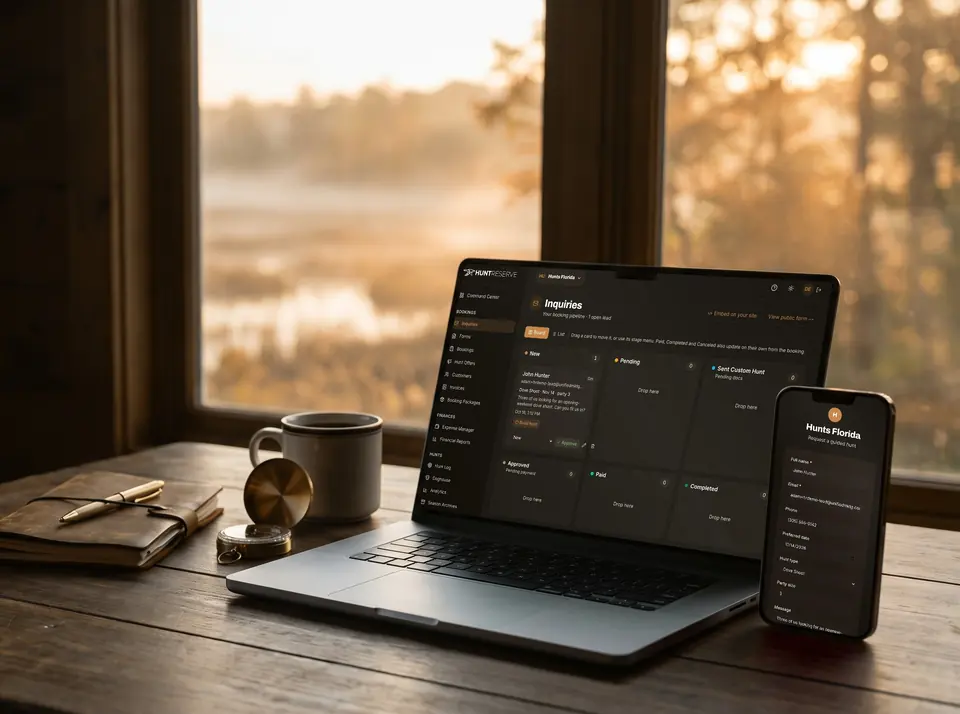 SaaS · Booking & Operations PlatformHuntReserve
From a stranger's inquiry to a paid, waivered, licensed hunting party without a single phone call.
9pipeline stages, drag-and-drop1personal link per hunter: details, license, waiver
Read the case study
-
 Community · Website + Custom Events PlatformCenter for Spiritual Living
A rescued website and a custom events platform that runs the center's entire calendar.
753pages live732events migrated to the new platform
Read the case study
10Questions
AI consulting questions, answered.
What do AI consulting services actually include?
A good engagement includes process mapping, a scored list of use cases, a build, buy or configure decision for each, a written data and risk policy, and a 30-60-90 day plan with owners. Ours can also include building the first pilot, because the same team advises and builds.
Do we need clean data before hiring an AI consultant?
No. Part of the job is telling you which use cases your data supports today and which need cleanup first. Many early wins, like drafting lead replies or summarizing calls, need far less data preparation than people assume.
Will AI replace our staff?
That is not how we plan AI consulting services engagements. The use cases that pay off fastest take repetitive drafting, summarizing and data entry off people's plates so they spend more time with customers. Every system we design keeps a person reviewing anything that goes out under your name.
How do you keep our customer data safe?
We set approved tools and data classes, use business or API accounts instead of consumer chatbots, ground answers in your documents, log every action, and test builds against the OWASP Top 10 for LLM Applications. Regulated businesses also get vendor agreements such as a HIPAA business associate agreement where needed.
Should we build custom AI or buy a tool?
Buy when a mature product does the job and your process is normal. Configure when software you already pay for has the feature. Build when the job depends on your own documents, rules or systems. Wait when the data or process is not ready. We have no reseller deals, so the answer is whatever fits.
How long does an AI consulting engagement take?
The planning work in our AI consulting services usually fits inside the first 30 days of the 90-day plan, with pilots in the second month and a go, change or stop decision by the third. The exact timing depends on how many processes are in scope and how fast your team can join interviews.
Can you build what you recommend?
Yes. That is the point of our AI consulting services. Unified is one in-house team covering strategy, software, websites and marketing. We built our own AI platform, a custom CRM and booking platform for HuntReserve, a 24/7 AI agent chat for HonestyInsure.com and an AI-assisted events platform for the Center for Spiritual Living.
Pairs well with.
One team. Every channel.
Websites, search, ads, content, CRM and AI software built by one in-house team, so every piece works with the others.
Find your first AI win.
Tell us the one job that eats your team's week and we will tell you honestly whether AI should touch it. Call (954) 758-7200 or send a note.