


Analytics and Growth · Sales Training
Sales training that turns leads into revenue.
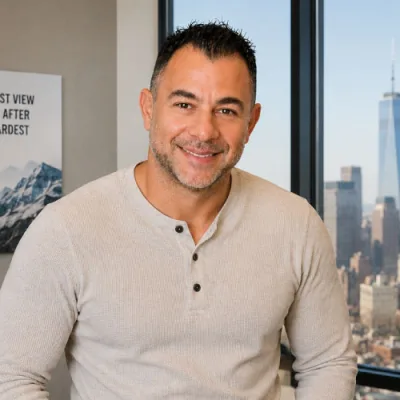 Reviewed by Adam Segall, Founder & CEOUpdated
We don't only drive leads, we drive revenue. Unified coaches your team on the calls, scripts and follow-up that turn leads into booked jobs and signed deals.
01Overview
Sales training for teams that work real leads
Most sales training is built for large software sales floors. Ours is built for owner-led and mid-sized businesses whose people answer inbound calls, return web form leads and make outbound calls every day. Unified has run marketing since 2006, and over the years the work kept pulling us toward the same place: the sales conversation. More leads rarely fix a business on their own. What your team says in the first two minutes usually decides the deal.
Adam Segall, who founded Unified, has spent about 20 years building and working with call centers and sales teams. As a fractional CMO, a big part of his job is tightening the sales process so the team qualifies faster and closes more. Our sales training program packages that work, the scripts, coaching, practice and CRM setup, inside our analytics and growth practice.
The U.S. Bureau of Labor Statistics describes sales managers as the people who set sales goals, monitor progress and plan training programs for sales staff. In many growing companies the owner does that job on top of everything else, so the team learns by guessing.
Signs your team needs sales training
- Marketing brings in leads, the team says the leads are bad, and nobody can prove it either way.
- Every rep sounds different on the phone, and the owner closes far more often than anyone else.
- Price objections end conversations instead of starting them, or reps discount to get a yes.
- Calls end with "let me think about it" and no date for the next step.
- Web leads wait hours for a first call, and some never get one.
- New hires take months to get productive because the playbook lives in one person's head.
If two or more of those sound familiar, the problem is usually process, not people, and process is fixable in weeks.
02Compare
Sales manager vs sales trainer vs Unified
Owners who want a stronger team usually weigh three paths: hire a sales manager, bring in an outside sales trainer for a workshop, or run a program that ties sales coaching to the marketing that produces the leads. Each has a place. The table is how we would explain the trade-offs to a friend.
| In-house sales manager | Generic sales trainer | Unified marketing and sales program | |
|---|---|---|---|
| What you get | A full-time leader for the team | A workshop or course, often off the shelf | Custom scripts, coaching, AI practice and CRM setup |
| Knows where leads come from | Over time, if tracking exists | Rarely | Yes, every call and form is traced to its source |
| Script built for your business | If they write one | Usually a template | Yes, from your services, buyers and objections |
| Practice between sessions | Depends on the manager | Ends when the workshop ends | AI role-play that scores every answer |
| CRM and follow-up | A separate project | Out of scope | Built in: script on screen, notes, tasks, stages |
| Ties sales to marketing spend | Rarely | No | Close rate by lead source, every month |
| Best for | Larger teams that need daily management | Teams that need a one-time reset | Owner-led and mid-sized teams working inbound and outbound leads |
A good sales training company should also tell you when not to hire it. If you have fifteen reps and nobody leading them day to day, hire a full-time sales manager. Many clients use us as a fractional sales manager in the meantime, or to build the playbook the new manager inherits on day one.
The gap we close: agencies hand over leads and walk away, and sales trainers coach a team without knowing where its leads came from. We do both, so we can tell whether a lost deal was a bad lead or a bad call.
For senior direction on your marketing and sales plan without hands-on coaching, our consulting and strategy service is the lighter option.
03Why Unified
Why teams choose Unified for sales training.
We drive the leads and coach the team that works them.
Marketing and sales under one roof
We see each lead from the first click to the closed deal. When a source brings poor leads, we fix the marketing. When good leads stall, we fix the calls. There is no finger-pointing between an agency and a sales trainer, because it is one team.
Twenty years with call teams
Adam Segall has spent about two decades building and working with call centers and sales teams. The scripts and coaching come from real phones and real objections, not a classroom, and they are written for owner-led and mid-sized businesses.
Practice that actually happens
AI role-play lets every rep practice objections on their own time and get a scored answer right away. Skills grow between sessions instead of fading after a workshop, and managers can see who is improving and who needs help.
Built into your tools
The script, notes, tasks and pipeline live inside your CRM through UnifiedIQ and GoHighLevel. Reps follow the process because it is on screen during the call, not filed in a binder nobody opens.
04The program
What our sales training program includes
Every sales training engagement is built from your business, not from a binder. These are the six parts. Most of them run through UnifiedIQ, our own platform, alongside the CRM your team already uses or one we build for you.
1. A custom call script

We write the script from your own information: services, best customers, common objections and what a lost deal costs. It follows a clear path: an opener that earns the next thirty seconds, discovery questions, finding the real problem, the cost of doing nothing, and booking the next step. One recent engagement produced a 7-stage outbound script and training doc for a trade-show exhibit builder.
Then we coach delivery, because the same words land differently in different mouths. Tone, pace and the silence after the ask get as much attention as the script itself. Learning to stay quiet after the ask is one of the fastest wins in sales coaching.
2. Objection and price handling
Reps learn to stop defending the price and stop dropping it. When a buyer says it costs too much, the answer starts with a question: compared to what? If the budget is real, the team trades scope instead of discounting, so the margin holds. The methods come from question-led selling and modern objection handling, adapted to your industry. The rule we coach hardest: every call ends in a yes, a no or a booked date.
3. AI role-play practice
Reps rarely practice, because rehearsing with a manager is awkward and rehearsing on real buyers is expensive. Our AI role-play plays a skeptical buyer, raises one objection at a time and scores each answer with what worked, what didn't and a better line to say. New hires get dozens of reps in before they touch a live lead, and veterans sharpen the objections they fumble most.
4. A live call assistant inside the CRM
During the call, the script sits on screen with the caller's details filled in from the CRM. Notes save per call and sync to GoHighLevel, follow-up tasks get created and the pipeline stage updates, so nobody retypes anything after hanging up. It is the same thinking behind our CRM implementation work, and teams that outgrow off-the-shelf tools can move to a custom CRM build.
5. Speed to lead and follow-up
The fastest helpful reply usually wins the deal, so we set up instant lead alerts, a clean pipeline and follow-up steps that do not depend on anyone's memory. UnifiedIQ tracks every call and form back to its source, and our call tracking shows which ads and pages make the phone ring. Our CRM for small business guide covers the setup, and the AI receptionist guide covers calls nobody can pick up.
6. Measurement
We track conversations, booked meetings, close rate by lead source and time to first call. Those numbers show whether the training is changing behavior on real calls, and they show marketing which sources deserve more budget. Sales training without measurement is a pep talk.
05First 90 days
Your first 90 days of sales coaching
Sales coaching and sales training work when they are short, specific and repeated. Here is the shape we follow, adjusted for team size and whether your calls are mostly inbound, outbound or both. The order matters: we fix the follow-up system before we train, so better calls are not wasted on leads that sat for a day.
Days 1 to 30: listen and build
- Listen to recorded calls and sit in on live ones to find where deals stall.
- Interview the owner and top performer to capture what already works.
- Write the custom call script, objection guide and training doc.
- Fix speed to lead: alerts, pipeline stages and follow-up tasks in the CRM.
- Set the baseline: conversations, booked meetings, close rate by source and time to first call.
Days 31 to 60: train and practice
- Sales team training sessions on the script, discovery questions and the cost of inaction.
- Daily AI role-play reps on the objections your buyers actually raise.
- The live call assistant switched on, so the script and notes run inside the CRM.
- Weekly call reviews: one thing to keep and one thing to change, per rep.
Days 61 to 90: measure and tighten
- Compare close rate and booked meetings by lead source against the baseline.
- Rewrite the script lines that are not landing, based on recordings and role-play scores.
- Hand the owner a playbook a new hire can learn in the first week.
- Share findings with marketing: which sources close and which waste the team's time.
Metrics we track
| Metric | What it tells you | Where it comes from |
|---|---|---|
| Time to first call | How fast new leads hear from a person | CRM activity and call logs |
| Conversations per lead | Whether the team actually reaches people | Call tracking and CRM |
| Booked meetings or appointments | Whether calls end with a next step | CRM pipeline stages |
| Close rate by lead source | Which channels bring buyers, not browsers | Closed deals tied to source |
| Discount rate | Whether reps hold the price | Quotes and invoices |
| Role-play scores | Skill growth between live calls | AI practice sessions |
Our analytics and reporting team builds the monthly view, so sales and marketing numbers come from the same systems instead of two spreadsheets that never agree.
06Choosing a trainer
How to choose a sales training company
Sales training can be a sound investment or an expensive pep talk. The difference is whether the work changes what reps say on an ordinary Tuesday, and whether anyone measures it.
Questions to ask any sales trainer
- Will you write a script for our business, or hand us a template?
- How will my team practice between sessions?
- Which numbers will you track, and where will they come from?
- Do you work inside our CRM, or is that someone else's problem?
- Have you built and run call teams yourself, or only taught them?
- How do you handle the rules for outbound calling?
Red flags in sales training programs
- A motivational workshop with no follow-up and no measurement.
- Scripts so rigid that reps sound like they are reading.
- Discounting taught as a closing tactic.
- No interest in where your leads come from or how fast they get called.
If your team calls consumers, the FTC's Telemarketing Sales Rule applies: callers must promptly disclose who they are calling for and that the call is a sales call before any pitch, stay inside permitted calling hours and respect Do Not Call lists. We build those disclosures into outbound scripts. This is not legal advice, so check your own situation with counsel.
Proof from the lead side
For Nusbaum Medical Centers, a medical weight loss and aesthetics group in New Jersey, our program logged 1,645 tracked inquiries in the past 12 months. Every one of those is a conversation a team has to handle well. For HuntReserve, we built a custom CRM and booking platform with 9 drag-and-drop pipeline stages, the same pipeline thinking we bring to a sales team.
Unified was founded in 2006 and has served hundreds of businesses from offices in South Florida and New Jersey. Our AI lead generation guide walks through the full chain from found to booked, and our B2B marketing work covers longer sales cycles. When you are ready, talk to us about your team.
07How we work
How a sales training engagement runs.
Listen, build, train, then measure every month.
- Step 01
Listen
We review recorded calls, sit in on live ones and interview the owner and top performers. You get a written diagnosis of where deals stall, from the first reply to the final follow-up, with fixes ranked by revenue impact.
- Step 02
Build
We write the custom script, objection guide and training doc, then set up the live call assistant, lead alerts, follow-up tasks and pipeline stages in your CRM so the process runs on its own.
- Step 03
Train
Live sales training sessions plus daily AI role-play on your real objections. Weekly call reviews give each rep one thing to keep and one thing to change, so progress is steady and visible.
- Step 04
Measure
Monthly reports track time to first call, booked meetings and close rate by lead source. We rewrite what is not working and share what we learn with marketing, so spend follows the leads your team closes.
08What you get
What you get.
- 01
Custom call script
The core of our sales training: a staged script built from your services, buyers and objections, from opener and discovery to the cost of inaction and the booked next step.
- 02
Objection guide
Answers to the price and timing objections your buyers raise, built on questions, scope trades and a clear yes, no or date.
- 03
AI role-play practice
An AI buyer that raises one objection at a time and scores every answer with what worked and a better line to say.
- 04
Live call assistant
The script on screen with caller details from the CRM, notes synced to GoHighLevel, tasks created and stages updated.
- 05
Speed-to-lead setup
Lead alerts, pipeline stages and follow-up steps, with every call and form traced to its source in UnifiedIQ.
- 06
Sales and marketing report
Monthly sales training numbers for conversations, booked meetings, close rate by source and time to first call, shared with marketing.
09Results
Proof, not promises.
Verified results from live client builds: rankings, AI citations and tracked inquiries, not projections.
-
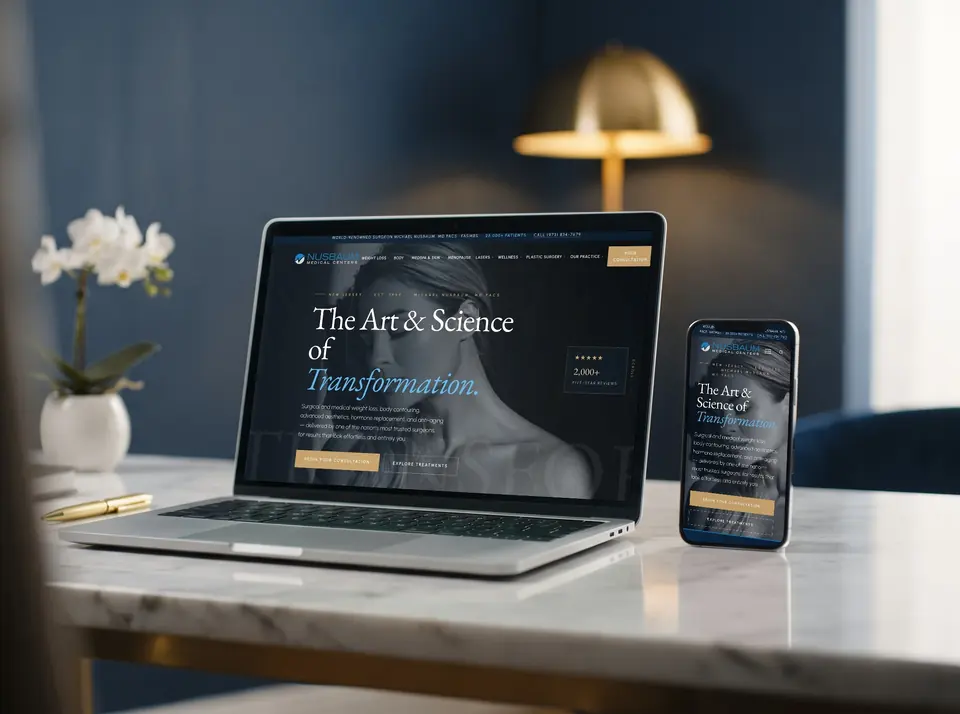 Medical · Custom Theme + SEO + AdsNusbaum Medical Centers
A 3,000-page medical authority that Google ranks first and ChatGPT recommends by name.
3,066pages live1,285search terms ranking on Google
Read the case study
-
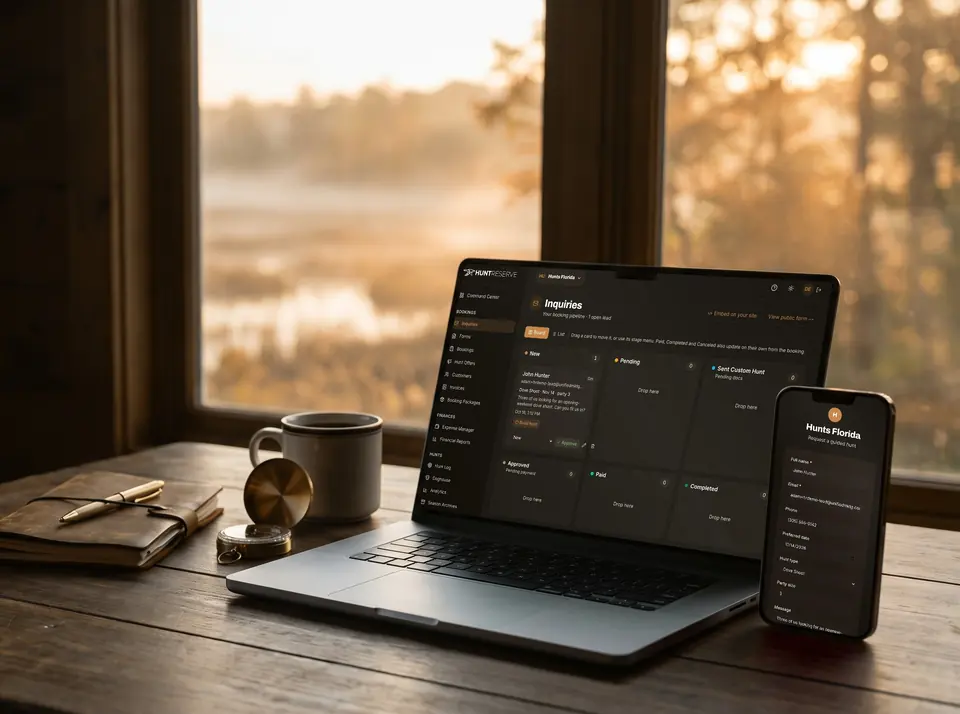 SaaS · Booking & Operations PlatformHuntReserve
From a stranger's inquiry to a paid, waivered, licensed hunting party without a single phone call.
9pipeline stages, drag-and-drop1personal link per hunter: details, license, waiver
Read the case study
-
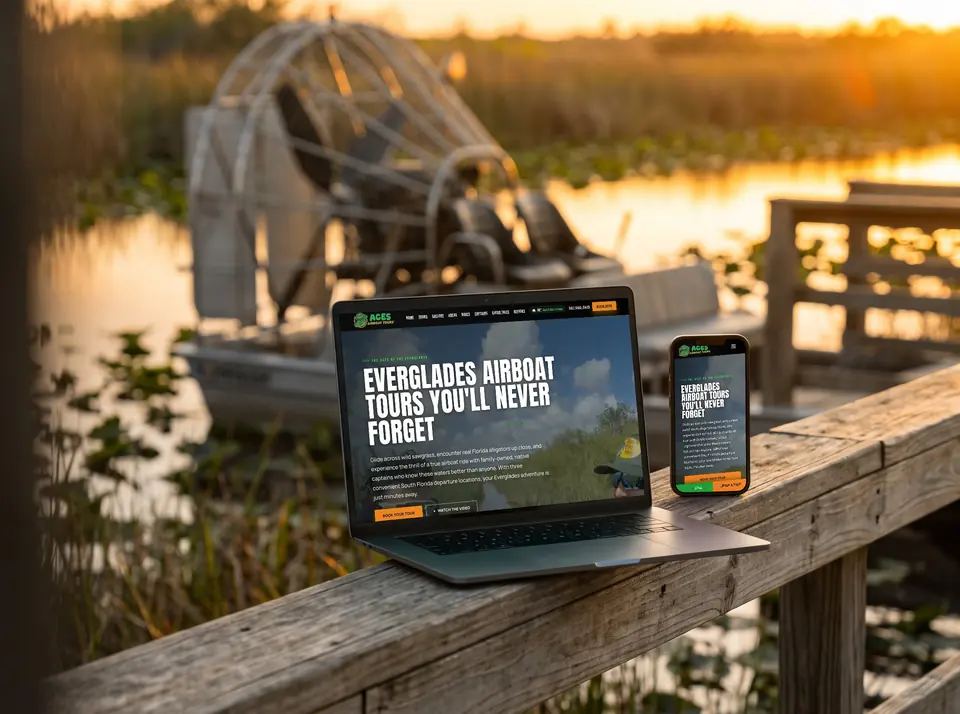 Tourism · Custom Theme + Local SEO + AdsAces Airboat Tours
A cinematic, booking-first site built to win travelers in the moment they search.
334pages live369booking-button clicks in the first 2 months
Read the case study
10Questions
Sales training questions, answered.
What does sales training from Unified include?
A custom call script written from your business, coaching on delivery and objection handling, AI role-play practice that scores every answer, a live call assistant inside your CRM, speed-to-lead and follow-up setup, and monthly measurement of conversations, booked meetings and close rate by lead source.
Do you only train teams that use your marketing?
No. Many teams come to us with leads from referrals, trade shows or other agencies, and the program works on any inbound or outbound lead. Pairing it with our marketing adds one advantage: we can see close rate by source and move budget toward the leads your team closes best.
Do you work with outbound calling teams?
Yes. We write outbound scripts with an opener, discovery questions and a clear ask for the next step, and coach reps on delivery. For calls to consumers we build in the disclosures the FTC Telemarketing Sales Rule requires and respect Do Not Call lists. Check your own situation with counsel.
Can you act as a fractional sales manager?
Yes. For teams without a full-time sales leader, we can run the weekly rhythm: call reviews, coaching, pipeline checks and reporting. When the team grows to the point where it needs daily management, we help you hire a full-time manager and hand over the playbook.
Which CRM do you work with?
Most often GoHighLevel, where the live call assistant syncs notes, tasks and pipeline stages. We also build custom CRMs when a business needs its own pipeline, as we did for HuntReserve. If your current CRM works, we set it up properly instead of replacing it.
How do you know the training worked?
We set a baseline in the first month for time to first call, conversations, booked meetings and close rate by lead source, then compare every month. Role-play scores show skill growth between live calls. If a number does not move, we change the script or the coaching.
One team. Every channel.
Websites, search, ads, content, CRM and AI software built by one in-house team, so every piece works with the others.
Turn more leads into revenue.
Call (954) 758-7200 or send a note, and we will listen to a few of your calls and show you where deals are slipping.