


Advertising · Media Buying
Media Buying Agency.
 Reviewed by Adam Segall, Founder & CEOUpdated
Media bought for leads, not impressions. We plan where your budget should go, buy it across digital and traditional channels, and prove what each placement produced in calls, forms and sales.
01Overview
What a media buying agency should do for you
A media buying agency has two jobs that often get blurred. The first is planning: deciding which audiences, channels and messages deserve your money, in what order, at what weight. The second is buying: placing that budget at the best price, setting frequency, and moving money every week toward what produces customers. At Unified, both sit inside our advertising practice, run by one senior team that also builds your landing pages and tracking.
Most owners hire for the buying and skip the planning. That is how you end up with a Google account, a Meta account and a radio contract that never talk to each other, each judged by its own vendor's report. A good plan starts from your numbers: what a customer is worth, how long they take to decide, and where they look before they call. The buy follows from that, not from whichever channel a rep pitched last.
Planning vs buying, side by side
| Media planning | Media buying | |
|---|---|---|
| The question | Where should the money go, and why | How do we place it well and keep improving it |
| Main inputs | Customer value, sales cycle, audience research, past results | Bids, rates, inventory, targeting, creative, daily results |
| Outputs | Channel mix, budget split, flight dates, reach and frequency goals | Live campaigns, insertion orders, pacing, weekly optimization |
| How it fails | A plan built on vanity metrics or a rep's package | Set it and forget it, no frequency control, no tracking |
| Who does it at Unified | Senior strategist with you | The same strategist and a channel specialist |
We keep the two joined on purpose. The person who wrote your plan watches the buy, so when a channel underdelivers, the plan changes that week instead of at the next quarterly review.
02Channels
Every channel a media buying agency can buy, and what each is for
No single channel does everything, and a media buying agency should be able to explain the job each one plays. Search captures people who already want you. Social and video create demand from people who do not know you yet. Broadcast and out-of-home build familiarity across a whole market. The table is the starting point we use with a new client, before your own data takes over.
| Channel | What the buyer is doing | Best job | Watch out for |
|---|---|---|---|
| Google Search | Typing a need right now | High-intent calls and forms | Broad match drifting into junk queries |
| Performance Max | Seeing ads across Google properties | Scaling once conversion data is clean | Less control over where spend lands |
| YouTube | Watching video on phones and TVs | Demonstrating the product, building recall | Judging it on last-click leads alone |
| Google Display | Reading sites and apps | Retargeting recent visitors | Placements on low-quality apps |
| Meta (Facebook, Instagram) | Scrolling the feed | Offers, new demand, retargeting | Creative fatigue in a few weeks |
| TikTok | Watching short vertical video | Younger audiences, products that show well | Ads that look like ads |
| Working, in a professional mindset | B2B targeting by job title and company | High cost per click without a sharp offer | |
| Programmatic and CTV | Streaming shows, browsing sites | TV-style reach with digital targeting | Opaque fees and unclear placements |
| Streaming audio | Listening to music and podcasts | Repetition at commute times | No direct click path, needs other channels |
| Radio, TV, out-of-home | Driving, watching live TV, passing a board | Local market awareness | Hard to measure without call tracking |

Performance Max can reach all Google Ads inventory, including YouTube, Display, Search, Discover, Gmail and Maps, per Google's own help center. That reach is useful, but it means one campaign can quietly favor the cheapest inventory. Our Performance Max guide covers how we keep it honest, and our Google Ads management page covers search, Shopping and YouTube in detail.
On social, our paid social team runs Meta, TikTok and LinkedIn, and the TikTok marketing page explains how we produce vertical creative that does not look like an ad. If you are choosing between the two biggest platforms, read Facebook ads vs Google ads first.
When traditional media still earns its place
Radio, local TV and billboards still work for local businesses with a wide service area and a simple message: a roofer after a storm, a restaurant group, a car dealer, a medical practice opening a second office. They rarely work alone. We buy them when digital is already capturing demand, give each spot its own tracking number and a matching landing page, and watch branded search volume and call volume during each flight.
03Why Unified
Why owners pick Unified as their media buying agency.
One senior team plans the media, buys it, builds the landing pages and proves the results.
Your accounts, your data
Who owns and who can access every Google, Meta, TikTok and LinkedIn account is written down from day one. We work through access you grant. If we ever part ways, your history, audiences and conversion data stay with you, because they were always yours.
Every cost disclosed
Reports show media spend by channel next to the calls and forms it produced. Channel picks follow your lead data, not what a seller wants to sell. The plan is built on what works for you.
Tracking built in-house
Call tracking, form sources, CRM fields and offline conversions are set up by our own team and reported in UnifiedIQ. You see leads by channel and campaign, so budget decisions rest on customers, not impressions.
Digital and traditional together
We plan search, social, streaming, radio, TV and out-of-home as one budget. Each channel gets a job and a measure, so a billboard flight and a Google campaign are judged in the same report.
04Budget
How we split a budget across channels
There is no right percentage for every business, and any media buying agency that hands you a fixed formula before seeing your numbers is selling a package. We split budgets in layers instead. Each layer has a different job, a different way to measure it, and a rule for when it gets more money. New clients usually start with the first layer only.
- Capture layer. Google Search and, where it fits, Local Services Ads. These people are already looking. This layer is funded first and measured on cost per qualified lead.
- Retarget layer. Display, YouTube and Meta shown to people who visited, called or started a form. Small budget, tight frequency, measured on assisted and returning conversions.
- Demand layer. Meta, TikTok, YouTube and LinkedIn prospecting to people who fit your best customer but have not searched yet. Funded once capture is profitable, measured on cost per lead and lift in branded search.
- Awareness layer. CTV, streaming audio, radio, TV and out-of-home. Funded last, in defined flights, measured on reach, frequency, call volume and branded search during each flight.
Our rule: money only moves up a layer when the layer below has tracking you trust and has hit its target for at least a few weeks. Awareness spend on top of broken tracking is the most common waste we find.
Reach and frequency: the part most buyers skip
Reach is how many different people saw your ad. Frequency is how many times each of them saw it on average. Too little frequency and nobody remembers you. Too much and the same small group sees you twenty times while everyone else never does. Google lets you set a frequency cap on Display and Video campaigns, limiting how often a single person sees your ads per day, week or month. We set caps on every awareness and retargeting campaign and review them as part of the weekly buy.
For small local markets, frequency matters even more. A retargeting audience of a few thousand people can burn out in days. We size each audience before launch, set a cap that matches the sales cycle, and rotate creative before results drop instead of after. For businesses just starting out, our Google Ads for small business guide walks through a sensible first budget structure without a single number you have to guess.
05Tracking
Tracking every call and form back to the buy
A media plan is only as good as its measurement, and this is where most media buying agency relationships fall apart. If you cannot say which placement produced which customer, budget decisions become opinions. Every buy we run gets a source: tagged links for digital, unique tracking numbers for radio, TV and print, dedicated landing pages for each campaign, and form fields that carry the source into your CRM. Our call tracking setup records which campaign drove each call.
All of that flows into UnifiedIQ, our own platform. It tracks every call and form back to its source, so your report shows leads by channel and campaign, not just clicks and impressions. It can also send offline conversions back to Google Ads, which means Google's bidding learns from leads that turned into real customers instead of every form fill. Our analytics and reporting team builds the dashboards on top.
What we measure for each layer
| Layer | Primary measure | Supporting signals |
|---|---|---|
| Capture | Cost per qualified lead, booked jobs | Search impression share, call answer rate |
| Retarget | Returning and assisted conversions | Frequency, audience size |
| Demand | Cost per lead, new customers | Branded search lift, video view rates |
| Awareness | Calls and branded searches during flights | Reach, frequency, tracking-number calls |
The proof is in accounts we run. For Aces Airboat Tours in the Everglades, we built 5 Google Ads campaigns and tracked 369 booking-button clicks in the first 2 months. For Nusbaum Medical Centers in New Jersey, 1,645 inquiries were tracked to their source in the past 12 months. Tracking at that level is what lets a budget move with confidence.
06Choosing
How to choose a media buying agency, red flags, and a 90-day plan
Our team has bought media at national scale. Working as PR Revolution, the agency Adam Segall ran before Unified, we ran a 2013 US media campaign for Nu Skin's ageLOC system, putting the product line in front of targeted audiences across the country. The same people now plan and buy for local and regional businesses, with the discipline that national budgets demand.
Questions to ask any media buying agency
- Whose name are the ad accounts in, and who holds admin access?
- Do you take markups, rebates or volume bonuses from media sellers, and will you put the answer in the contract?
- Can I see the actual invoices from Google, Meta, stations and programmatic platforms?
- How do you count a lead, and can I audit where that conversion fires?
- Who plans the buy and who runs it day to day, and how senior are they?
- What frequency caps will you set, and how will you know when an audience is burned out?
- What happens to my accounts, data and creative if we part ways?
Red flags
- Undisclosed markups. The ANA's K2 media transparency report found non-transparent practices, including cash rebates to media agencies, to be pervasive across a wide range of media. Ask in writing.
- The agency owns your ad accounts. In Google Ads, a manager account with ownership can edit user access on your account. You should own the account and grant the agency access, never the reverse.
- Reports with no leads in them. Impressions and clicks are inputs. A report that never mentions calls, forms or sales is hiding something.
- One channel for everyone. If the answer is always the channel the agency happens to sell, it is not a plan.
- Long lock-in contracts for digital. Broadcast often needs flight commitments. Digital rarely does.
Your first 90 days
| Window | What happens | What you get |
|---|---|---|
| Days 1 to 30 | Audit accounts, fix tracking, move ownership to you, launch capture layer | Written audit, tracking map, first leads with sources |
| Days 31 to 60 | Search term cleanup, retargeting with frequency caps, first creative tests | Cost per qualified lead by campaign, test log |
| Days 61 to 90 | Add demand layer, plan any awareness flight, shift budget to winners | Channel mix for next quarter, budget split with reasons |
If you want a second opinion before you sign with anyone, contact us and a senior strategist will review your current accounts and tell you plainly what we would change first, and what we would leave alone.
07How we work
How a media buying engagement runs.
Plan from your numbers, buy in layers, measure every lead.
- Step 01
Audit and ownership
We review every ad account, contract and tracking setup you have, move account ownership to you where needed, and write down how each lead is counted today. You get a plain audit with fixes ranked by impact, the same audit we would want from any media buying agency.
- Step 02
Media plan
We build the plan from your customer value, sales cycle and market: which layers to fund, which channels, budget split, flight dates and frequency goals. You approve it before a single dollar of new spend runs.
- Step 03
Buy and launch
We set up campaigns, negotiate traditional placements, assign tracking numbers and landing pages, and launch the capture layer first. Frequency caps, exclusions and pacing are set on day one, not after waste shows up.
- Step 04
Optimize and expand
Weekly, we review leads by source, shift budget toward what produces customers and refresh creative. Monthly, we report in plain language and decide together whether the next layer has earned funding.
08What you get
What you get.
- 01
Media plan
A written channel mix with budget split by layer, flight dates, reach and frequency goals, and the reason behind every choice.
- 02
Account ownership audit
A list of every ad account, who owns it, who has access, and the steps to put everything in your name.
- 03
Tracking map
Every tracking number, tagged link, landing page and form source documented, so anyone can audit where a lead came from.
- 04
Campaign builds
Search, Performance Max, YouTube, Meta, TikTok, LinkedIn and programmatic campaigns built by specialists, with caps and exclusions set.
- 05
Traditional buys
Radio, TV and out-of-home placements planned and bought where they fit, each with its own number and landing page.
- 06
Monthly report
Leads and customers by channel in UnifiedIQ, what changed, what we learned and where budget moves next month.
09Results
Proof, not promises.
Verified results from live client builds: rankings, AI citations and tracked inquiries, not projections.
-
 Global Brand · US Media CampaignNu Skin
A targeted media campaign that took Nu Skin's ageLOC system to audiences across the United States.
USnationwide media campaignageLOCthe anti-aging system we promoted
Read the case study
-
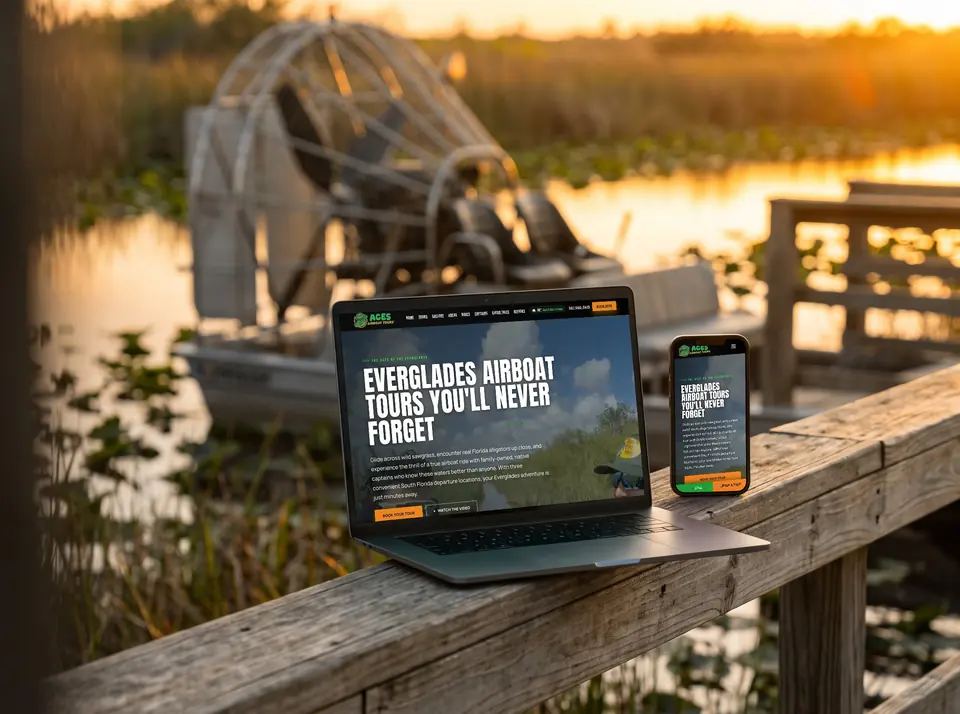 Tourism · Custom Theme + Local SEO + AdsAces Airboat Tours
A cinematic, booking-first site built to win travelers in the moment they search.
334pages live369booking-button clicks in the first 2 months
Read the case study
-
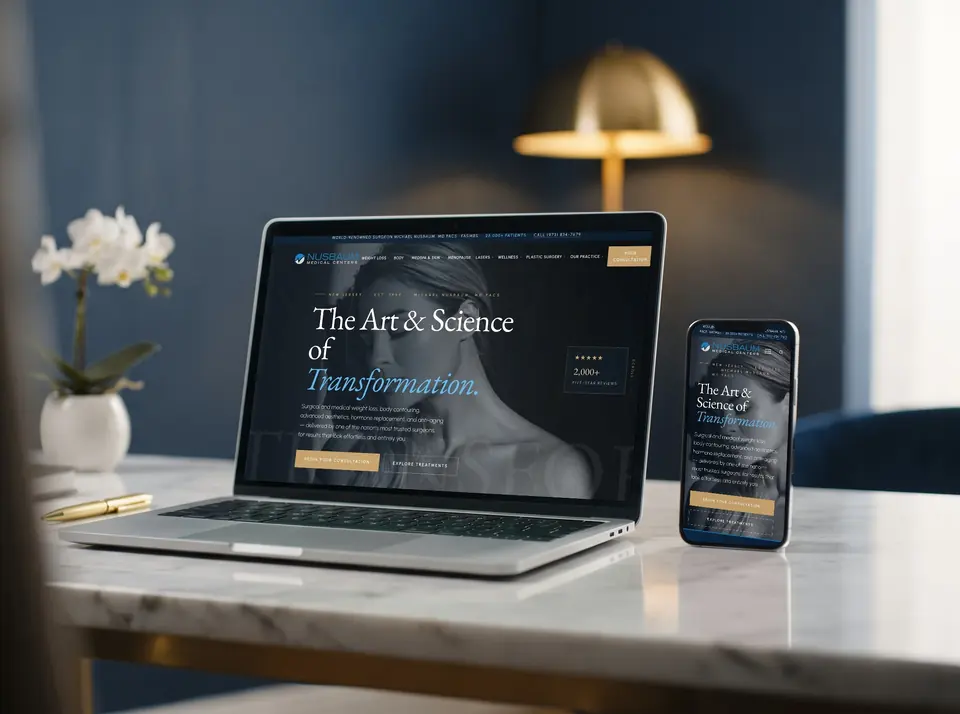 Medical · Custom Theme + SEO + AdsNusbaum Medical Centers
A 3,000-page medical authority that Google ranks first and ChatGPT recommends by name.
3,066pages live1,285search terms ranking on Google
Read the case study
10Questions
Media buying agency questions, answered.
What does a media buying agency do?
A media buying agency plans where your advertising budget should run, buys those placements through ad platforms or directly from sellers, and manages them over time. Good ones also set up tracking so every placement can be judged by the leads and sales it produces, then move money toward what works.
What is the difference between media planning and media buying?
Planning decides the strategy: which audiences, channels, budget split, timing and frequency. Buying carries it out: placing the ads, bidding or negotiating rates, pacing spend and optimizing each week. We keep both with the same senior strategist so the plan changes as soon as the results say it should.
Should I own my own ad accounts?
Yes. Your Google Ads, Meta, TikTok and LinkedIn accounts should be in your business name with you as an admin. The agency should work through access you grant. That way your history, audiences and conversion data stay with you if you ever change agencies.
How do you charge for media buying?
It depends on the channels and the work involved. We walk through it on a call and put it in writing before anything launches. Ask any media buying agency you talk to to show platform invoices and state in writing whether they take rebates or bonuses from sellers.
Is radio or TV worth it for a local business?
It can be, when digital is already capturing demand and your service area is wide enough to use the reach. We give every spot its own tracking number and landing page, then watch calls and branded searches during each flight. If a flight does not move those numbers, we do not renew it.
What is CTV and programmatic advertising?
CTV is advertising on streaming TV shown through connected TVs and devices. Programmatic is automated buying of ad placements across sites, apps and streaming inventory. Together they give TV-style reach with digital targeting. The main risk is fees and unclear placements, so as your media buying agency we review where ads ran and what each layer of the buy costs.
How long until media buying shows results?
Capture campaigns like Google Search can produce leads within the first weeks once tracking is right. Demand and awareness channels take longer because they build familiarity first. Our 90-day plan launches capture first, adds retargeting next and only funds awareness once the lower layers are hitting their targets.
Pairs well with.
- Google AdsSearch, Performance Max, Shopping and YouTube
- Paid SocialMeta, TikTok and LinkedIn management
- Analytics and ReportingTie every campaign to revenue
- Call TrackingKnow which buy made the phone ring
- Performance Max CampaignsKeep control of Google's widest campaign
- Nu SkinA US media campaign for the ageLOC system
One team. Every channel.
Websites, search, ads, content, CRM and AI software built by one in-house team, so every piece works with the others.
Where we work
Get a straight read on your media spend.
Call (954) 758-7200 or share access, and a senior strategist from our media buying agency team will review where your budget runs today and what we would change first.