


What We Solve · Getting customers
Know exactly what your ads bring in.
 Reviewed by Adam Segall, Founder & CEOUpdated
You pay the ad bill every month. You should know which ads made the phone ring and which ones just spent money.
01The problem
Spend goes out. Answers don't come back.
A roofing company spends on Google Ads every month. The dashboard shows clicks and impressions, and the phone rings some days, but nobody can say which calls came from the ads. When the owner asks if it's working, the answer is a shrug and a chart.
This happens because most ad accounts are set up to report on the ad platform's terms. Clicks are easy to count. Calls, form fills and booked jobs are not, unless someone connects them on purpose. Without that link, money keeps going to search terms that bring in job seekers, wrong cities, and people looking for a service you don't offer.
The usual fixes miss the real problem. Raising the budget makes the waste bigger. Switching platforms or agencies starts the same guessing game over. Turning on the platform's automatic settings hands the decisions to a system that is optimizing for its own numbers, not your revenue.
02What changes
What changes when every dollar is tracked.
Clear lead counts
You see how many calls, forms and bookings each campaign produced last week, in plain numbers.
Less wasted spend
Search terms and audiences that never turn into customers get blocked, so the budget stops leaking.
Budget follows results
Money moves toward the ads and keywords that bring real leads, not the ones with the most clicks.
Straight answers
When you ask whether your ads are working, you get a real answer with the calls to back it up.
03How we fix it
How we make ads accountable.
A repeatable process, run by the same in-house team from kickoff to launch.
- Step 01
Connect the tracking
We set up call tracking, form tracking and conversion events so every lead is tied to the ad, keyword or audience that sent it.
- Step 02
Audit the account
We go through search terms, locations, audiences and settings line by line to find spend that has never produced a lead.
- Step 03
Rebuild around buyers
We restructure campaigns around the services and areas you want more of, with ads and landing pages written for people ready to call.
- Step 04
Review every week
Our team checks results weekly, adds negatives, shifts budget and reports leads and cost per lead in language you can use.
04What you get
What you get.
- 01
Full tracking setup
Calls, forms, chats and bookings tracked back to the source, checked so the numbers match what your team actually received.
- 02
Account cleanup
A cleaned-up account with wasted search terms blocked, wrong locations removed, and campaigns organized by service.
- 03
Weekly optimization
Ongoing review of search terms, bids and budgets by people who know your goals, watched around the clock by UnifiedIQ.
- 04
Lead-based reporting
A simple report showing leads, cost per lead and which campaigns earned more budget, so you can decide fast.
05Any industry
Works the same in any business.
- 01
Home services
Calls from ads are tracked by job type, so a plumber can see which ads bring drain calls and which bring water heater installs.
- 02
Medical practices
New patient requests are tied to campaigns without sending patient details to ad platforms, keeping tracking clean and private.
- 03
Law firms
Intake calls are matched to the practice area and keyword that produced them, so spend goes to cases the firm wants.
- 04
Retail and ecommerce
Sales and store visits are traced to ads, so the shop can stop paying for clicks that never buy.
06Results
Proof, not promises.
Verified results from live client builds: rankings, AI citations and tracked inquiries, not projections.
-
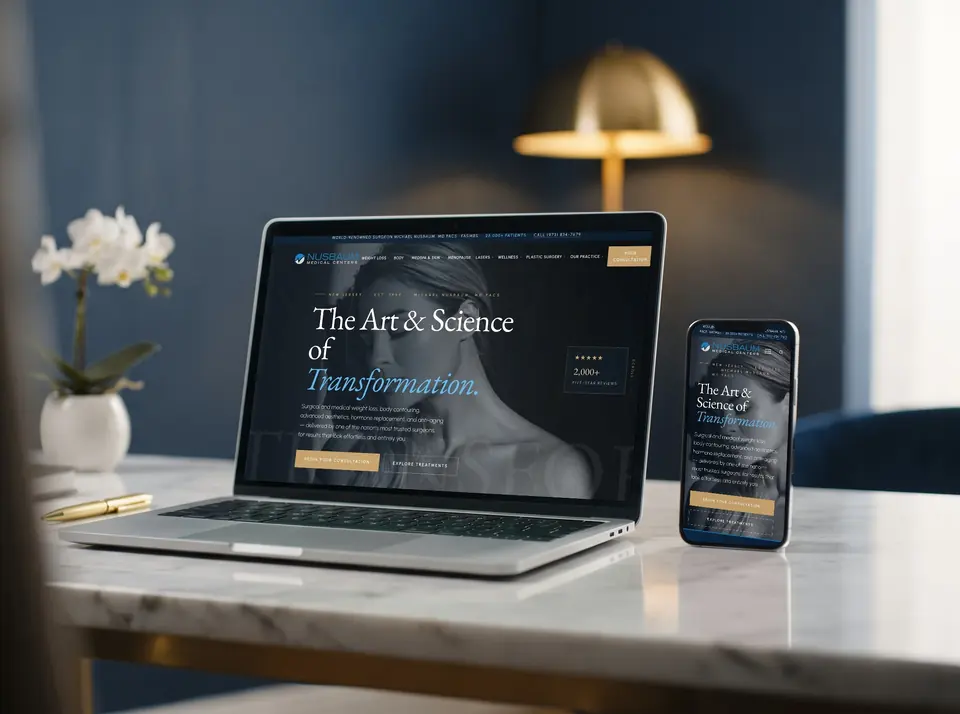 Medical · Custom Theme + SEO + AdsNusbaum Medical Centers
A 3,000-page medical authority that Google ranks first and ChatGPT recommends by name.
3,066pages live1,285search terms ranking on Google
Read the case study
-
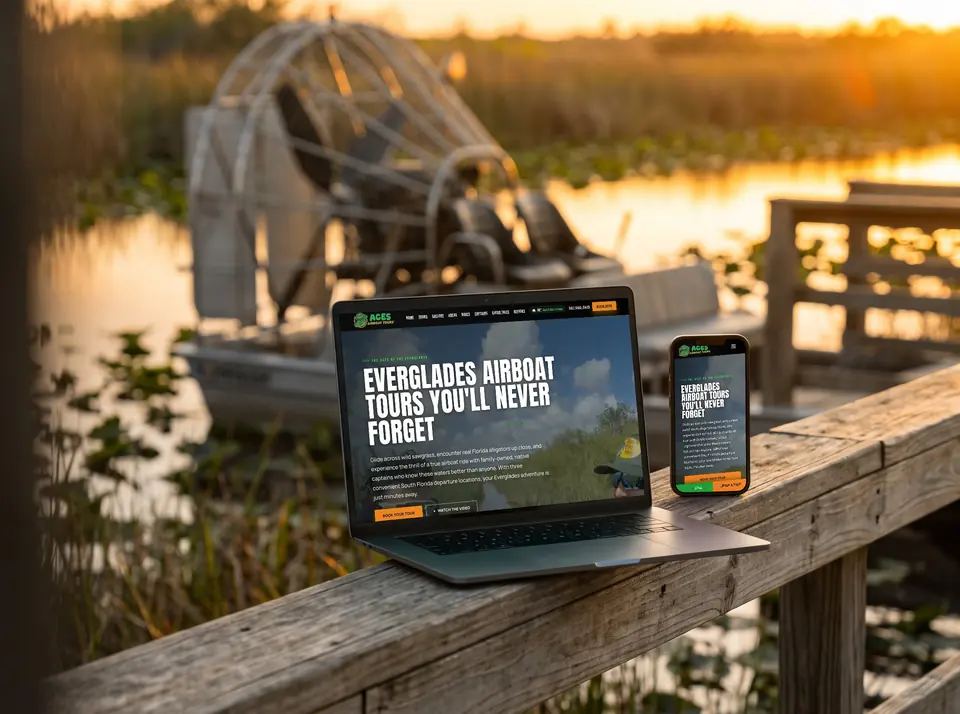 Tourism · Custom Theme + Local SEO + AdsAces Airboat Tours
A cinematic, booking-first site built to win travelers in the moment they search.
334pages live369booking-button clicks in the first 2 months
Read the case study
-
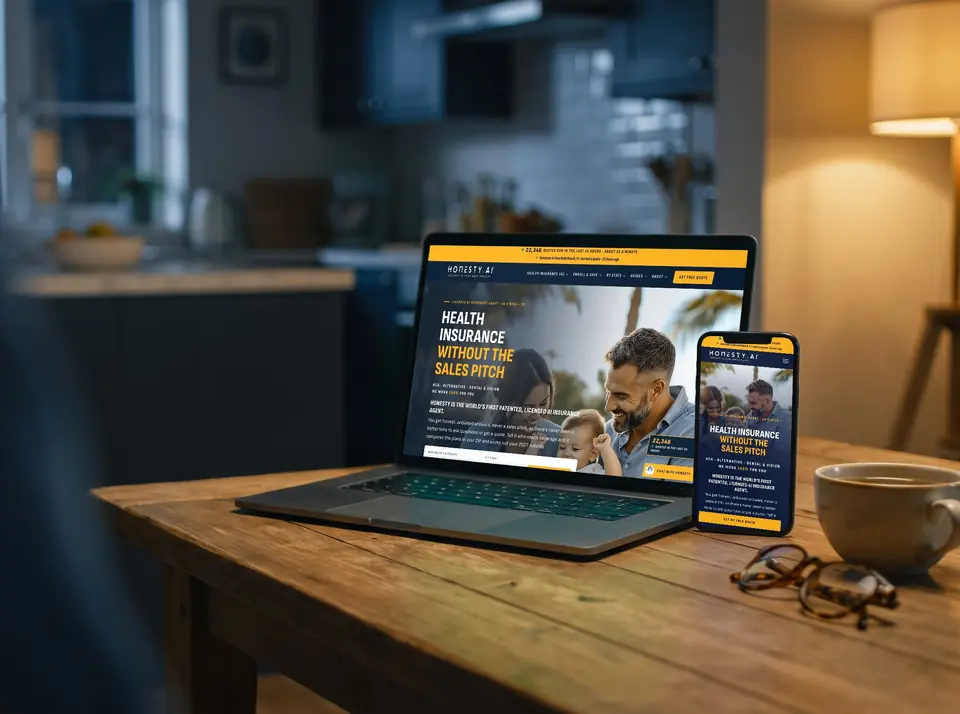 Insurance · AI Search Site + Live ChatHonestyInsure.com
A health insurance site written to be the answer AI search gives, with an AI agent that enrolls you right on the page.
144pages and guides indexed31states with their own local pages
Read the case study
07Questions
Questions about ads that don't pay.
How do I know if my ads are actually working?
Look at leads, not clicks. If you can't say how many calls and forms each campaign produced last month, the tracking isn't set up yet. That's the first thing we fix, because every other decision depends on it.
Should I just increase my ad budget?
Not until you know where the current budget goes. More money in a leaky account mostly buys more waste. Once tracking is in place and the dead spend is cut, raising the budget becomes a much safer call.
Do you work with Google Ads and Facebook ads?
Yes. We manage Google Ads and paid social, including Facebook and Instagram. The tracking works the same way on both, so you can compare them side by side.
Does this work for my industry?
Yes. The approach works for any business that wants calls, forms, bookings or sales from ads, from contractors and clinics to law firms, restaurants and online stores. The keywords and audiences change by business. The discipline of tracking every lead does not.
How long before I see a difference?
Tracking can usually be in place within the first couple of weeks, and that alone changes what you can see. Cutting waste often shows up in the first month. Growth after that depends on your market and how much room there is to scale.
Other problems we solve.
- 01We post on social media and nothing happensWe give your social a clear job, post content people actually stop for, and connect it to inquiries you can count.
- 02Customers can't find us on Google or MapsWe fix your Google Business Profile, local listings and service pages so nearby customers searching for what you do find you, trust you and call.
- 03ChatGPT and AI answers name our competitors, not usWe make your business clear, consistent and well documented across the web, so ChatGPT, Google's AI answers and other assistants have good reasons to mention you.
- 04Our website gets visits but nobody callsWe find where visitors give up on your site, then fix the pages, forms and calls to action so more of today's visitors call, book or request a quote.
One team. Every channel.
Websites, search, ads, content, CRM and AI software built by one in-house team, so every piece works with the others.
Find out what your ads really do.
Send us your account and we'll show you where the money goes and what we'd change first.