


Advertising · Amazon Ads
Amazon Advertising Agency.
 Reviewed by Adam Segall, Founder & CEOUpdated
Amazon ads that grow the whole brand. Sponsored ads, display and Amazon Marketing Cloud managed against total sales, not just ad sales, by the team that also builds your store and runs your Google and Meta ads.
01Overview
What an Amazon advertising agency should do for your brand
A good amazon advertising agency does more than raise bids until sales show up. It decides which searches your products deserve to win, which ones are draining budget, which listings are ready for traffic, and how Amazon fits with the rest of your marketing. At Unified, Amazon work sits inside our advertising practice, next to the specialists who run Google Ads and paid social, so one plan covers every place your buyers shop.
We will be straight with you. We have run paid media and built brands since 2006 for more than 1,100 businesses, including campaign work for Nu Skin and the brand site for Marc Anthony True Professional. We have not published an Amazon case study, so we will not quote you Amazon results. What we bring is the discipline that Amazon rewards: clean campaign structure, ruthless search term review, honest measurement and listings built to convert.
What changed at Amazon Ads in 2026
Amazon moved fast this year. On September 29, 2026 it announced Amazon Ads Agent, the new name for its unified buying platform, now with AI built in. Campaigns now sit in three groups: sponsored ads, Full-Funnel Campaigns, and Display, Video and Audio (DVA+). DVA+ folds together what used to be Sponsored Display, Sponsored TV and programmatic campaigns, and Amazon says it begins rolling out in late October. Any agency still pitching last year's playbook has not been paying attention.
The AI tools are useful, and we use them. They also optimize toward the goals and data you feed them, the same way Performance Max does on Google. Our job is to set the right goals, keep your branded searches from soaking up credit, and read the results with a skeptical eye before money moves.
The work we cover
- Sponsored Products: automatic and manual campaigns, keyword and product targeting, negatives and bids.
- Sponsored Brands: image, collection and video ads that send shoppers to your Brand Store or a product page.
- Display, video and DVA+: remarketing and audience campaigns on and off Amazon once the basics are profitable.
- Amazon Marketing Cloud: custom audiences and customer journey analysis for brands with enough volume.
- Listings and brand content: titles, images, A+ Content and Brand Store pages the ads depend on.
- Off-Amazon traffic: Google, Meta and email sending shoppers to Amazon, measured with Amazon Attribution.
02Ad types
Every Amazon ad type, and what each one is good for
Most brands start with Sponsored Products and stop there, and so do many agencies. A capable amazon advertising agency knows every format. That works until the easy keywords are taken and growth stalls. Each format below does a different job, and the order you add them in matters more than the budget split. This is the decision table we use when we plan an account.
| Ad type | What it does | Best for | Who can run it |
|---|---|---|---|
| Sponsored Products | Cost-per-click ads for single listings, in and beside search results and on product pages | Capturing shoppers already searching for what you sell | Professional sellers, vendors, KDP authors, agencies |
| Sponsored Brands | Image, collection or video ads featuring several products, linking to your Brand Store or a product page | Branded searches, defending your name, new product discovery | Vendors, agencies, and sellers enrolled in Brand Registry |
| Display, video and audio (DVA+) | Audience and contextual ads on Amazon, Twitch, Fire TV and third-party sites | Remarketing product viewers, reaching new audiences | Rolling out in Amazon Ads Agent from late October 2026 |
| Full-Funnel Campaigns | One campaign across sponsored, display, video and streaming TV, planned by Amazon's AI | Brands with steady sales history and clear goals | Amazon says all US advertisers |
| Amazon Marketing Cloud | A privacy-safe clean room for analysis and custom audiences | Brands with enough data to learn from | Eligible advertisers at no cost |

The details come from Amazon's own pages for Sponsored Products and Sponsored Brands. Sponsored Products charges per click with no monthly fee, and a listing must win the Featured Offer to show. Sponsored Brands can be bought per click, per thousand viewable impressions, or through reserved share of voice, which carries a minimum commitment.
Amazon DSP, DVA+ and Amazon Marketing Cloud
Amazon DSP was the programmatic side, and it was open even to brands that do not sell on Amazon. Its features now live in DVA+ advanced settings inside Amazon Ads Agent. Amazon Marketing Cloud is a clean room built on AWS that accepts only pseudonymized data and returns only aggregated results. You can build custom audiences from engagement and conversion events and study how shoppers move across ad types before they buy.
We bring in display and AMC when they can answer a real question, such as how many shoppers who saw a video ad later searched your brand name. For a young account with thin data, they are a distraction. For an established brand, they are often where the next gain hides.
Our rule of order: fix the listings, win the searches you deserve with Sponsored Products, defend and grow the brand with Sponsored Brands, then add display, video and AMC once the core is profitable.
03Why Unified
Why brands choose Unified as their Amazon advertising agency.
We treat Amazon as one channel in your brand, not a separate business with its own rules and its own vendor.
Senior people on your account
A senior paid media specialist manages your Amazon account every week, the same level of person who runs our Google and Meta work. No junior account coordinators learning on your budget, and no handoffs that lose the context of why a campaign was built the way it was.
Total sales, not vanity ACoS
We report ACoS, TACoS, new-to-brand orders and contribution margin by product, with branded searches split out. You see whether ads are building your brand on Amazon or just taking credit for sales you would have made anyway, and you can make budget decisions on real profit.
One team for every channel
The team that runs your Amazon ads also builds Shopify stores, runs Google and Meta ads, and produces photography and video. Your listings, store and campaigns share one plan and one message, instead of three vendors pointing at each other when results dip.
Your accounts stay yours
Your Seller Central or Vendor Central account and your ad account stay in your name. We work as invited users with the access we need, every change goes in a log you can read, and if you ever leave, you keep everything, including the campaign history.
04Keywords and metrics
Keyword harvesting, ACoS and TACoS without the spin
The search term report is the most valuable file in your account, and most brands never open it. If your amazon advertising agency does not review it weekly, ask why. It shows the real words shoppers typed before they clicked your ad. Some of those words become your best keywords. Others are burning money every day. Weekly harvesting is the habit that separates a managed account from a neglected one, and it is the first thing we install.
How we harvest keywords
- Run an automatic campaign alongside manual ones. Amazon's close match, loose match, substitutes and complements groups surface searches and products you would never think to target.
- Pull the search term report every week and sort by spend, orders and conversion rate, not by clicks.
- Move proven converters into exact match campaigns, where you control the bid, and add them as negatives in the discovery campaign so the two stop competing.
- Negate the waste with phrase or exact negatives. Amazon's targeting guide suggests waiting until a term has at least 20 clicks before you judge it, then letting negatives run two weeks before changing course.
- Harvest product targets too. Competitor and complementary ASINs that convert get their own product targeting campaigns.
- Log every change so next month's review compares like with like.
This is the same search term discipline we use on Google, where a clean account also feeds Quality Score. The tools differ, the habit is identical: pay for intent, block the rest, and keep a record.
ACoS vs TACoS, explained plainly
Amazon defines ACoS as ad spend divided by ad revenue, times 100. ROAS is the inverse: ad revenue divided by ad spend. TACoS, or total ACoS, is an industry term rather than an Amazon report column. It divides ad spend by your total sales on Amazon, paid and organic together. ACoS tells you whether a campaign pays for itself. TACoS tells you whether advertising is growing the business or just renting sales you would have made anyway.
| Metric | How it is calculated | What it tells you | Where it misleads |
|---|---|---|---|
| ACoS | Ad spend divided by ad-attributed sales | Efficiency of a campaign or keyword | Branded terms look brilliant and hide waste elsewhere |
| ROAS | Ad-attributed sales divided by ad spend | The same efficiency, read the other way | Same blind spots as ACoS |
| TACoS | Ad spend divided by total Amazon sales | Whether ads lift organic sales over time | Slow to move, so it needs months, not days |
| New-to-brand | Share of ad orders from first-time buyers of your brand | Whether ads find new customers | Can rise while profit falls if bids run hot |
| Contribution margin | Sales minus product cost, fees and ad spend | Whether you actually made money | Needs your cost data, which Amazon does not have |
We will not quote you a target ACoS before we see your margins. The right number depends on your product cost, Amazon fees, repeat purchase rate and whether a product is launching or mature. Anyone who promises a figure on the first call is guessing.
05Listings and brand
Listings, A+ Content and Brand Stores do half the selling
Ads buy the visit. The listing makes the sale, which is why an amazon advertising agency that ignores listings is only doing half the job. When a product page has weak images, a vague title or few reviews, more ad spend only makes the problem more expensive. Before we scale a campaign, we audit every listing it points at, the same leak hunt we describe in our guide to improving website conversion rate, adapted to Amazon's page layout.
Brand Registry comes first
Amazon Brand Registry is free, and it needs a pending or registered trademark for your brand name or logo. It opens A+ Content, Brand Stores, Sponsored Brands for sellers, Brand Analytics and tools to report infringement. If you sell your own brand and have not enrolled, that is usually step one of our engagement, before any campaign work.
- A+ Content: enhanced images, comparison charts and video on the product page. Amazon's A+ Content page says it is free for eligible sellers and cites internal data of sales lifts up to 8 percent for Basic and up to 20 percent for Premium. Treat those as Amazon's figures, not ours.
- Brand Stores: a free multipage storefront on Amazon, per Amazon's Stores page, and the best landing page for Sponsored Brands campaigns.
- Images and video: product photography that shows scale, texture and use. Our work with Joe Sale Photography, a fine art photographer, shows how we build pages around images that sell.
- Titles and bullets: written for the shopper first, with the words they actually search, taken from your search term report.
How Amazon fits with your Shopify site and Google and Meta ads
Amazon should not live in its own silo, and your amazon advertising agency should not either. Many brands sell on their own Shopify store and on Amazon, and the two can feed or starve each other. We decide product by product where each channel should send traffic. New customers might go to Amazon for the trust of Prime, while bundles and subscriptions go to Shopify, where you own the customer relationship and the email address.
When Google or Meta ads send shoppers to Amazon, Amazon Attribution measures what they did next: detail page views, add-to-carts, purchases and new-to-brand customers. It is free for brand-registered sellers and vendors. US brand owners can also enroll in the Brand Referral Bonus, which Amazon says averages 10 percent of qualifying sales as a credit against referral fees. That changes the math on off-Amazon ads, and few brands use it.
06Plan and hiring
A 90-day plan and how to judge any Amazon advertising agency
Here is what the first three months look like when you hire us as your amazon advertising agency. Every brand is different, but the order rarely changes: access and audit, then structure, then growth. You see every change in a shared log and a weekly note in plain English, and our UnifiedIQ platform keeps your site, search and ad reporting in one place.
| Phase | What we do | What you get |
|---|---|---|
| Days 1 to 15 | Access through your own accounts, Brand Registry check, full audit of campaigns, search terms, listings and margins by product | A written audit with the waste we found, the listings not ready for traffic, and a priority list |
| Days 16 to 45 | Restructure campaigns by product and intent, separate branded from non-branded, build negatives, fix the top listings and A+ Content | A clean account, a harvesting routine and listing changes live |
| Days 46 to 75 | Weekly harvesting, bid changes by margin, Sponsored Brands and Brand Store, Amazon Attribution tags on Google and Meta traffic | Clear ACoS, TACoS and new-to-brand reporting by product |
| Days 76 to 90 | Test display or DVA+ remarketing where the data supports it, review AMC readiness, plan the next quarter | A 90-day review and a budget plan built on your real numbers |
Questions to ask any Amazon advertising agency
- Will my Seller Central or Vendor Central account and my ad account stay in my name, with your team added as users?
- Do you report TACoS and contribution margin, or only ACoS?
- How often do you review search term reports, and can I see the change log?
- Do you split branded and non-branded campaigns so I can see what is truly new demand?
- Who works on my account each week, and how senior are they?
- What will you do to my listings before you spend more on ads?
- How does Amazon fit with my Shopify store, Google and Meta ads?
Red flags we see
- The agency wants to own your ad account or hold your Seller Central login. Amazon supports manager accounts with admin, editor and viewer roles, so there is no reason to hand over your keys.
- Reports show only ACoS, with branded and non-branded traffic lumped together.
- A promised ACoS or sales figure before anyone has seen your margins.
- All automatic campaigns, no negatives and no search term review.
- Long contracts with no audit, no change log and no exit plan for your data.
If you want a second opinion on your current account, send us read access and we will show you what we find. Our ecommerce marketing team can look at Amazon, your store and your ads together. Ask for an audit and you will get an honest read from an amazon advertising agency on where your Amazon budget is going.
07How we work
How an Amazon advertising engagement runs.
Audit first, structure second, then scale what earns its keep.
- Step 01
Audit
We review your campaigns, search term reports, listings, Brand Registry status, reviews and product margins. You get a written audit that names the waste, the listings not ready for traffic, and the opportunities, before we change a single bid.
- Step 02
Restructure
We rebuild campaigns around products and shopper intent, separate branded from non-branded, set up discovery and exact match campaigns, and add negatives. Listing and A+ Content fixes go live on the products that matter most.
- Step 03
Harvest and tune
Every week we mine search terms, move winners to exact match, cut waste, and adjust bids by margin. Sponsored Brands, the Brand Store and Amazon Attribution on Google and Meta traffic come in as the core stabilizes.
- Step 04
Expand and report
With a profitable core, we test display, video or DVA+ remarketing and review Amazon Marketing Cloud readiness. Monthly reviews cover TACoS, new-to-brand and margin by product, plus the plan for next month.
08What you get
What you get.
- 01
Account and listing audit
A written review of campaigns, search terms, listings and margins, with the waste and quick wins ranked by impact.
- 02
Campaign structure
Discovery, exact match, product targeting and branded campaigns, organized by product and intent, with negatives built in.
- 03
Weekly keyword harvesting
Search term review every week, winners promoted, waste negated, and every change recorded in a shared log.
- 04
Listing and A+ Content fixes
Titles, bullets, images, A+ Content and Brand Store pages improved on the products your ads depend on.
- 05
Honest reporting
ACoS, TACoS, new-to-brand and contribution margin by product, branded and non-branded split, in plain English.
- 06
Cross-channel plan
Amazon Attribution on Google and Meta traffic and a clear rule for which products go to Amazon and which to your Shopify store.
09Results
Proof, not promises.
Verified results from live client builds: rankings, AI citations and tracked inquiries, not projections.
-
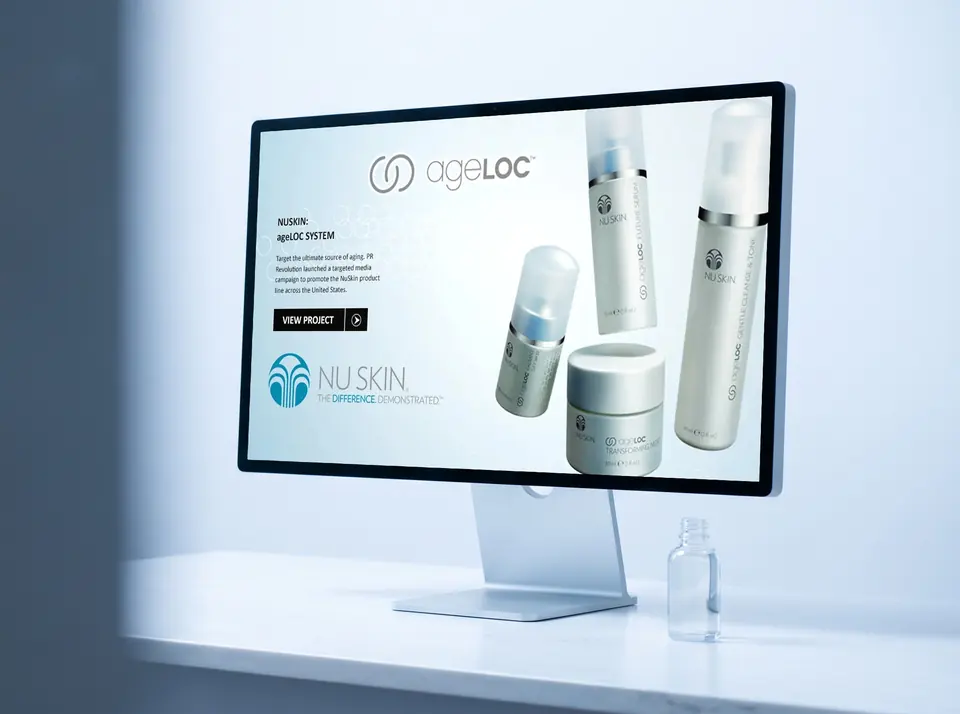 Global Brand · US Media CampaignNu Skin
A targeted media campaign that took Nu Skin's ageLOC system to audiences across the United States.
USnationwide media campaignageLOCthe anti-aging system we promoted
Read the case study
-
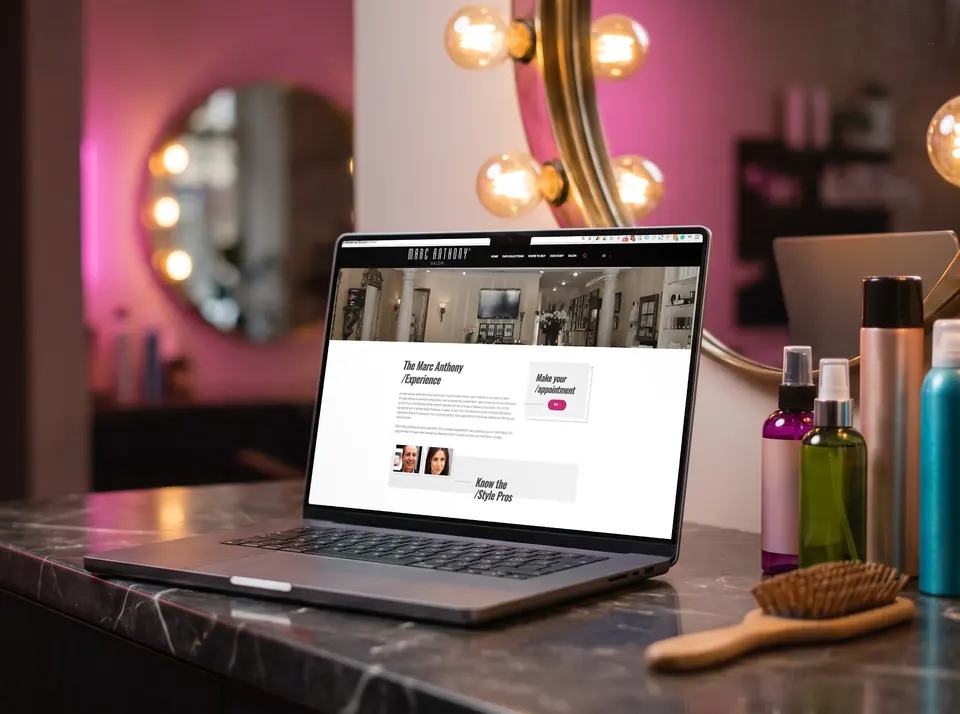 Consumer Brand · Website, Store + MediaMarc Anthony True Professional
A salon-quality hair care brand, rebuilt online as a store, a salon and a style magazine in one.
6hair collections in the launch store2markets: United States and Canada
Read the case study
-
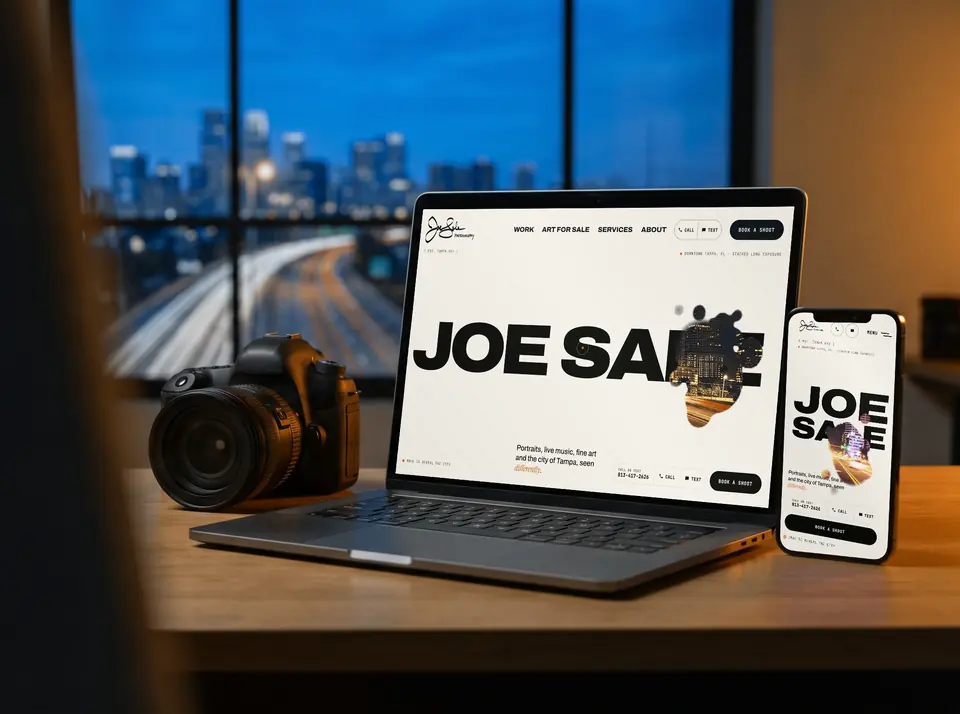 Photography · Custom Theme + BookingJoe Sale Photography
A portfolio you play with: the city is hidden under his name, and you wipe it away.
50SEO landing pages, every one scoring 99–10047portfolio frames, uncropped, filterable
Read the case study
10Questions
Amazon advertising questions, answered.
What does an Amazon advertising agency actually do?
It plans and manages your sponsored ads, reviews search term reports to add good keywords and block waste, sets bids by margin, improves the listings ads point to, and reports on whether advertising grows your total sales. A good one also connects Amazon to your own store and your Google and Meta ads instead of treating it as a separate world.
Do you have Amazon case studies?
Not published ones, and no honest amazon advertising agency should invent results. We have run paid media since 2006 for more than 1,100 businesses, including campaign work for Nu Skin and the brand site for Marc Anthony True Professional. On Amazon we bring the same habits: clean structure, weekly search term review, listings that convert and honest reporting on total sales.
What is a good ACoS?
There is no single good number. The right ACoS depends on your product cost, Amazon fees, how often customers reorder and whether a product is launching or mature. A launch can justify a high ACoS to build sales history and reviews. A mature product should usually run leaner. We set targets by product after we see your margins.
What is the difference between ACoS and TACoS?
ACoS divides ad spend by sales the ads are credited with. TACoS divides ad spend by your total Amazon sales, including organic. ACoS shows whether a campaign is efficient. TACoS shows whether advertising is lifting the whole business over time. If ACoS looks great but TACoS keeps rising, ads may be taking credit for sales you would have made anyway.
Do I need Brand Registry?
If you sell your own brand, yes in practice. Brand Registry is free and needs a pending or registered trademark. For sellers it opens Sponsored Brands, A+ Content, Brand Stores, Brand Analytics and infringement reporting. Without it you are limited mostly to Sponsored Products and basic listing tools.
Will I own my accounts?
Yes, and any amazon advertising agency should agree to this. Your Seller Central or Vendor Central account and your Amazon Ads account stay in your name. Amazon lets you add our team as users with set roles, so you never hand over a password. You keep all campaign history, reports and creative if you ever change agencies.
Can you run our Shopify store and Google ads too?
Yes. Our in-house team builds Shopify stores, runs Google and Meta ads, and produces photography and video. That lets us decide which products to push to Amazon and which to your own store, measure Google and Meta traffic sent to Amazon with Amazon Attribution, and keep one message across every channel.
How fast will we see results?
Waste cuts from negatives and restructuring often show within the first month. Gains from listing improvements, Sponsored Brands and new keywords build over the following weeks. TACoS and organic rank move slowest, so we judge them over a full quarter. We will tell you what we expect for your account after the audit, not before.
Pairs well with.
- Google AdsSearch and Shopping ads managed to sales
- Paid SocialMeta and social ads that feed every channel
- Shopify DevelopmentCustom stores built to sell
- Ecommerce Marketing AgencySearch, ads and email for stores
- Performance Max CampaignsHow to run Google's AI campaigns well
- Nu SkinBeauty and wellness media campaign
One team. Every channel.
Websites, search, ads, content, CRM and AI software built by one in-house team, so every piece works with the others.
Where we work
Let's look at your Amazon account.
Send us read access for an audit, and we will show you where your Amazon budget is going and what we would fix first. Call (954) 758-7200 or (973) 858-5988.