


Advertising · PPC
PPC that pays for itself.
 Reviewed by Adam Segall, Founder & CEOUpdated
Paid search and paid social managed to the number that matters: tracked leads and sales, with a senior specialist on your account every week.
01Overview
What a good PPC agency actually does all week
A good ppc agency does far more than write ads and set budgets. The real work is deciding which searches you should pay for, which you should block, how each lead gets counted, and where the next unit of budget will do the most good. At Unified, paid media sits inside our advertising practice, run by the same in-house team that builds websites, tracking and CRM, so nothing falls between vendors.
Most accounts we inherit from another PPC agency are not broken in obvious ways. The ads run, the clicks come in, the monthly report shows a cost per conversion. The problem hides one layer down: conversions that count page views as leads, broad match keywords spending on job seekers, and nobody checking which calls became customers. Fixing that layer is what separates management from babysitting.
What you should expect from a PPC agency every month
- Search term reviews at least weekly in the first 90 days, with new negatives added from real queries, not a template list.
- Conversion tracking you can audit: a written list of what counts as a lead, where it fires, and how calls are measured.
- Budget moves with a reason: every shift between campaigns or platforms tied to cost per qualified lead, not clicks.
- Creative and landing page tests running at all times, one variable at a time, so you learn something each cycle.
- A plain-language report that names what worked, what did not and what changes next month.
Our Google Ads management page covers search, Performance Max and Shopping in detail, and paid social covers Meta, TikTok and LinkedIn. This guide is the buyer's view across all of them: which platform fits which job, how we structure an account, what an audit usually finds and how to judge any agency before you sign.
02Platforms
Google vs Microsoft vs Meta vs Local Services Ads
Pay-per-click is not one channel. Each platform reaches a different mindset, bills differently and needs different tracking. The table is how we decide where a new budget starts. Any PPC agency you hire should be able to explain why your budget starts where it does. Most local service businesses begin with Google Search and add the others once tracking proves which leads turn into revenue.
| Platform | What the buyer is doing | Best for | Watch out for |
|---|---|---|---|
| Google Search | Typing a problem or service right now | High-intent leads, emergency services, local and national B2B | Broad match drifting into unrelated queries without strong negatives |
| Performance Max | Seeing ads across Search, YouTube, Display, Maps and Gmail | Ecommerce with a clean product feed, accounts with solid conversion data | Less visibility into where spend goes; weak signals train it on junk leads |
| Microsoft Advertising (Bing) | Searching on Bing, Edge and partner sites | Extending a proven Google account to more searchers, often older and desktop-heavy | Imported campaigns need their own review; settings do not always map one to one |
| Meta (Facebook and Instagram) | Scrolling, not searching | Creating demand, offers, retargeting, products people do not know to search for | Creative fatigue, and pixel-only tracking that misses conversions after privacy changes |
| Google Local Services Ads | Searching for a local pro and seeing verified providers at the top | Home services and some professional services that qualify for the badge | You pay per lead, so lead disputes and fast answering matter a lot |

Microsoft lets you import campaigns directly from Google Ads, which makes it a low-effort second channel once Google is profitable. We still rebuild bids, negatives and ad copy for that audience instead of copying blindly. Local Services Ads bill per lead rather than per click, per Google Local Services Help, which changes how you manage them; our Local Services Ads guide walks through setup and disputes.
A rule we use: do not add Performance Max until Search has at least a few weeks of conversions you trust. Our Performance Max guide explains how to keep control once you do.
03Why Unified
Why businesses pick Unified as their PPC agency.
Twenty years of paid media, one in-house team, and tracking we built ourselves.
Senior hands on every account
Your account is run by a senior specialist, not handed to a junior after the sales call. The person who audits your account is the person who rebuilds it, reviews your search terms and explains the report, so decisions carry context instead of getting lost between departments.
Tracking first, bids second
We do not raise budgets on numbers we cannot trust. Every engagement starts by fixing conversion tracking, call measurement and the CRM link, so the bidding systems learn from real leads and the report you read reflects money, not activity.
One team for ads, pages and CRM
Ads only work as well as the page and follow-up behind them. Our designers build the landing pages, our developers wire the tracking, and our CRM team builds the follow-up, all in-house, so a weak link gets fixed in days rather than argued about.
You own everything
Ad accounts, conversion actions, audiences and data stay in your name with full admin access. If we ever part ways, you keep the history and the learning. We earn the next month by results, never by holding your account hostage.
04Structure
Account structure and negative keywords that protect your budget
Structure is the first thing a PPC agency should fix, because it decides what you can control. When every service sits in one campaign, the cheapest service eats the budget and you cannot set a different target for each. We build campaigns around how your business makes money: one campaign per service line or margin tier, tight ad groups by theme, and locations set by where you actually take jobs.
How we structure a PPC account
- Campaigns by service and value. Emergency repair and planned installs get separate campaigns and budgets, because their lead value is different.
- Ad groups by intent theme. Each group has keywords that share one landing page and one message.
- Keywords by match type on purpose. Exact and phrase for proven terms, broad only with Smart Bidding and a trusted conversion signal.
- Shared negative lists. Account-wide lists for jobs, free, DIY and competitor names, plus campaign-level negatives to stop internal overlap.
- One landing page per theme. Matching the search to the page raises relevance; our Quality Score guide explains why it matters.
Negative keywords: the part most accounts get wrong
Google's own negative keyword documentation carries a detail many advertisers miss: negative keywords do not match close variants. Blocking "job" does not block "jobs", and blocking "free" does not block "freebie". You have to add plurals, misspellings and synonyms yourself. Google also warns that too many negatives can shrink reach, so we add them from real search terms rather than giant downloaded lists.
| Negative theme | Example queries it blocks | Why it matters |
|---|---|---|
| Employment | jobs, hiring, salary, careers, training | Job seekers click service ads constantly |
| DIY and how-to | how to, diy, tutorial, youtube | Researchers who want to do it themselves |
| Price shoppers | free, cheapest, coupon | Low-intent searches for many service businesses |
| Wrong service | services you do not offer, adjacent trades | Broad match loves stretching into these |
| Competitors | other brand names | Usually low conversion and can draw complaints |
| Wrong location | cities and states you do not serve | Location settings alone do not catch query intent |
Pair structure with landing pages built for the click. A generic homepage loses people the ad just won. Our landing page design team builds pages per campaign theme, and our Google Ads for small business guide shows a lean starter structure if you are spending carefully.
05Tracking and audits
What a PPC agency audit finds in most accounts
Bidding algorithms optimize toward whatever you tell them is a conversion. Google's Smart Bidding documentation describes how the system learns from conversion data, so bad data produces confident, wrong decisions. That is why every engagement starts with measurement. Our analytics and reporting team sets up GA4 key events, Google Ads conversions and the CRM connection before we touch bids.
Phone calls deserve special care. Google lists five ways to track call conversions, from calls on ads to calls imported from a CRM, and many accounts only count taps on a phone number, which says nothing about whether a real conversation happened. Our call tracking guide compares the methods. UnifiedIQ, our own platform, tracks every call and form back to its source and can send offline conversions to Google Ads, so bidding learns from leads that turned into customers.
Google's offline conversion import works by storing the click ID with each lead and sending it back when the sale happens. Google now recommends enhanced conversions for leads over the older method, and it is moving uploads to its Data Manager API, so check that whoever runs your account is current on the setup.
What our PPC agency audits find again and again
| Finding | What it costs you | Our fix |
|---|---|---|
| Page views or button clicks counted as leads | The algorithm chases cheap, fake conversions | Count only real form submits and qualified calls |
| Search partners and Display left on by default | Spend on low-quality placements | Test them separately with their own budget |
| No negative lists, or one stale list | Spend on jobs, DIY and wrong-service queries | Weekly search term review and shared lists |
| Every service in one campaign | Cheap services starve profitable ones | Split by service and lead value |
| Calls not tracked by length or outcome | No idea which calls became customers | Call conversions plus CRM outcomes |
| Location set to people interested in the area | Clicks from outside your service area | Presence-only targeting where it fits |
| Ads sending every click to the homepage | Lower relevance and conversion rate | Dedicated landing pages per theme |
If you want the full picture before hiring any PPC agency, a marketing audit covers ads, tracking, site and SEO in one pass, with a written list of fixes ranked by impact.
06Proof and hiring
How to judge a PPC agency before you sign
Ask any PPC agency to show how it measures, not just what it reports. For Nusbaum Medical Centers, a medical weight loss and aesthetics group in New Jersey, the tracking we built recorded 1,645 inquiries in the past 12 months, each tied back to its source. For Aces Airboat Tours in the Everglades, we built 5 Google Ads campaigns alongside a 334-page site that logged 369 booking-button clicks in its first 2 months.
Regulated categories need extra care. For HonestyInsure.com, a health insurance site, we built 144 indexed pages and guides and 31 state pages, the kind of landing page depth a regulated category needs before any paid traffic is sent, because ad platform policies there are strict. If you are in medicine or insurance, our healthcare marketing page covers those rules.
Questions to ask any PPC agency
- Who owns the ad account, and will I keep full admin access if we part ways?
- Exactly which actions count as a conversion, and how are phone calls measured?
- How often do you review search terms, and can I see the negative lists?
- Who works on my account day to day, and how senior are they?
- How do you connect ad clicks to what happened in my CRM?
- What would make you recommend spending less?
Red flags when hiring a PPC agency
- The agency creates the account under its own name and will not hand over admin access.
- Reports show clicks, impressions and click-through rate, but never cost per qualified lead.
- Every client gets the same campaign template regardless of industry.
- Promises of first-position ads or fixed results before anyone has seen your data.
Industry matters too. A home services account lives on calls and emergency intent, while an ecommerce account lives on feeds and return on ad spend. When you are ready, talk to us and we will review your current account and tell you plainly what we would change first.
07How we work
How a PPC engagement runs.
Measurement first, then structure, then scale.
- Step 01
Audit and tracking fix
We review account structure, search terms, conversions and landing pages, then fix tracking before anything else. You get a written list of findings ranked by cost, and a clear definition of what counts as a lead in your business.
- Step 02
Rebuild the structure
Campaigns get split by service and lead value, negative lists are built from real queries, ads are rewritten for each theme, and landing pages are matched to intent. Budgets move to the campaigns with the clearest path to customers.
- Step 03
Weekly optimization
Search terms, bids, budgets, ads and placements are reviewed every week. We add negatives, pause waste, test one variable at a time and feed qualified leads back to the platforms so their bidding learns who your customers are.
- Step 04
Scale what works
Once cost per qualified lead is steady, we expand: more keywords, Microsoft Advertising, Meta retargeting or Local Services Ads, each with its own tracking. You approve every new channel and see its results separately.
08What you get
What you get.
- 01
Account audit
A written review of structure, search terms, conversion setup and landing pages, with every finding ranked by how much budget it wastes.
- 02
Conversion tracking
GA4 key events, Google Ads conversions, call tracking and CRM connection set up and documented so you know exactly what is counted.
- 03
Clean campaign structure
Campaigns by service and value, themed ad groups, deliberate match types and shared negative keyword lists built from your real queries.
- 04
Ads and landing pages
Responsive search ads, assets and dedicated landing pages for each theme, tested one variable at a time.
- 05
Offline conversion feedback
Qualified leads and sales from your CRM sent back to Google Ads where your setup allows, so bidding learns from customers.
- 06
Monthly plain-language report
Cost per qualified lead by campaign and platform, what changed, what we learned and what happens next month.
09Results
Proof, not promises.
Verified results from live client builds: rankings, AI citations and tracked inquiries, not projections.
-
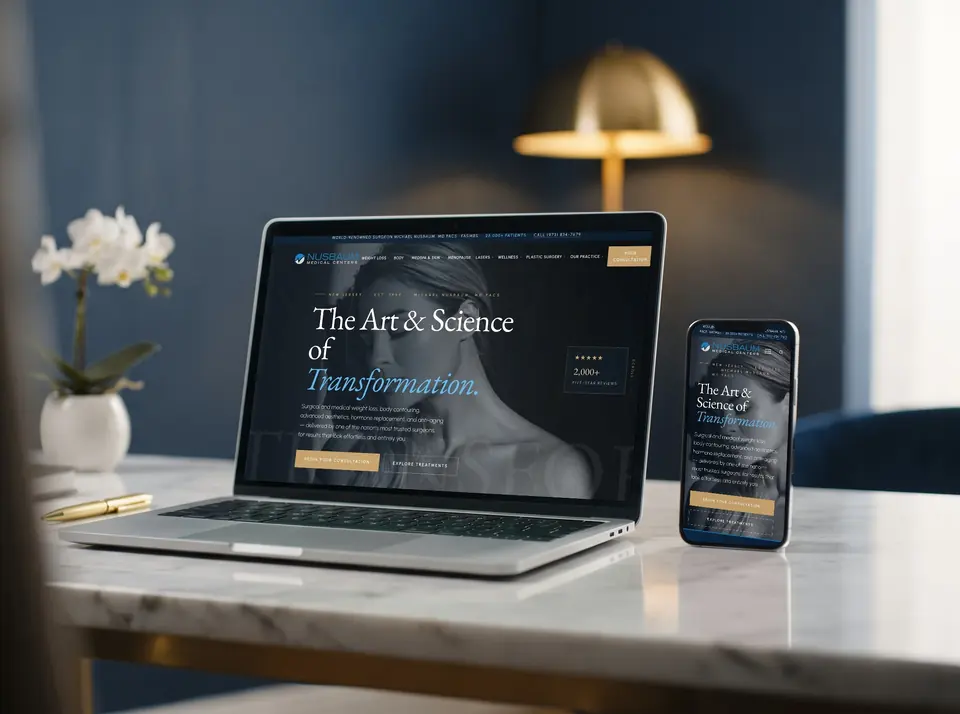 Medical · Custom Theme + SEO + AdsNusbaum Medical Centers
A 3,000-page medical authority that Google ranks first and ChatGPT recommends by name.
3,066pages live1,285search terms ranking on Google
Read the case study
-
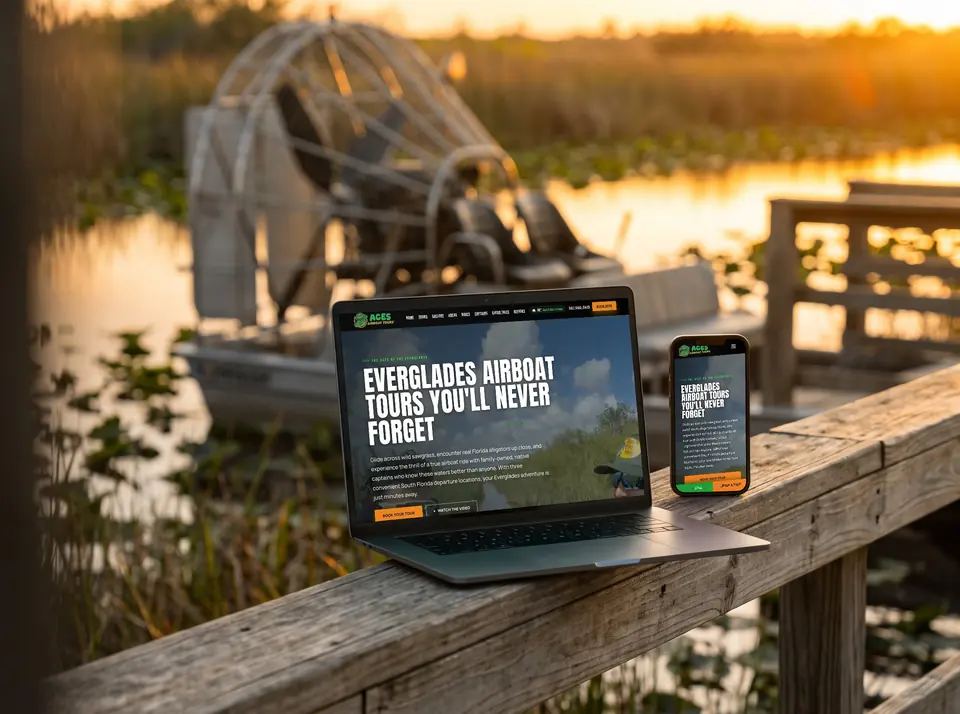 Tourism · Custom Theme + Local SEO + AdsAces Airboat Tours
A cinematic, booking-first site built to win travelers in the moment they search.
334pages live369booking-button clicks in the first 2 months
Read the case study
-
 Insurance · AI Search Site + Live ChatHonestyInsure.com
A health insurance site written to be the answer AI search gives, with an AI agent that enrolls you right on the page.
144pages and guides indexed31states with their own local pages
Read the case study
10Questions
PPC agency questions, answered.
What does a PPC agency do?
A PPC agency plans, builds and manages pay-per-click ads on platforms like Google, Microsoft Bing and Meta. The daily work is choosing which searches to pay for, blocking wasted queries with negative keywords, writing ads, building landing pages, setting up conversion tracking and moving budget toward the campaigns that bring in real customers.
Which platform should I start with?
A good PPC agency starts where intent is highest. For most local service businesses, Google Search comes first because people are actively looking for the service. Microsoft Advertising is a natural second step because campaigns can be imported. Meta works best for creating demand, offers and retargeting. Local Services Ads suit home services that qualify for the verified badge.
How long until PPC shows results?
Clicks start on day one, but useful results take longer. The first weeks are spent fixing tracking and collecting search term data. Most accounts need several weeks of clean conversion data before bidding settles and the cost per lead becomes predictable enough to scale with confidence.
Do I keep my ad account if I leave?
Yes. With Unified, ad accounts, conversion actions, audiences and history stay in your name with full admin access. A PPC agency that builds your account under its own ownership takes years of learning with it when you part ways, so ask about ownership before you sign with anyone.
How do you track phone calls from ads?
We use Google's call conversion options, such as calls from ads and calls from your website, set a minimum call length, and connect call outcomes in your CRM. UnifiedIQ tracks every call and form back to its source and can send offline conversions to Google Ads so bidding learns from real customers.
What are negative keywords and why do they matter?
Negative keywords stop your ads from showing on searches you do not want, like jobs, DIY or services you do not offer. Google's documentation notes that negatives do not match close variants, so plurals and synonyms must be added by hand. Weekly search term reviews keep the lists current.
Is Performance Max a good idea?
It can be, especially for ecommerce with a strong product feed. It works best once your account already has conversion data you trust, because it optimizes heavily toward whatever you count as a conversion. We add it after Search is stable and keep brand and search terms reporting under watch.
Can you promise specific results?
No honest PPC agency can promise specific results before seeing your data. What we commit to is clean tracking, weekly optimization, full transparency and plain reporting on cost per qualified lead. If a channel is not working, we will say so and move the budget rather than hide it in a report.
Pairs well with.
One team. Every channel.
Websites, search, ads, content, CRM and AI software built by one in-house team, so every piece works with the others.
Where we work
Get a straight answer on your account.
Send us access or call (954) 758-7200, and a senior specialist will tell you what is wasting budget and what we would fix first.