


Websites · WordPress
WordPress, minus the bloat.
 Reviewed by Adam Segall, Founder & CEOUpdated
Custom WordPress themes written by hand for your business: fast on real phones, light on plugins, simple for your team to edit, and built to rank.
01Overview
WordPress website design without page builders
WordPress website design comes in two very different forms. One is a commercial theme plus a drag-and-drop page builder, assembled in a few weeks. The other is a custom theme, written for your content and your buyers, where every line of code is there for a reason. Both run on WordPress and both look fine in a sales demo. Only one stays fast, secure and cheap to maintain three years later.
Unified has built websites since 2006 for more than 1,100 businesses, and we hand-code every theme. No Elementor, no Divi, no Avada. We design first in a clickable prototype through our website design process, then our development team turns it into a lean theme your editors can use without breaking the layout.
WordPress itself is a sound choice. It is open source, you own your content and code, it runs on almost any host, and it handles everything from a ten-page service site to thousands of location and service pages. The risk is never WordPress. It is what gets bolted on top of it.
What a custom WordPress build gives you
- Speed: templates that load only the CSS and scripts each page uses, instead of a builder's full library on every page.
- Fewer plugins: features like sliders, tabs, FAQ blocks and forms are built into the theme where it makes sense, so there is less to update and less to break.
- Clean structure: semantic HTML and schema that search engines and AI answer engines can read clearly.
- Guardrails for editors: your team edits text, images and sections in fields and blocks designed for your content, without layout controls that let one stray click wreck a page.
02Hand-coded vs builder
Hand-coded themes vs page builder themes
WordPress supports two official theme types. The WordPress developer handbook describes block themes and classic themes: block themes are built from HTML block templates and edited in the Site Editor, while classic themes use the PHP templating system that has been supported since 2005. We build both, and pick based on how your team works. Page builders are a third layer on top of either, and that layer is where most problems start.
| Factor | Hand-coded custom theme | Commercial theme plus page builder |
|---|---|---|
| Page weight | Only the code each template needs | Builder CSS and JavaScript load sitewide, often with nested wrapper markup |
| Core Web Vitals | Easier to keep in the good range | Often fails on mobile; fixes fight the builder |
| Plugins | A short list chosen for real needs | Add-on packs, widget libraries and helper plugins pile up |
| Editing | Structured fields and blocks matched to your content | Total freedom, which also means easy to break layouts |
| Security surface | Small; less third-party code to patch | Larger; builder and add-on vulnerabilities affect you |
| Lock-in | Plain WordPress content you can move | Content trapped in builder shortcodes or proprietary data |
| Upfront time | Longer: design, then build | Shorter, until customization starts |
| Cost of ownership | Lower over years of updates | Higher as conflicts and rework add up |
Builders still have a place. A short-lived campaign microsite or an internal page that changes daily may be fine on one. For the site your business depends on, we have rebuilt enough builder sites to know the pattern: fast at launch, slower every year, then a full rebuild. Our website redesign services exist partly to clean that up.
Ask any agency pitching WordPress website design one question: if we part ways, can another developer open the theme files and understand them in an afternoon? With hand-coded themes, the answer should be yes.
03Why Unified
Why businesses choose Unified for WordPress design.
We build WordPress the slow, careful way once, so you do not have to rebuild it in three years.
Every theme hand-coded
We do not resell templates or assemble pages in Elementor, Divi or Avada. Each theme is written for your content and buyers, which keeps pages light, editing safe and the code readable by any competent developer who follows us. You own the code, and nothing breaks when a builder vendor changes its pricing or roadmap.
Plugins kept to a short list
Features that belong in the theme go in the theme. The plugins that remain are well maintained, documented and chosen for a real job, which shrinks the security surface and makes updates routine instead of risky. You get a written record of each plugin and why it is there.
Built for search and leads
The same in-house team runs SEO, Google Ads and tracking, so every template ships with schema, clean headings, fast load times and conversion tracking wired into UnifiedIQ from the first day. Each template is scored for SEO before launch, and every call and form is tied to its source, so you can see which pages actually produce business.
Cared for after launch
We host, patch, back up and monitor the sites we build through our care program. When something needs to change, you talk to the people who wrote the theme, not a ticket queue that has never seen it. Updates are tested on staging before they reach your live site.
04Plugins and security
WordPress plugins and security: fewer moving parts
The official WordPress hardening guide lists outdated plugins and software among the common routes attackers use, and it tells site owners to keep WordPress current, update plugins regularly, remove the ones they do not use, install only from WordPress.org or well-known companies, and enable two-step authentication. A lean custom theme makes all of that easier, because there is simply less to keep track of.
Our plugin rules
- Every plugin earns its place. If a feature is a few lines of theme code, it goes in the theme. If it is a serious system like forms, ecommerce or multilingual content, we use a well-maintained plugin.
- Active maintenance only. We check update history, compatibility with current WordPress and the developer's track record before installing anything.
- No code-execution plugins. The hardening guide warns against them; custom templates do the same job with less risk.
- One tool per job. No overlapping SEO, caching or security plugins fighting each other.
- Documented list. You get a record of every plugin, why it is installed and who maintains it.
Security hardening we apply at launch
- Dashboard file editing disabled, tight file permissions and least-privilege user roles.
- Two-step authentication for administrators and login rate limiting.
- Automatic minor core updates, scheduled plugin updates tested on staging first.
- Off-site backups with versioned snapshots, so a clean copy exists from before any problem.
- Uptime and security monitoring through website care, with patches handled by the team that built the theme.
That is the difference between a WordPress site that quietly gets hacked through a forgotten slider plugin and one that has nothing forgotten in it. Good WordPress website design includes the boring parts.
05Speed and SEO
Speed, SEO and accessibility built into the theme
Google's Core Web Vitals define a good experience as Largest Contentful Paint of 2.5 seconds or less, Interaction to Next Paint of 200 milliseconds or less, and Cumulative Layout Shift of 0.1 or less, at the 75th percentile of real page loads. Builder themes often miss those on mobile. A hand-coded theme starts with a budget and keeps to it. Our Core Web Vitals guide breaks down what moves each metric.
| Layer | What we build in | Why it matters |
|---|---|---|
| Images | Modern formats, correct sizes, explicit dimensions, lazy loading below the fold | Faster LCP and no layout shift |
| Scripts | Deferred, page-specific, no jQuery dependency unless needed | Better INP on mid-range phones |
| Fonts | Self-hosted, subset, preloaded where it counts | No invisible text or late swaps |
| Markup | Semantic headings, landmarks and clean lists | Clear to search engines, screen readers and AI |
| Schema | Organization, LocalBusiness, Service, FAQ and breadcrumbs where they fit | Eligible for rich results and clearer entity signals |
| SEO controls | Titles, meta, canonicals and sitemaps managed per page | No plugin needed to fix what the theme should do |
| Accessibility | Contrast, focus states, labels and keyboard paths toward WCAG 2.2 AA | More people can use the site, and fewer legal headaches |
We run the full technical SEO checklist before launch, then connect every page to UnifiedIQ, our platform that scores each page for SEO and tracks calls and forms back to their source. That ties WordPress website design to the results it is supposed to produce, so we know which templates earn leads and which need work.
It shows in the numbers. Joe Sale Photography runs 50 SEO landing pages on a custom theme, every one scoring 99 to 100. Aces Airboat Tours launched 334 pages and logged 369 booking-button clicks in its first two months.
06Plan and hire
Planning a WordPress website design project
Most WordPress builds for service businesses follow the same arc, with time driven by page count and how ready the content is. Larger builds such as the Center for Spiritual Living, with 753 pages and 732 events moved to a custom AI-assisted events platform, add time to content and data migration, not to the theme.
| Phase | Typical length | Outcome |
|---|---|---|
| Discovery | 1 to 2 weeks | Goals, audience, sitemap, content plan, URL map if replacing a site |
| Design | 2 to 4 weeks | Clickable desktop and mobile prototype you approve |
| Theme build | 3 to 6 weeks | Hand-coded templates, editor blocks, forms, schema, tracking |
| Content load and QA | 1 to 2 weeks | Pages populated, speed, accessibility and device testing |
| Launch and training | 1 week | Go-live, redirects, sitemap submission, editor training |
Questions to ask any WordPress agency
- Is the theme custom-coded or a commercial theme with a page builder?
- How many plugins will the site run at launch, and why is each one there?
- Who owns the theme code, and is it in version control?
- What Core Web Vitals and accessibility targets do you build to?
- How are updates tested before they reach the live site?
- What can my team edit without a developer?
Red flags
- Custom design promised, but the demo login shows a builder interface.
- Twenty or more plugins on a simple brochure site.
- No staging site, so updates are tested on the live one.
- No plan for redirects when replacing an existing site.
- Hosting and maintenance left to you after launch with no handover.
If you sell online, compare WordPress with Shopify development before you decide, and read our conversion leak audit for what the finished site should do. See the full Websites practice, or start a conversation about your build.
07How we work
How a WordPress website design project runs.
Prototype first, hand-coded theme second, plugins last.
- Step 01
Discover
Every WordPress website design project starts with your services, buyers and goals. We review your current site and analytics, and plan the sitemap, content and any redirects. You leave with a clear page list and a plan for every existing URL.
- Step 02
Design
We design key templates in a clickable prototype for desktop and mobile and refine them with you. Development only starts once you have clicked through and approved the real experience. Feedback at this stage is cheap to act on, and it keeps the build on schedule.
- Step 03
Build
We hand-code the theme with editor blocks and fields shaped to your content, add schema, forms and tracking, and tune every template against Core Web Vitals and accessibility targets on staging. Your team gets a preview login to see progress as templates come together.
- Step 04
Launch and care
We load content, test devices and redirects, launch, submit sitemaps and train your editors. Then our care program keeps WordPress, plugins and backups current, with monitoring and support. You get a written guide for common editing tasks, so nothing depends on memory.
08What you get
What you get.
- 01
Custom WordPress theme
A hand-coded block or classic theme built for your content, with no page builder, kept in version control and fully owned by you.
- 02
Clickable prototype
Desktop and mobile designs for key templates that you click through and approve before any production code is written.
- 03
Editor-friendly blocks
Structured fields and blocks for your sections, so your team updates text and images safely without touching layout code.
- 04
Lean plugin stack
A short, documented list of maintained plugins, each with a stated purpose, plus security hardening applied at launch.
- 05
SEO and tracking layer
Schema, titles, sitemaps, GA4 and conversion tracking set up and connected to UnifiedIQ page scoring and lead attribution.
- 06
Training and care
Editor training and written notes at launch, then updates, backups, monitoring and support through our care program.
09Results
Proof, not promises.
Verified results from live client builds: rankings, AI citations and tracked inquiries, not projections.
-
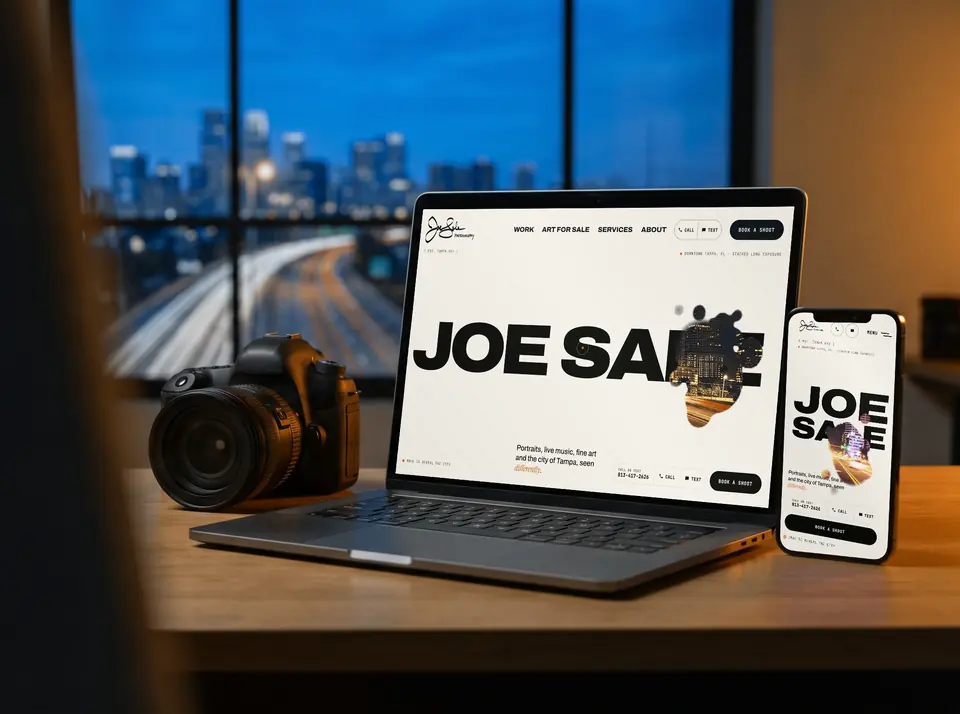 Photography · Custom Theme + BookingJoe Sale Photography
A portfolio you play with: the city is hidden under his name, and you wipe it away.
50SEO landing pages, every one scoring 99–10047portfolio frames, uncropped, filterable
Read the case study
-
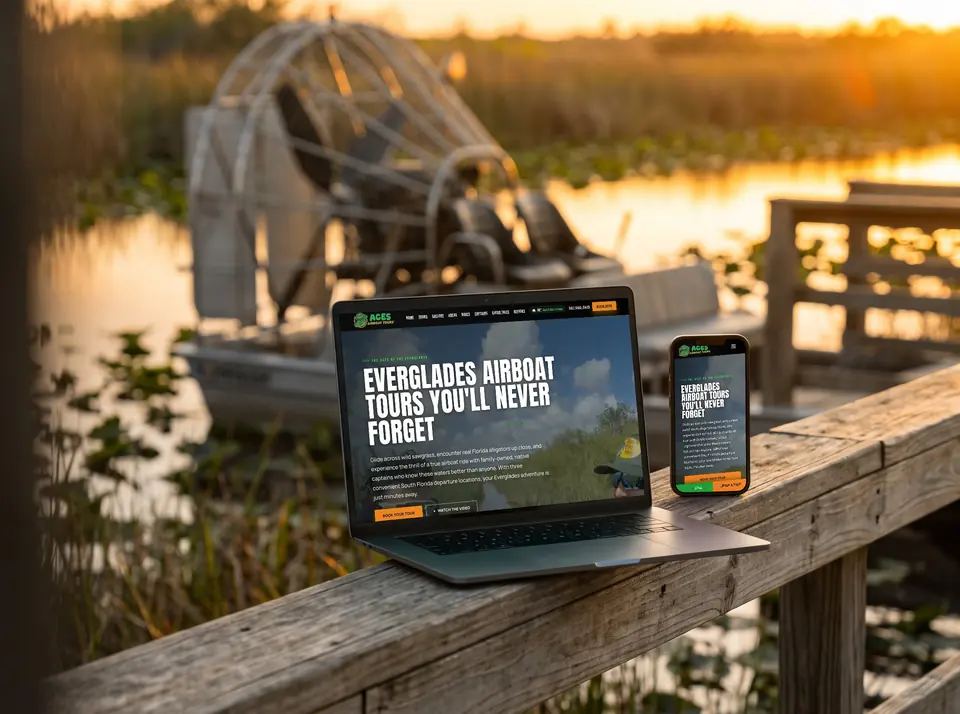 Tourism · Custom Theme + Local SEO + AdsAces Airboat Tours
A cinematic, booking-first site built to win travelers in the moment they search.
334pages live369booking-button clicks in the first 2 months
Read the case study
-
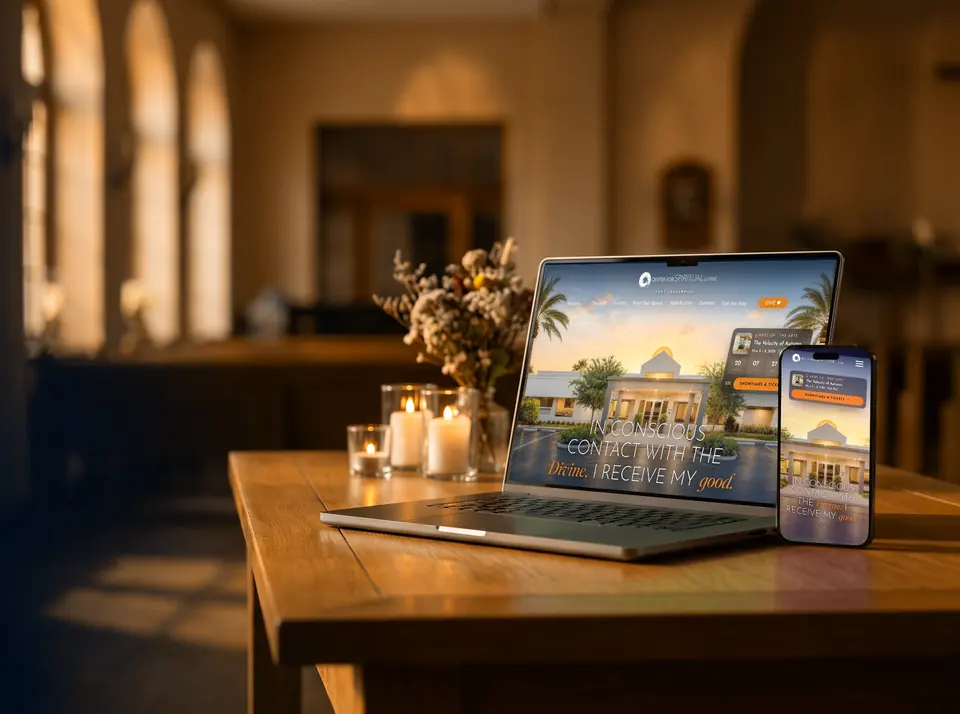 Community · Website + Custom Events PlatformCenter for Spiritual Living
A rescued website and a custom events platform that runs the center's entire calendar.
753pages live732events migrated to the new platform
Read the case study
10Questions
WordPress website design questions, answered.
Why not use a page builder like Elementor or Divi?
Builders load large CSS and JavaScript libraries on every page and add extra wrapper markup, which makes speed and Core Web Vitals harder to hit, and their add-ons expand the security surface. Content can also get locked in builder shortcodes. A hand-coded theme loads only what each page needs and stays readable for future developers.
Can I still edit my site myself?
Yes. Our WordPress website design work includes editor blocks and fields built around your content, so your team can update text, images, services, team members and new pages without a developer. Layout guardrails stop one wrong click from breaking a page.
Do you build block themes or classic themes?
Both. Block themes use the Site Editor and theme.json and suit teams that want more control over templates. Classic PHP themes suit tightly structured sites where editors only change content. We recommend one based on how your team works. Either way, the theme is hand-coded and free of page builders.
How many plugins will my site have?
As few as the job needs. Typical service sites run a short list covering forms, SEO controls, caching or security where the host does not provide them, and anything specialized like ecommerce. Simple features go into the theme instead of a plugin.
Is WordPress secure?
WordPress core is actively maintained, and most problems come from outdated plugins, weak logins and neglected updates. We follow the official hardening guidance: fewer plugins, two-step authentication, least-privilege roles, disabled file editing, tested updates and versioned off-site backups. Our care program then keeps all of it current after launch.
Can you redesign my existing WordPress site?
Yes. We often rebuild builder-based WordPress sites as custom themes. We inventory every URL, keep ranking content, map redirects for anything that moves, and move content out of builder shortcodes into clean WordPress blocks. Your editors get a cleaner admin, and the site gets faster without losing the pages that rank.
Should I choose WordPress or Shopify?
WordPress suits service businesses, publishers and content-heavy sites with light or moderate ecommerce. Shopify suits businesses where the store is the core of the business and you want hosting, checkout and PCI handled for you. We build on both and will recommend one based on your catalog and team.
Pairs well with.
- Website DesignPrototype-first, conversion-focused design
- Website DevelopmentHand-coded, fast, secure builds
- Website CareUpdates, backups, monitoring, support
- Website RedesignRebuilds that keep your rankings
- Technical SEO checklistThe launch checks we run
- Joe Sale Photography50 SEO landing pages scoring 99 to 100
One team. Every channel.
Websites, search, ads, content, CRM and AI software built by one in-house team, so every piece works with the others.
Build it right once.
Tell us about your site and we will scope your WordPress website design project. Call (954) 758-7200 or (973) 858-5988.