


Analytics and Growth · Call Tracking
Know which marketing makes the phone ring.
 Reviewed by Adam Segall, Founder & CEOUpdated
Phone leads traced to the ad, page or listing that drove them, then matched to the jobs and sales they became, so budget follows real revenue.
01Overview
Why call tracking decides where your budget goes
For most service businesses, the phone is the main lead source, and without call tracking it is also the biggest blind spot. Forms are easy to measure. Calls are not. A plumber, dentist or law firm can spend for months without knowing whether the ad, the Google Business Profile, the website or a mailer made the phone ring. Our analytics and growth practice exists to close that gap.
When calls go unmeasured, three things go wrong. The ad platforms optimize toward form fills only and undervalue campaigns that drive calls. Reports understate your best channels. And nobody can tell a booked job from a wrong number, a spam call or an existing customer asking about an invoice. Good measurement fixes all three.
What good call tracking tells you
- Source: which channel, campaign and often which keyword or page led to the call.
- Quality: how long the call lasted, whether it was answered, and whether it was a new prospect.
- Outcome: whether the caller booked, bought or became a customer, recorded in your CRM.
- Timing: when calls come in, so staffing and ad schedules match demand.
- Missed calls: how many prospects hit voicemail, which is often the cheapest leak to fix.
This is part of our wider analytics and reporting work, and it runs through UnifiedIQ, our own platform, which tracks every call and form back to its source.
02Methods
Call tracking methods compared, honestly
There is no single right way to do call tracking. Each method trades accuracy, cost, setup effort and impact on your local listings. Plenty of vendors push one approach for everything. We pick by business type, channel mix and how much detail you actually need to make decisions. Here is how the common options compare.
| Method | How it works | Good for | Limits |
|---|---|---|---|
| Static number per channel | One tracking number on each channel: ads, mailer, billboard, a listing | Offline media, simple channel-level answers | Shows the channel, not the keyword or page |
| Dynamic number insertion | An industry method where the website swaps the number shown based on the visitor's source, drawing from a pool | Keyword or session-level detail on high-traffic sites | Needs a number pool sized to traffic; adds a script and ongoing cost |
| Google Ads call conversions | Calls from ads and call assets, or a Google forwarding number shown on your site after an ad click | Paid search accounts that need calls to count as conversions | Covers Google Ads traffic only |
| Tel-click events in GA4 | A tap on a phone link fires an event marked as a key event | Every site; free and fast to set up | Measures the tap, not whether a call happened or how long it lasted |
| CRM call logging | Calls through a CRM phone system are logged against the contact with source and outcome | Tying calls to pipeline stages and sales | Only as good as the source data attached to the contact |
| Offline conversion import | Qualified calls and sales from the CRM sent back to Google Ads | Teaching bidding which calls became customers | Needs click IDs or matching data captured at the lead |
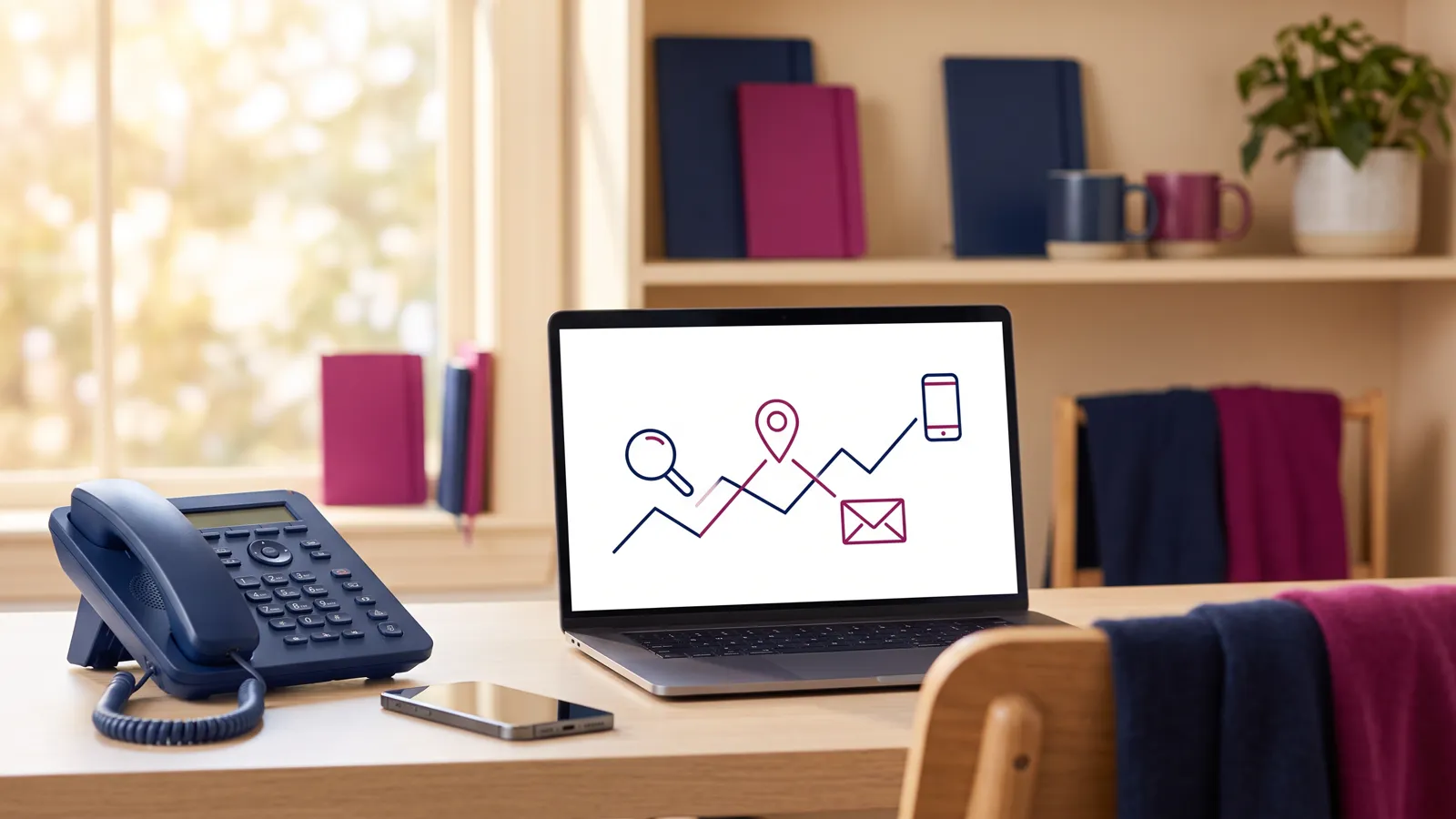
Google documents five ways to track phone call conversions, including calls from ads, calls to a number on your website, clicks on a number on your mobile site and calls imported from another system. For the website option, Google shows a forwarding number to visitors who clicked an ad and counts a conversion when the call passes a minimum length you set, per its website call setup guide.
Our own site uses one tracking number rather than a pool of rotating numbers, and our reports still trace calls to their source. Most small and mid-sized businesses do not need a number pool to make good decisions.
03Why Unified
Why businesses trust Unified with call tracking.
Honest methods, clean data, and reporting that ends at revenue.
We recommend the simplest method that works
We do not sell number pools to businesses that do not need them. We look at your channels, traffic and decisions, then choose static numbers, Google Ads call conversions, GA4 events, CRM logging or a mix, keeping cost and complexity as low as your questions allow.
Our own platform does the attribution
UnifiedIQ tracks every call and form back to its source and can send offline conversions to Google Ads. We built it because off-the-shelf reports stopped at the ring, and owners needed to know which calls became customers.
Local listings stay clean
Your real main number anchors your Google Business Profile and directory listings, so tracking never undermines the consistency that local rankings rely on. Tracking numbers go where they measure something without muddying your citations.
One team from ad to CRM
The people who run your ads also set up the tracking, the CRM fields and the follow-up. When a call source looks wrong, we fix it in the same week instead of opening a ticket with three vendors.
04Setup
How we set up call tracking without breaking your local SEO
Call tracking numbers can hurt you if they are scattered carelessly. Google and directory sites compare your name, address and phone number across the web, and a listing full of mismatched numbers makes your business look less consistent. So we keep your real main number as the anchor on your Google Business Profile and directory listings, and put tracking numbers where they will not muddy citations.
Our call tracking setup checklist
- Map every place your number appears: website, ads, profiles, directories, vehicles, print.
- Choose the method per channel from the table above, keeping it as simple as the decisions require.
- Set up Google Ads call conversions with a minimum call length that reflects a real conversation; our Google Ads for small business guide covers the basics.
- Add a tel-click event through Google Tag Manager and mark it as a key event in GA4 so mobile taps show in your reports.
- Connect the phone system to the CRM so each call lands on a contact with its source and outcome.
- Define a qualified call with your team: a new prospect, answered, over a set length, about a service you sell.
- Send qualified calls back to Google Ads as offline conversions where your setup allows.
That last step is where most of the value sits. Google's offline conversion import works by storing the ad click ID with each lead and sending it back when the lead converts. UnifiedIQ can send offline conversions to Google Ads, so bidding learns from calls that became customers instead of every ring. This matters even more for Performance Max campaigns, which optimize heavily toward whatever you count.
Missed calls are a tracking problem too. If tracking shows a share of calls going to voicemail after hours, the fix may be staffing, a callback workflow or an AI receptionist, not more ad spend. Every call that gets answered makes your marketing cheaper.
05Measure and comply
What to measure, and call recording consent
Counting rings is the start of call tracking, not the end. The useful numbers sit one layer down, where you can see which calls were real opportunities and what happened next. These are the metrics we put in front of owners each month, because each one points at a specific decision about budget, staffing or follow-up.
| Metric | What it tells you | Decision it drives |
|---|---|---|
| Qualified calls by source | Which channels produce real prospects | Where budget goes next month |
| Cost per qualified call | Ad spend divided by calls that met your definition | Bids, budgets and pausing waste |
| Answer rate | Share of calls a person picked up | Staffing, hours and overflow handling |
| First-time caller rate | New prospects vs existing customers | Whether a campaign finds new business |
| Booked rate | Calls that became appointments or jobs | Call handling training and scripts |
| Revenue by source | Sales tied back to the original call | True return on each channel |
Call recording consent
Recording calls is useful for training and quality checks, but consent rules vary. Federal law allows recording when one party to the call consents, under 18 U.S.C. 2511(2)(d). Some states go further. California's Penal Code section 632 prohibits recording confidential communications without the consent of all parties. Callers can cross state lines, so a plain recording notice at the start of each call is the safest default. The Reporters Committee recording guide summarizes state laws. This is not legal advice; check with your attorney.
Healthcare and legal practices need extra care with what gets recorded and stored, and who can access it. We set retention and access rules with you, and we never move sensitive call content into ad platforms. Only the fact that a qualified conversion happened goes back to Google Ads.
06Proof
Call tracking results from real client work
For Nusbaum Medical Centers, a medical weight loss and aesthetics group in New Jersey, our tracking recorded 1,645 inquiries in the past 12 months, each tied back to its source. That gives the practice a clear view of which pages, listings and ads produce inquiries across 3,066 live pages.
For Aces Airboat Tours, an Everglades tour operator, we tracked 369 booking-button clicks in the first 2 months across a 334-page site and 5 Google Ads campaigns. For HonestyInsure.com, a health insurance site with 31 state pages, a 24/7 AI agent chat in the hero gives visitors another way to reach out besides calling, one more lead channel that call tracking should sit beside, not replace.
Questions to ask any call tracking provider
- Will tracking numbers appear on my Google Business Profile or directory listings, and how do you protect my main number?
- Who owns the tracking numbers if we stop working together?
- How is a qualified call defined, and can I change the definition?
- Do qualified calls get sent back to Google Ads as conversions?
- Where are recordings stored, who can hear them, and for how long?
Phone-heavy industries feel this most. Our HVAC marketing and healthcare marketing pages show how call tracking fits each one, and our conversion rate guide covers making the number easy to tap. Paid search is usually the first place to apply it, through our Google Ads management. To see what your calls are telling you, contact us and we will review your current setup.
07How we work
How a call tracking project runs.
Map, choose, connect, then report on outcomes.
- Step 01
Map your phone footprint
We list every place your number appears, how calls are answered today, and which channels you spend on. You get a short plan showing which method fits each channel and what decisions the data will support.
- Step 02
Set up and connect
We configure Google Ads call conversions, GA4 tel-click key events, channel numbers where they help, and the CRM connection. Each call lands on a contact with its source, duration and answered status.
- Step 03
Define qualified calls
With your team, we agree on what a qualified call means for your business, then tag outcomes in the CRM. Qualified calls are sent back to Google Ads as offline conversions where your setup allows.
- Step 04
Report and refine
Monthly reports show qualified calls, cost per qualified call, answer rate and revenue by source. We use them to move budget, fix missed-call leaks and adjust ad schedules to match when buyers call.
08What you get
What you get.
- 01
Phone footprint map
Every place your number appears, with the tracking method chosen for each and the reasons behind it.
- 02
Google Ads call conversions
Calls from ads and website calls set up with a minimum length that reflects a real conversation.
- 03
GA4 call events
Tel-click events marked as key events so mobile taps appear in your analytics and channel reports.
- 04
CRM call logging
Each call attached to a contact with its source, duration, answered status and outcome.
- 05
Offline conversion feedback
Qualified calls sent back to Google Ads where possible, so bidding learns which calls became customers.
- 06
Monthly call report
Qualified calls, cost per qualified call, answer rate and revenue by source, in plain language.
09Results
Proof, not promises.
Verified results from live client builds: rankings, AI citations and tracked inquiries, not projections.
-
 Medical · Custom Theme + SEO + AdsNusbaum Medical Centers
A 3,000-page medical authority that Google ranks first and ChatGPT recommends by name.
3,066pages live1,285search terms ranking on Google
Read the case study
-
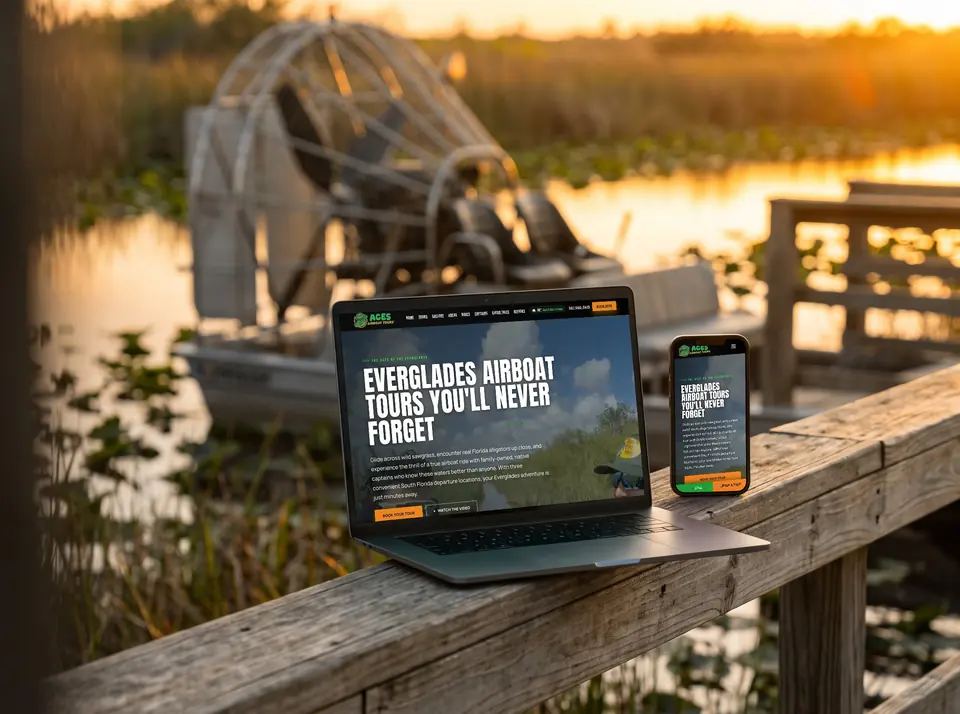 Tourism · Custom Theme + Local SEO + AdsAces Airboat Tours
A cinematic, booking-first site built to win travelers in the moment they search.
334pages live369booking-button clicks in the first 2 months
Read the case study
-
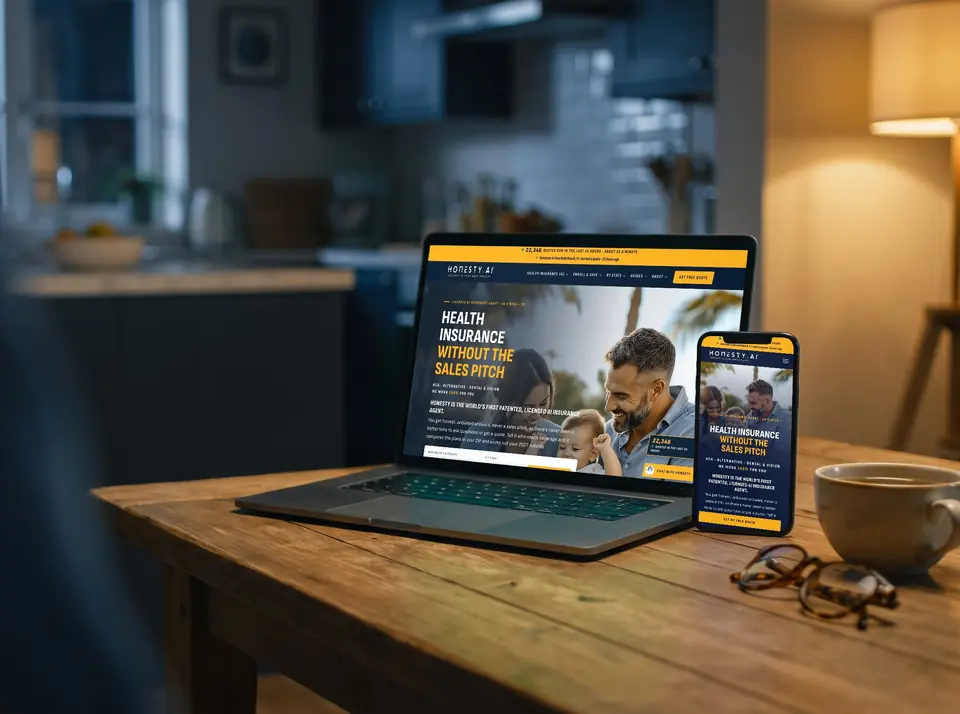 Insurance · AI Search Site + Live ChatHonestyInsure.com
A health insurance site written to be the answer AI search gives, with an AI agent that enrolls you right on the page.
144pages and guides indexed31states with their own local pages
Read the case study
10Questions
Call tracking questions, answered.
What is call tracking?
Call tracking connects each phone call to the marketing that caused it, such as an ad, keyword, page or listing. Better setups also record whether the call was answered, how long it lasted and whether the caller became a customer, so you can judge marketing by revenue instead of rings.
Do I need dynamic number insertion?
Not always. Dynamic number insertion swaps the number on your site based on each visitor's source and is useful on high-traffic sites that need keyword-level detail. Many small and mid-sized businesses get what they need from channel numbers, Google Ads call conversions, GA4 events and CRM logging.
Will tracking numbers hurt my local SEO?
They can if they are scattered across your listings. We keep your real main number on your Google Business Profile and directories so your name, address and phone stay consistent, and place tracking numbers where they measure something without muddying citations.
Can call data improve my Google Ads results?
Yes. When qualified calls are sent back to Google Ads as conversions, bidding learns which searches bring real customers rather than any ring. UnifiedIQ can send offline conversions to Google Ads, and we set a minimum call length so short or accidental calls do not count.
Is it legal to record sales calls?
Often, but rules vary. Federal law allows recording with one party's consent, while some states, including California, require the consent of all parties for confidential calls. A clear recording notice at the start of each call is the safest default. Check with your attorney for your situation.
What is a qualified call?
It is a call that meets a definition you agree on, for example a new prospect, answered by a person, longer than a set length, about a service you sell. Counting only qualified calls keeps spam, wrong numbers and existing customers out of your marketing results.
How long does setup take?
Basic tracking with Google Ads call conversions and GA4 events can be live quickly. Connecting a CRM, defining qualified calls and sending offline conversions back takes longer because it involves your team and your phone system. We plan it in stages so data starts flowing early.
One team. Every channel.
Websites, search, ads, content, CRM and AI software built by one in-house team, so every piece works with the others.
Where we work
Find out what your calls are telling you.
Call (954) 758-7200 or send a note, and we will review how your calls are tracked today and what we would change first.