

Industries · Restaurants
More covers. More direct orders.
 Reviewed by Adam Segall, Founder & CEOUpdated
We help restaurants win the map, earn real reviews and move regulars from delivery apps to your own ordering, with every booking and call tracked to its source.
01Overview
What a restaurant marketing agency should do for you
A good restaurant marketing agency does not start with a content calendar. It starts with the moment a hungry person opens Google Maps two blocks away and decides between you and three other places in a few seconds. Your photos, your rating, your hours, your menu and one tap to call or order decide that moment. Everything else we do feeds it.
Any restaurant marketing agency worth hiring knows restaurants are a local discovery business with thin margins and a loyalty problem. Most new guests find you on a map, a delivery app or a friend's post. Most profit comes from the guests who return. So the work splits cleanly in two: get found and chosen by people nearby, then pull those people into channels you own, like your own ordering, your email list and your reservation book.
The four jobs, in order
- Get chosen on the map. A complete Google Business Profile with a live menu, real photos, correct hours and the right ordering and reservation links. Our Google Business Profile optimization playbook walks through every field.
- Earn a rating people trust. A steady flow of honest reviews from real guests, answered by a human, every week.
- Move orders to your own channels. Direct online ordering on your site, promoted everywhere a guest already sees you, so fewer orders pay a third-party commission.
- Bring regulars back. Email, SMS and social that give people a reason to return on a slow Tuesday, not just on Saturday.
We run these four jobs as one system, from the same in-house team that builds the website, runs the ads and reads the numbers. That matters because a menu change, a new patio or a holiday hours update has to hit your profile, your site, your social and your ads on the same day. When five vendors own five pieces, the map says one thing and your website says another, and guests notice.
The test we use: if a guest searches your cuisine plus your neighborhood right now, do you show in the top three map results, with a menu, a rating above your closest competitor's and a working order button? If any of those four is missing, that is where we start.
02Channels
The channels that fill tables, and what each one is for
Every restaurant gets pitched every channel by every restaurant marketing agency in town. Very few need all of them at once. The table is the decision sheet we use on a first call. It shows what each channel is actually good for in a restaurant, where it fails, and when we would turn it on.
| Channel | Best at | Where it fails | When we turn it on |
|---|---|---|---|
| Google Business Profile and Maps | Nearby, ready-to-eat searches; calls, directions, menu views | Stale hours, missing menu, old photos | Day one, always |
| Reviews | Winning the side-by-side comparison on the map | Gating, bursts, unanswered complaints | Day one, as a weekly habit |
| Your website and direct ordering | Owning the order, the guest data and the margin | Slow mobile pages, PDF menus, buried order buttons | Month one |
| Organic social | Showing the food, the room and the people; reminding regulars | Posting with no plan or no faces | Month one, a few strong posts a week |
| Paid social | Launching a new location, menu or event to a tight radius | Broad audiences, no offer, no tracking | Once the profile and site convert |
| Google Ads | Catering, private events and high-intent "near me" searches | Bidding on generic food terms citywide | For catering and events first |
| Email and SMS | Repeat visits on slow nights, launches, loyalty | Blasting discounts that train guests to wait | As soon as you are collecting contacts |
| Delivery apps | Reach to people who would never find you otherwise | Margins, guest data you never see | Keep, but cap your dependence |
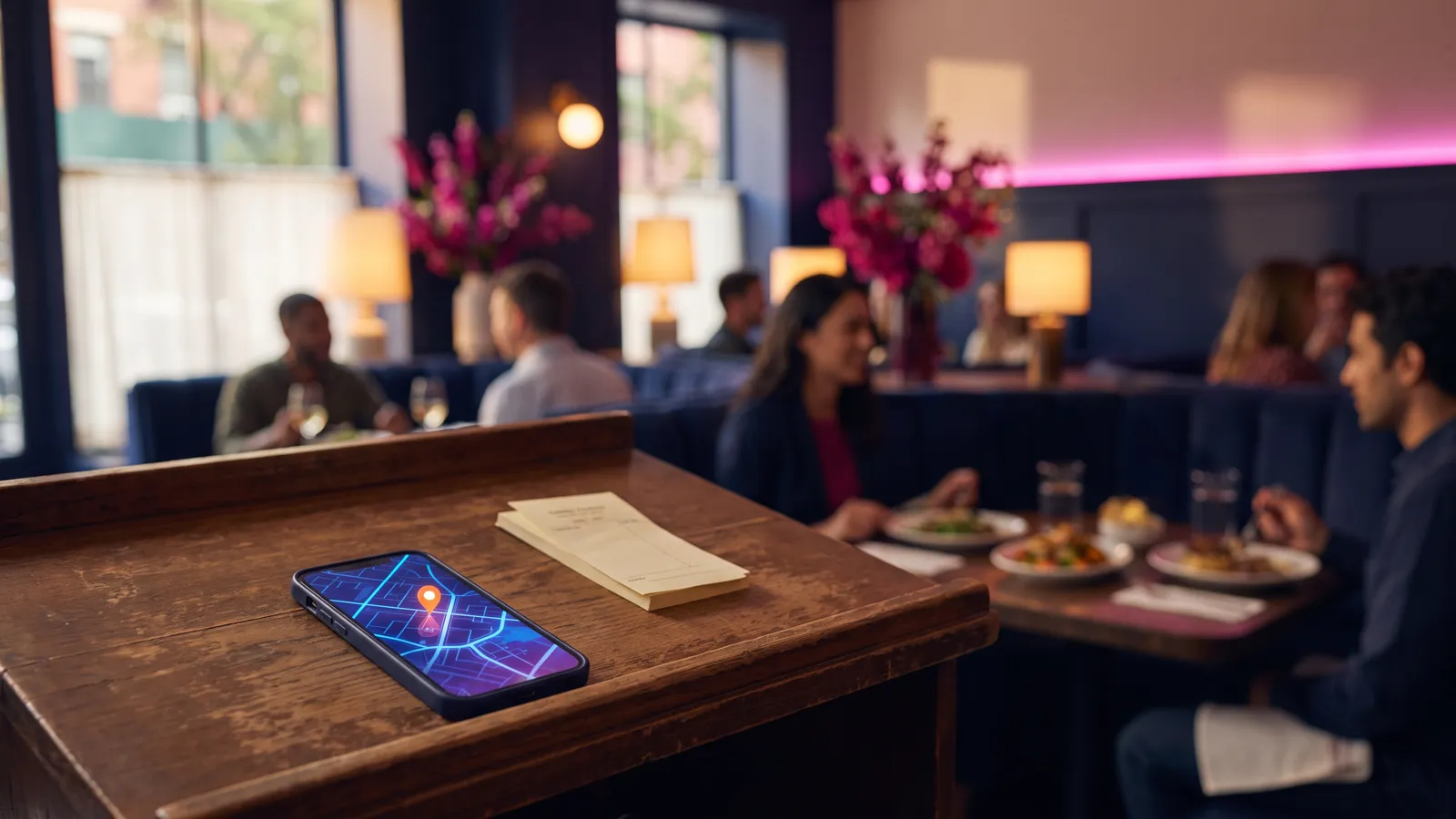
Local discovery is the main event
For most restaurants, Google Maps is the highest-intent channel you have, and it costs nothing to show up. Google lets food and drink businesses publish a structured menu right on the profile, grouped into sections with descriptions and prices, through its menu editor. Changes can take a day or two to appear on Maps and Search, so we schedule seasonal menu updates ahead of the switch, not the morning of.
Ranking on the map comes from relevance, distance and prominence. You cannot move your kitchen, but you can make your categories, menu items, photos, reviews and website match what people actually search. Our local SEO and Google Business Profile service handles this end to end, and our guide on how to rank higher on Google Maps shows the levers we pull.
Social that shows the food and the room
Organic social works for restaurants when it looks like a reason to go out tonight: the dish coming off the line, the bartender building a drink, the room filling up. Our social media management team plans shoots around your menu calendar so you always have something real to post. Paid social then pushes your best posts to people within a short drive, which is where it earns its keep for openings, new menus and events.
We also shoot short video on site when it fits. A fifteen-second clip of the kitchen during service does more for a dinner reservation than a polished brand film, and our video production crew knows the difference.
03Why Unified
Why restaurants choose Unified.
One senior team since 2006, 1,100+ businesses served, offices in South Florida and New Jersey.
Map first, always
Our restaurant marketing agency starts where your guests decide: the map listing, the menu, the rating and the order button. Before any ad spend, we make sure the free channel that drives most nearby discovery is complete, current and better than the place down the street.
Direct ordering as a goal
We measure our work by how much of your revenue you own. Every channel we run points regulars toward your own ordering and your own list, so fewer orders pay a commission and more guests become people you can invite back.
Honest reviews only
We never buy, fake or gate reviews. We set up an ask that reaches every guest the same way and reply to every review like a host would, which is what Google and the FTC require and what diners actually trust.
Every table traced
UnifiedIQ tracks calls and forms back to their source, so you can see whether a catering order came from the map, a search ad or a post. You stop guessing which spend works and start moving money to what fills the room.
04Reviews and orders
Reviews, delivery apps and the move to direct ordering
Reviews: the honest way is the only way
Guests compare ratings on the map before they compare menus. The fix is not a trick. It is asking every guest, the same way, at the right moment, and answering every review like a host would. Our playbook on how to get more Google reviews covers the ask, the scripts and the timing that work in a dining room.
The rules are strict, and they apply to you. Google's Maps content policy prohibits discouraging negative reviews, asking only happy guests, and offering anything in return for a review. The FTC's final rule on fake reviews, announced in August 2024, bans buying fake reviews, undisclosed insider reviews, and using threats to get negative reviews taken down. We never buy, fake or gate reviews. Our online reputation management work is built on asking everyone and answering everyone.
Delivery apps: keep them, cap them
Third-party delivery brings you guests you would never reach on your own, and for many restaurants it is now a real share of sales. The trouble is what you give up: a commission on every order, and the guest relationship. The app knows who ordered, how often and what they like. You get a ticket and a payout.
As a restaurant marketing agency, we do not tell owners to quit the apps. We tell them to stop sending their own regulars there. Every guest who already loves you should have a faster, easier way to order from you directly, and every touchpoint you control should point to it.
How we shift orders to your own channels
- Set your profile's ordering links on purpose. Google lets you mark a preferred provider for pickup and delivery and add a custom link to your own ordering page, per its online ordering help. We make your direct link the obvious choice.
- Put ordering one tap from every page. A fast mobile site with a real HTML menu, not a PDF, and a sticky order button. Our landing page design team builds dedicated pages for catering, private dining and holiday menus.
- Give a reason to order direct. A perk that only exists on your channel, such as a direct-order item or early access to specials, so the switch feels like an upgrade.
- Capture the guest. Every direct order adds a contact to your list, which feeds email marketing that brings them back.
- Use the bag. Inserts in delivery-app orders that invite the guest to order direct next time.
AI can help on the operations side too. Our guide on AI for restaurants covers answering rush-hour phones, catering inquiries and review replies, with a human in the loop.
05First 90 days
Your first 90 days with our restaurant marketing agency
With any restaurant marketing agency, the first three months should be about fixing what guests see first, then building the habits that compound. Here is the plan we run, adjusted for one location or several.
| Weeks | What we do | What you see |
|---|---|---|
| 1 to 2 | Audit your profile, menu, photos, reviews, website speed, ordering links and tracking. Install call and form tracking. | A one-page punch list ranked by impact |
| 3 to 4 | Rebuild the Google Business Profile: categories, attributes, menu, photos, hours, links. Start the weekly review ask and reply routine. | A complete profile and a steady review rhythm |
| 5 to 8 | Fix or rebuild the mobile site and menu pages, add a direct-ordering path, launch catering and private event pages, start organic social. | More direct orders and event inquiries |
| 9 to 12 | Turn on tight-radius paid social and catering search ads, start email to captured guests, first monthly report on what filled tables. | Spend tied to real bookings, calls and orders |
Tracking goes in during the first two weeks, not the last. UnifiedIQ, our own platform, tracks every call and form back to the channel that produced it and scores each page on your site for SEO. That is how we can tell you whether the catering page, the map listing or the paid post brought in the rehearsal dinner. Our call tracking setup makes phone reservations visible, which is where many restaurants are blind.
What we measure, every month
- Map views, calls, direction requests and website clicks from your Google Business Profile
- Rating and review count against your three closest competitors
- Direct online orders versus third-party orders, as a share
- Reservations and catering or private event inquiries, by source
- Email and SMS list growth and repeat-visit offers redeemed
- Cost per catering inquiry from paid search and paid social
A restaurant marketing agency should report in plain language, and we do. You will see what changed, what it produced, and what we are doing next month. If something did not work, we say so and move the budget.
06Choosing an agency
How to judge any restaurant marketing agency
Restaurant owners get pitched by a new restaurant marketing agency almost every week. Some agencies are excellent. Many resell the same posting package to every restaurant in town. These are the questions that separate the two, and you should ask them of us too.
Questions to ask on the first call
- Which of my channels would you not spend money on yet, and why?
- How will you tell me which channel produced a reservation, a catering order or a phone call?
- Who exactly writes my posts, replies to reviews and runs my ads, and how senior are they?
- How do you ask for reviews, and is that process compliant with Google's policy and the FTC rule?
- What will you do to lower my reliance on delivery apps without losing their reach?
- Do I own my website, my ad accounts, my profile and my guest list if we part ways?
Red flags
- A promise of page-one or number-one rankings by a date. Nobody controls that.
- Review packages, review gating or "only send the happy ones" funnels.
- Reports full of reach and impressions, with no calls, orders or bookings.
- Ad accounts or profiles set up under the agency's name instead of yours.
- A templated website or a menu that only exists as a PDF.
- No one at the agency has ever asked what your food cost or table turn looks like.
We do not have a restaurant case study to publish yet, so we will point you to the closest proof. The same booking-focused local system we built for Aces Airboat Tours produced 369 booking-button clicks in its first two months, and the local search work for the Center for Spiritual Living put it first on Google and Maps in Fort Lauderdale. Restaurants live on the same map. If you want an honest read on where your restaurant stands, talk to us and we will tell you what we would fix first.
07How we work
How a restaurant engagement runs.
One in-house team, from your profile to your ads, on one plan.
- Step 01
Audit the guest path
We search for you the way a hungry local does, then audit your profile, menu, photos, reviews, site speed, ordering links and tracking. You get a ranked punch list of what is costing you covers right now.
- Step 02
Fix the foundation
We rebuild your Google Business Profile, put a real menu online, fix your mobile site, set your direct-ordering links and start the review routine. These fixes usually matter more than any ad you could buy.
- Step 03
Turn on growth
With tracking live, we add organic social, tight-radius paid social, catering search ads and email to your captured guests, each with a clear job and a budget you approve.
- Step 04
Report and adjust
Every month you see calls, orders, reservations and inquiries by source, in plain language. We cut what is not working, double what is, and plan around your seasons and menu changes.
08What you get
What you get.
- 01
Google Business Profile buildout
Categories, attributes, structured menu, photo plan, hours, holiday hours and ordering and reservation links, kept current every week by a real person.
- 02
Review system
A compliant ask that reaches every guest, reply templates in your voice, weekly responses, and monthly tracking of your rating against nearby competitors.
- 03
Fast mobile website and menus
A hand-coded site with HTML menus, a sticky order button, and dedicated pages for catering, private dining and events that load fast on a phone.
- 04
Direct-ordering push
Profile links, site placement, in-bag inserts and email that steer regulars from delivery apps to ordering from you.
- 05
Social and paid social
A monthly content plan built on your menu calendar, real photos and short video, plus tight-radius ads for launches, menus and events.
- 06
Tracking and monthly report
Call and form tracking through UnifiedIQ, with a plain-language report on what filled tables and what we will do next.
09Results
Proof, not promises.
Verified results from live client builds: rankings, AI citations and tracked inquiries, not projections.
-
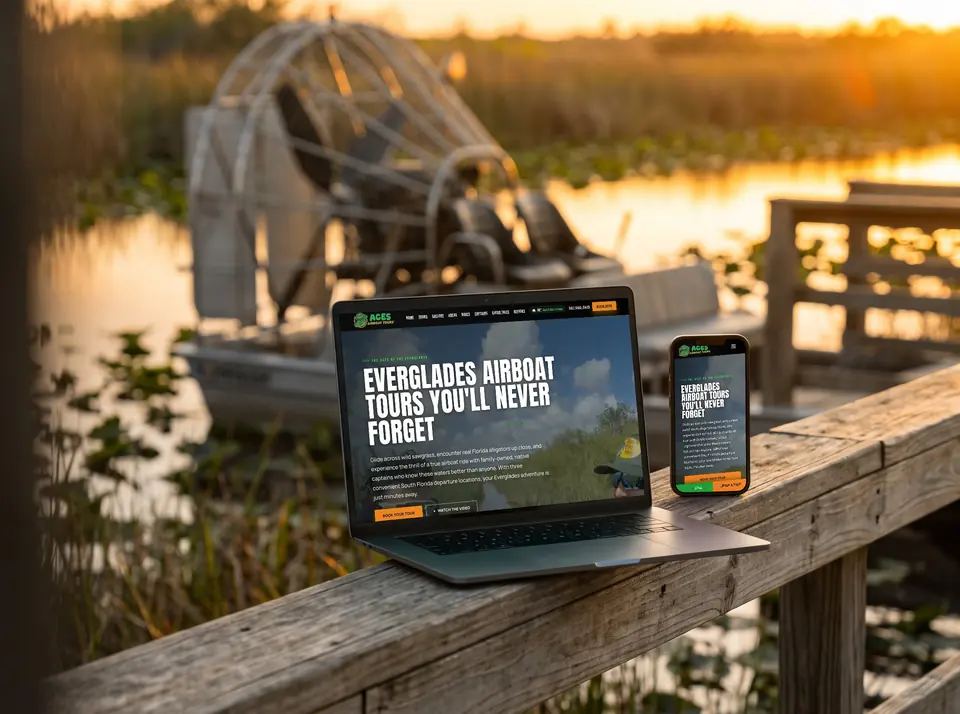 Tourism · Custom Theme + Local SEO + AdsAces Airboat Tours
A cinematic, booking-first site built to win travelers in the moment they search.
334pages live369booking-button clicks in the first 2 months
Read the case study
-
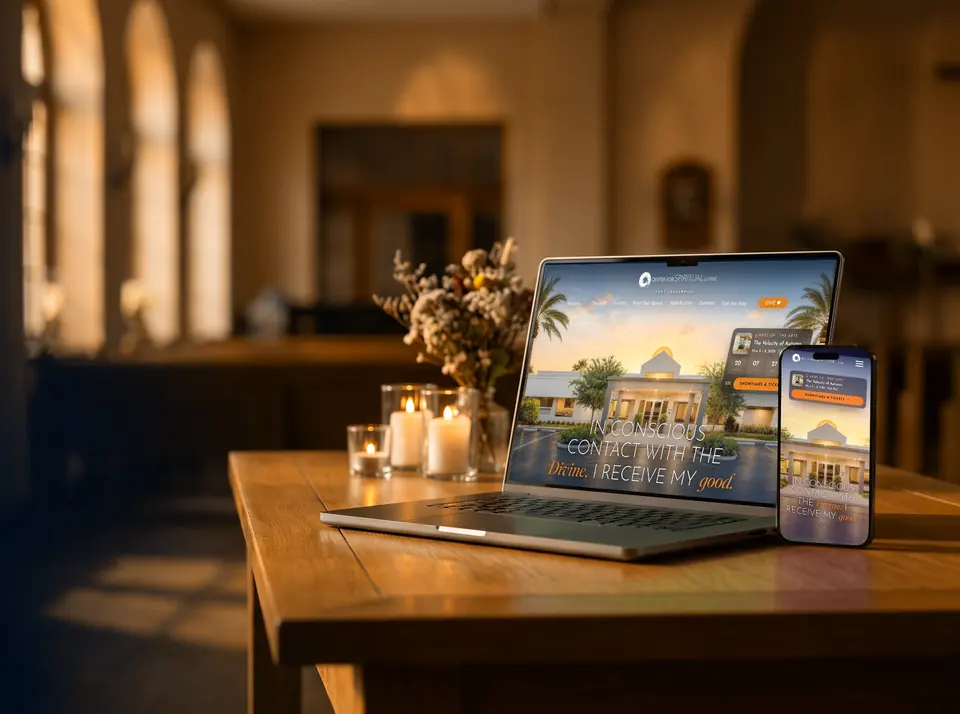 Community · Website + Custom Events PlatformCenter for Spiritual Living
A rescued website and a custom events platform that runs the center's entire calendar.
753pages live732events migrated to the new platform
Read the case study
-
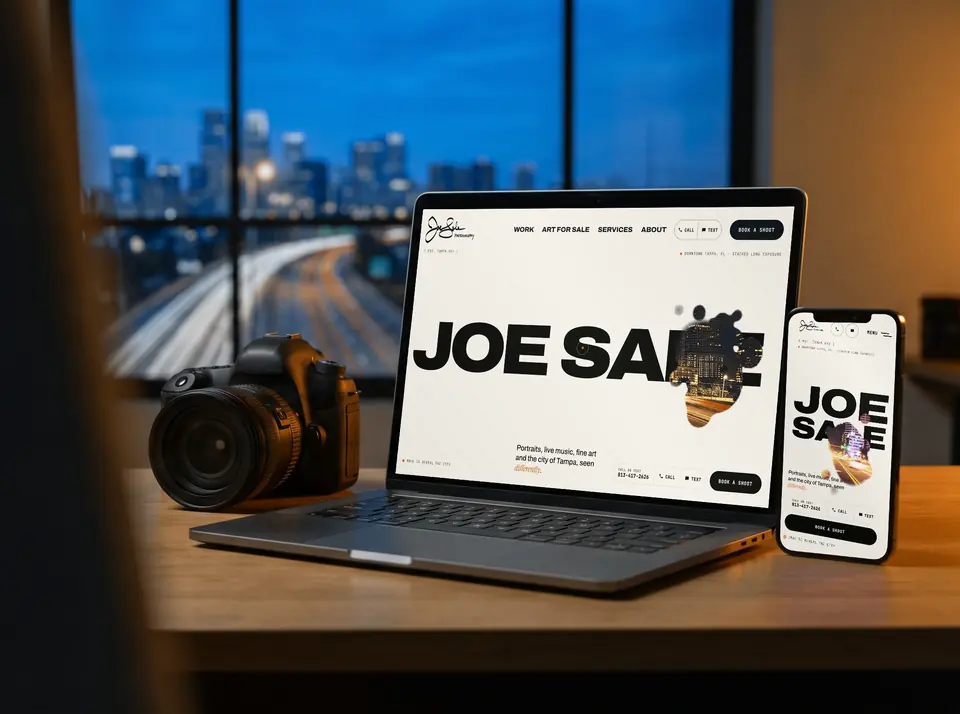 Photography · Custom Theme + BookingJoe Sale Photography
A portfolio you play with: the city is hidden under his name, and you wipe it away.
50SEO landing pages, every one scoring 99–10047portfolio frames, uncropped, filterable
Read the case study
10Questions
Restaurant marketing questions, answered.
What does a restaurant marketing agency actually do?
It gets more nearby people to pick you and then brings them back. In practice that means running your Google Business Profile and menu, building a steady flow of honest reviews, keeping your website fast with direct ordering, posting real food and room content on social, running tight-radius ads for launches and catering, and emailing regulars. A good agency tracks which of those produced reservations, calls and orders.
Should my restaurant get off the delivery apps?
Usually no, and a restaurant marketing agency that tells you otherwise is guessing. Delivery apps reach guests who would never find you otherwise, and that reach has value. The goal is to stop sending your own regulars there. We make your direct ordering faster and more rewarding, point your profile, site and social at it, and use in-bag inserts to invite app guests to order direct next time. You keep the reach and recover margin on repeat orders.
How do you get more Google reviews without breaking the rules?
We ask every guest the same way, at the right moment, with a short link, and we never offer a discount or freebie for a review. We do not filter out unhappy guests or send only satisfied ones to Google, because Google's policy prohibits that. We also reply to every review. The FTC's 2024 rule bans fake and bought reviews, and we follow it.
How long until we see more covers?
With a restaurant marketing agency that starts on the map, profile and menu fixes can show up in calls and direction requests within weeks, because they affect searches already happening near you. Review momentum, map ranking gains and direct-ordering habits build over the first three months. Paid social and catering ads can produce inquiries quickly once tracking is in place. We report every month, so you see the trend rather than waiting on a promise.
Do you work with multi-location restaurant groups?
Yes. Each location needs its own accurate profile, menu, hours, photos and reviews, plus location pages on your website that match. We run them on one plan with shared brand content and location-level reporting, so you can compare what each site gets from the map, ads and ordering, and spot a location that needs help early.
Can you help us sell more catering and private events?
Yes, and it is often the fastest win a restaurant marketing agency can deliver. Catering and private dining buyers search with clear intent and higher order values. We build dedicated pages with menus, capacity, photos and a simple inquiry form, run focused search ads, track every inquiry by source and set up fast follow-up so a planner hears back the same day.
How do you price restaurant marketing?
We scope every engagement around your locations, channels and goals after a first call, and we do not publish set prices. You approve the plan and any ad budget up front, ad spend goes into accounts you own, and you can see in the monthly report exactly what each channel produced. Call (954) 758-7200 or use the contact page to start.
Pairs well with.
- Local SEO and Google BusinessWin the map near your restaurant
- Social Media ManagementReal food, real room, every week
- Paid SocialTight-radius ads for launches and events
- Online Reputation ManagementHonest reviews, answered every week
- AI for RestaurantsPhones, catering and review replies
- Aces Airboat ToursLocal booking system case study
One team. Every channel.
Websites, search, ads, content, CRM and AI software built by one in-house team, so every piece works with the others.
Fill more tables.
Tell us about your restaurant and we will show you what we would fix first. Call (954) 758-7200 or send us a note.