

Industries · Dental
Full chairs, every day.
 Reviewed by Adam Segall, Founder & CEOUpdated
Maps rankings, reviews, Google Ads and a fast site for dental practices, measured by booked new patients and the cases they become, not by clicks.
01Overview
Why dental is a Maps, phone and recall business
Most new dental patients pick a practice from the map. They search "dentist near me" or "emergency dentist" plus a town, scan three results, read a handful of reviews and call. A dental marketing agency that starts with blog posts or brand videos is solving the wrong problem. The first job is to win those three map spots for the searches that matter, and to answer the phone when it rings.
The second job is case mix. A cleaning and an implant consult are both one new patient, but they are not the same appointment for your production. We split marketing by case type: general and family care, emergency, cosmetic, implants, clear aligners, and whatever your specialty mix includes. Each gets its own pages, keywords, ad budget and tracking, so you can see which case types your marketing actually brings in.
The third job is the one most agencies forget: keeping the patients you already have. Hygiene recall, unscheduled treatment and reactivation of lapsed patients usually sit in your practice software untouched. A short email and text program, sent from tools your team already uses, often fills more of the schedule than a new campaign. That is why recall is part of every dental plan we build.
How dental differs from general healthcare
- Insurance shapes the search. Many patients search by plan, so in-network status belongs on your pages and profile where it applies.
- Emergencies happen after hours. Toothache searches peak when the office is closed, so after-hours call handling matters more than in most specialties.
- Patients stay for years. The real value of a new patient shows up across many visits, so cost per booked patient is the number to watch, not cost per click.
- Fear is real. Comfort, sedation options, gentle care and clear pricing policies (not prices) on the page reduce no-shows and cancellations.
If your group also runs medical or aesthetic services, our healthcare marketing agency page covers the wider HIPAA and ad-policy picture. For the long-form tactics behind this page, read our dental marketing playbook.
02Channels
What a dental marketing agency should run, channel by channel
Every channel below can work for a dental practice, and a good dental marketing agency will tell you which ones to skip. The mistake is running all of them at once with no idea which books patients. This is the table we use to decide what to turn on first, based on your location, competition and case goals.
| Channel | Best for | Dental watch-outs | What we track |
|---|---|---|---|
| Google Business Profile and Maps | "Dentist near me", emergency and town searches | Correct categories per service, real photos, hours that match the phones, one profile per location | Calls, direction requests and bookings from the profile |
| Reviews | Winning the compare step on the map | No incentives, no gating, replies that never confirm someone is a patient | New reviews per month, rating trend, reply time |
| Service pages (SEO) | Implants, aligners, veneers, sedation, emergency and pediatric care | Accurate clinical copy, credentials, no outcome promises | Rankings and inquiries by case type |
| Google Ads search | High-value cases and emergency calls | Health is a sensitive category, so no remarketing lists or customer match for targeting | Cost per booked consult by case type |
| Paid social | Cosmetic and aligner awareness, new-mover offers | Use real patients only with written consent, and avoid unsubstantiated claims | Consult requests, show rate |
| Email and text recall | Hygiene recall, unscheduled treatment, reactivation | Consent for texts, plain subject lines with no clinical details | Appointments booked from each send |
| Call tracking | Knowing which channel made the phone ring | Recordings may contain health details, so limit access and retention | Answer rate, booked rate, missed calls by hour |
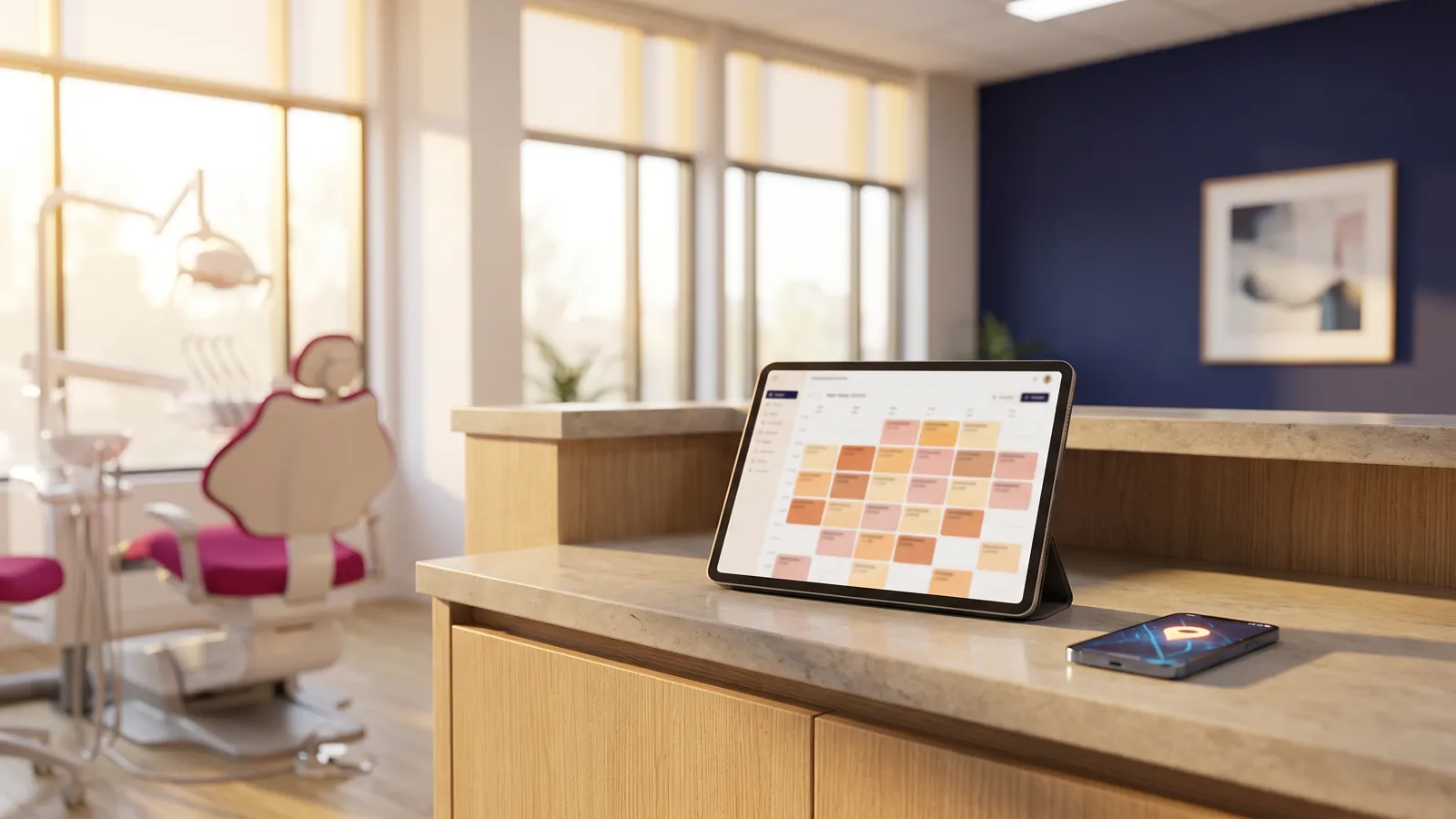
Most practices should start with local SEO and Google Business Profile work. It is the cheapest new patient you will ever get, and it compounds. Our guides to Google Business Profile optimization and ranking higher on Google Maps show the field-by-field work we do for every location.
Google Ads is where you buy the cases organic search has not won yet, usually implants, aligners and emergency visits. We build separate campaigns per case type, send each to its own landing page, and judge them by booked consults. A campaign that brings cheap calls for cleanings while you are trying to grow implant cases is not working, even if the cost per click looks great.
Your site has to carry all of it. A hand-coded dental website loads in a blink on a phone, shows the phone number and booking button on every screen, and gives each service and location a real page. Call tracking ties every ring to its source, and email marketing runs the recall program that keeps hygiene full.
03Why Unified
Why dental practices choose Unified.
A dental marketing agency should be judged by booked patients. We report on nothing less.
Built around case mix
We split pages, ads and tracking by case type, so you can see whether marketing brings in implant consults or cleanings. Budget follows the cases you want more of, not whatever generates the cheapest click.
Reviews done the clean way
We ask every patient the same way and offer nothing in return, which follows the FTC rule and Google's policy. Reply templates keep patient details out, so your front desk can respond quickly without creating a privacy problem.
Your site, not a template
Unlike a dental marketing agency selling one template to hundreds of offices, we hand-code every site, so it loads fast, ranks on its own merits and belongs to you. No shared template, no exclusive-territory contract and no losing your site if you ever change agencies.
Twenty years, one team
Founded in 2006, more than 1,100 businesses served, with strategy, design, SEO, Google Ads, content and analytics under one roof. Senior specialists run your account directly.
04Reviews and rules
Reviews, patient privacy and dental advertising rules
Reviews decide most dental choices, and they are also where practices get into the most trouble. This is not legal advice, and your state dental board rules always apply. These are the rules we build every dental program around, with the official sources linked so you can check them yourself.
Ask every patient, reward none
The FTC's rule on fake reviews and testimonials bans buying or selling fake reviews, undisclosed insider reviews and review suppression through threats or intimidation. Google's review content policy separately bans incentives for reviews and selectively asking only happy patients. So the system is simple: ask every patient, the same way, at the right moment, with nothing offered in return. Our guide to getting more Google reviews has the scripts.
Never reply with patient details
In 2019, HHS announced a settlement with a dental practice that disclosed patient information in replies to online reviews. The lesson for every office: a reply can thank, apologize and invite the person to call, but it should never confirm they are a patient, mention a procedure or dispute their account with clinical details. Our reputation management team writes reply templates your front desk can use safely.
Influencers, claims and specialist wording
The ADA added guidance on social media in 2025. As ADA News reported, new Advisory Opinion 5.F.7 extends the false or misleading standard to statements made by influencers and calls for disclosure of paid partnerships, and an update to 4.E.1 treats paying influencers a share of patient fees as fee splitting. Specialist wording is governed by your state board, so general dentists should avoid implying specialist status.
Tracking on your website
HHS has issued guidance on online tracking technologies for HIPAA covered entities, and part of it was narrowed by a federal court in 2024. The practical rule we follow: no ad pixels on patient forms, portals or online booking confirmations without your compliance lead's approval, and ad platforms receive a click ID and a conversion event, never a name or a treatment. Google also treats health as a sensitive category for personalized ads.
0590-day plan
Your first 90 days with our dental marketing agency
Practices that hire a dental marketing agency see the fastest gains from fixing what already exists: profiles, phones, reviews and the recall list. So that is where we start. New campaigns come after we can see where patients come from today.
| Window | What we do | What you see |
|---|---|---|
| Days 1 to 15 | Audit every Google Business Profile, call tracking on all numbers, missed-call report by hour, site speed and booking flow review, Ads account review | A written list of leaks, ranked by how many patients each one costs you |
| Days 16 to 45 | Profiles fixed, review request flow live (asking every patient), recall and reactivation emails started, top two case-type pages rebuilt | More reviews, recall bookings, cleaner call data |
| Days 46 to 75 | Google Ads rebuilt by case type with dedicated landing pages, more service and location pages, safe reply templates | Booked consults by case type in the report |
| Days 76 to 90 | Quarter review, budget shifted toward case types that book, next-quarter page and campaign plan | A plan built on your numbers |
All of it runs in UnifiedIQ, our own platform. It tracks every call and form back to its source, scores every page for SEO and runs AI agents that suggest work while our strategists decide what ships. You get one dashboard, not a stack of vendor logins.
Front desk coverage is part of the audit. If the phone goes unanswered at lunch or after five, marketing just buys more missed calls. Our guide to AI for medical practices explains where an AI receptionist can answer basic questions and book, and the HIPAA guardrails that keep it safe.
We do not have a dental client case study to show you yet, and we will not invent one. The proof we bring is the same system that built 3,066 pages and 1,645 tracked inquiries in 12 months for Nusbaum Medical Centers, a New Jersey medical group, and 50 landing pages scoring 99 to 100 for Joe Sale Photography.
06Choosing
How to choose a dental marketing agency: questions and red flags
Dental is crowded with agencies that sell one template site to hundreds of practices and report on clicks. Ask these questions before you sign anything. The good answers are specific, and they mention your phones and your case mix, not just traffic.
Questions to ask
- How will you report booked new patients by case type, not just leads?
- How do you get reviews without incentives or filtering out unhappy patients?
- Who writes our review replies, and how do you keep patient details out of them?
- Which pages will carry ad pixels, and what data do they send?
- Is our website built for us, or shared across other practices?
- Do we own the site, the domain, the ad account and the tracking numbers?
- What will you do about our recall list in the first month?
Red flags
- Exclusive-territory template sites you cannot take with you.
- Review programs that offer gift cards, discounts or entries into a drawing.
- Tracking numbers owned by the agency, so you lose your call history if you leave.
- Promises of the number one map spot or a fixed number of new patients.
- Reports that never mention calls, answer rate or booked appointments.
What to measure
Booked new patients per month by source, booked consults by case type, cost per booked patient on paid channels, call answer rate, new reviews per month and recall bookings. Those six numbers tell you whether your dental marketing agency is earning its place. If you want a second opinion on your current setup, book a strategy call and we will audit your profiles, phones and reviews first.
07How we work
How a dental engagement runs.
Fix what exists first, then add spend.
- Step 01
Audit
We review every Google Business Profile, put tracking on every number, pull a missed-call report and read your ad accounts. In two weeks you get a ranked list of what is costing you patients and what to fix first.
- Step 02
Plan
We choose the case types to grow, map the searches behind each one and set booked-patient goals. You approve the page list, the ad plan and the recall program before anything goes live.
- Step 03
Build
We fix profiles, launch a review request flow, rebuild key pages, set up case-type campaigns with their own landing pages, and start recall and reactivation emails from your patient list with proper consent.
- Step 04
Grow
Monthly, we report booked patients by source and case type, add pages and locations, tune campaigns and move budget toward what books. Quarterly, we reset the plan with you.
08What you get
What you get.
- 01
Maps and profile work
Every location's Google Business Profile cleaned up and kept current: categories, services, photos, hours and posts, tracked for calls and bookings.
- 02
Review system
An opt-in request flow that asks every patient, plus safe reply templates and a monthly review report. No incentives, no gating.
- 03
Case-type pages
Hand-coded service pages for implants, aligners, cosmetic, emergency and general care, with clinical copy your dentists approve.
- 04
Google Ads by case type
Separate campaigns and landing pages per case type, judged by booked consults and cost per booked patient.
- 05
Recall and reactivation
Email and text programs that bring overdue hygiene patients and unscheduled treatment back onto the schedule.
- 06
One clear monthly report
Booked patients by source, call answer rate, reviews and the work shipped, in UnifiedIQ with a short written summary.
09Results
Proof, not promises.
Verified results from live client builds: rankings, AI citations and tracked inquiries, not projections.
-
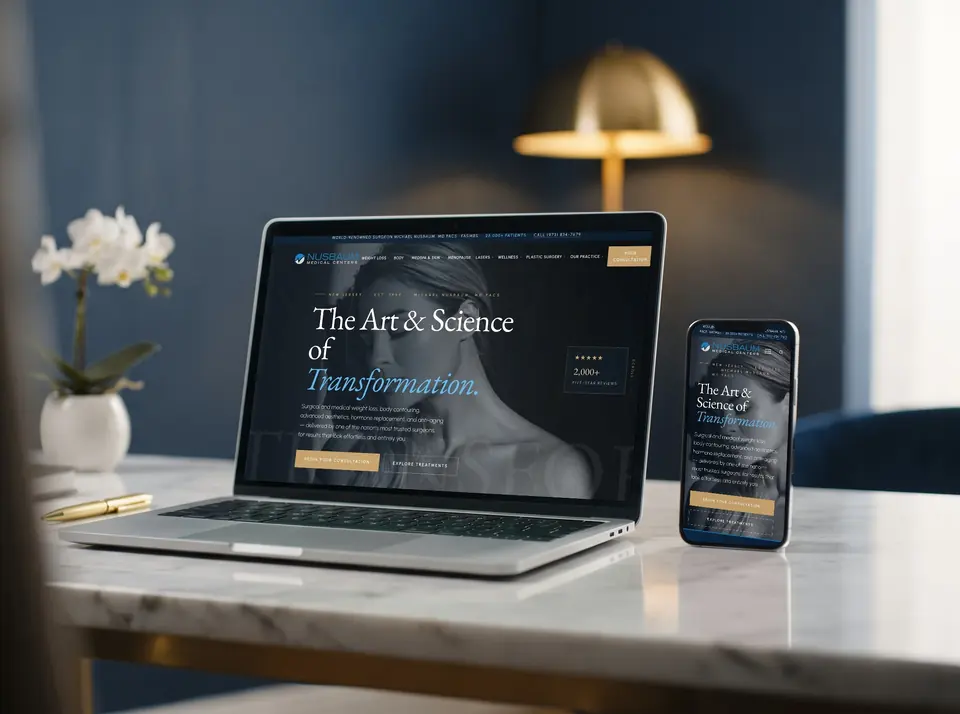 Medical · Custom Theme + SEO + AdsNusbaum Medical Centers
A 3,000-page medical authority that Google ranks first and ChatGPT recommends by name.
3,066pages live1,285search terms ranking on Google
Read the case study
-
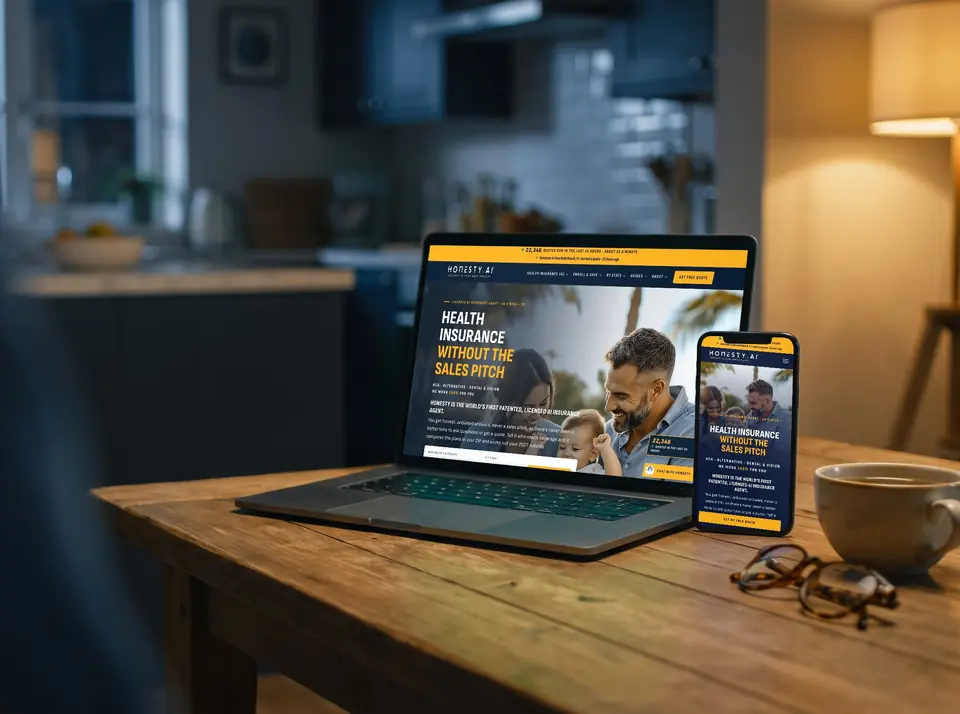 Insurance · AI Search Site + Live ChatHonestyInsure.com
A health insurance site written to be the answer AI search gives, with an AI agent that enrolls you right on the page.
144pages and guides indexed31states with their own local pages
Read the case study
-
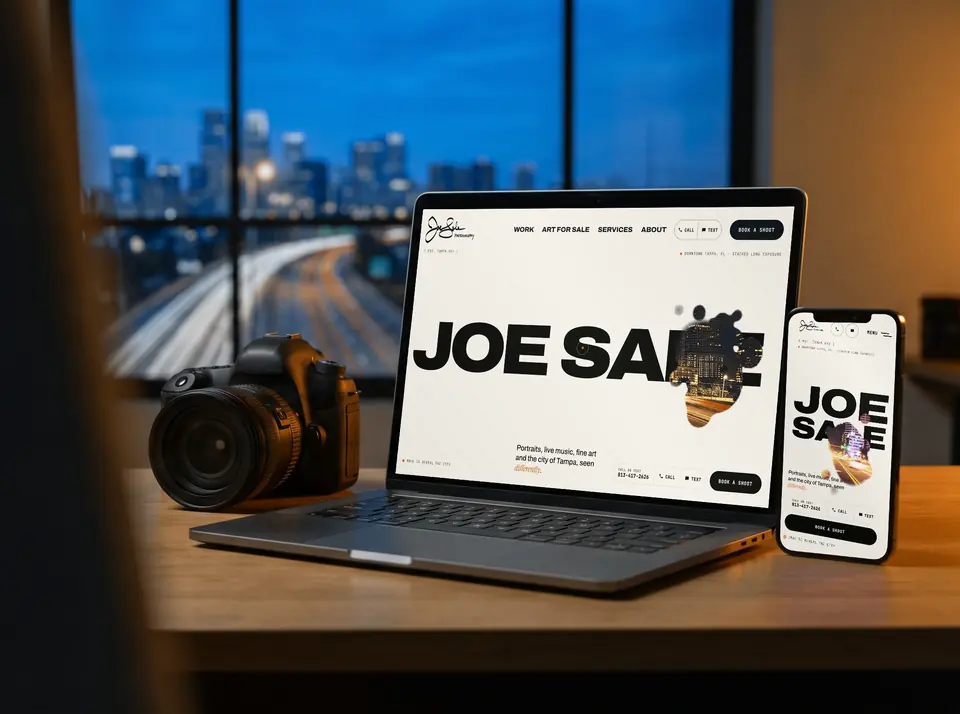 Photography · Custom Theme + BookingJoe Sale Photography
A portfolio you play with: the city is hidden under his name, and you wipe it away.
50SEO landing pages, every one scoring 99–10047portfolio frames, uncropped, filterable
Read the case study
10Questions
Dental marketing questions, answered.
What should a dental marketing agency do first?
Fix your Google Business Profiles, put tracking on every phone number and look at missed calls. Those three steps usually reveal more lost patients than any new campaign would find. Then start a review request flow and recall emails, and only then add paid campaigns by case type.
Can we offer patients a discount for leaving a review?
No. Google's policy bans incentives for reviews, and the FTC rule on reviews adds federal risk to manipulated reviews. Ask every patient the same way, make it easy with a direct link and offer nothing in return. Consistent asking works better than incentives anyway.
How should we reply to a bad review?
Thank the person, apologize for the experience and invite them to call the office manager. Never confirm they are a patient, mention treatment or dispute their account with details. HHS has settled with dental practices that disclosed patient information in review replies.
Is Google Ads worth it for a dental practice?
Usually, and any dental marketing agency should prove it with your numbers. It works for high-value cases and emergency visits when campaigns are split by case type and judged by booked consults. It is often not worth it for general cleanings in markets where your Maps ranking is already strong. We test with a clear goal per campaign and cut what does not book.
Can we use remarketing for dental ads?
Google treats health as a sensitive category for personalized ads, so you cannot target dental ads with your own remarketing lists or customer match. Search campaigns, location targeting and predefined Google audiences still work well, and they are where most dental budgets belong anyway.
How long until we see more new patients?
Profile fixes, answered phones and recall emails can show up in the first month. Paid search can book consults within weeks once landing pages and tracking are live. Organic rankings for competitive services usually take three to six months to move meaningfully.
Do we keep our website and phone numbers if we leave?
Yes, and you should demand that of any dental marketing agency. Your site, domain, Google Business Profiles, Ads account and tracking numbers belong to your practice. We work inside accounts you own, so your call history and data stay with you.
Pairs well with.
- Local SEO and Google BusinessWin the map for every location
- Google AdsCampaigns built around case types
- Web designHand-coded sites that book on a phone
- Online reputation managementReviews and safe replies
- Healthcare marketing agencyThe wider medical and HIPAA picture
- Nusbaum Medical Centers3,066 pages live, 137 page-one rankings
One team. Every channel.
Websites, search, ads, content, CRM and AI software built by one in-house team, so every piece works with the others.
Let's fill your chairs.
Book a strategy call and we will audit your profiles, phones and reviews first. Call (954) 758-7200 or (973) 858-5988.