

Industries · Roofing
Roofing marketing homeowners trust.
 Reviewed by Adam Segall, Founder & CEOUpdated
After a storm, every truck in town has a yard sign. We build the reputation, listings, ads and follow-up that make homeowners call you first and sign with you.
01Overview
What a roofing marketing agency should deliver
A roofing marketing agency has a harder job than most, because roofing buyers start out suspicious. Homeowners have heard about storm chasers, surprise bills and crews that vanish after the deposit. They are spending a large sum on something they cannot see from the driveway. So the work is less about clever ads and more about proof: real reviews, real addresses on real jobs, a license number in plain sight and a fast, honest first conversation.
Most roofers who call a roofing marketing agency are stuck between two bad options. Buy shared leads and race three other companies to the same homeowner, or wait for referrals and watch the slow months drag. We build a third path: owned demand from Maps, search and your own customer base, measured down to the signed contract, so you stop renting leads and start building a pipeline you control.
Five roofing lead types, five different plays
| Lead type | What triggers it | Sales cycle | Channels that win | What we measure |
|---|---|---|---|---|
| Storm and insurance damage | Hail, wind, named storms | Days to weeks | Maps, Search ads, Local Services Ads, past-customer outreach | Inspections booked, claims approved, roofs signed |
| Active leak repair | Water stain, drip, missing shingles | Hours to days | Local Services Ads, Maps, call-only ads | Answered calls, repair visits booked |
| Retail replacement | Age, selling a home, energy upgrade | Weeks to months | SEO pages, Search ads, reviews, financing pages | Estimates set, close rate |
| Commercial roofing | Property managers, flat roof failure | Months | SEO, direct outreach, account follow-up | Bids submitted, contracts won |
| Gutters and add-ons | Bundled with roof work | Same visit | Site upsell blocks, follow-up | Add-on revenue per job |
Each of these needs its own budget and its own follow-up. A storm lead needs speed and a clean inspection process. A retail replacement buyer needs weeks of patient, useful follow-up. A property manager needs a capabilities page and a bid process. When an agency lumps them together, the account chases cheap repair calls and starves the replacement work that pays the bills.
02Storms
The storm response playbook, without becoming a storm chaser
Storms are when roofing demand spikes and when trust is lowest. Out-of-town crews arrive, door hangers pile up and homeowners get a dozen knocks in a week. The roofer who wins long term is the one who looks local, licensed and patient while everyone else looks rushed. Your roofing marketing agency should make you feel like the opposite of a storm chaser.
The FTC tells homeowners exactly what to look for. Its guidance on scams after weather emergencies warns that unlicensed contractors and scammers often appear in recovery zones, says to consider only licensed and insured contractors, to walk away from anyone wanting cash up front, and to never sign an insurance check over to a contractor. We turn that list into your sales material: a page and a leave-behind that show you pass every test.
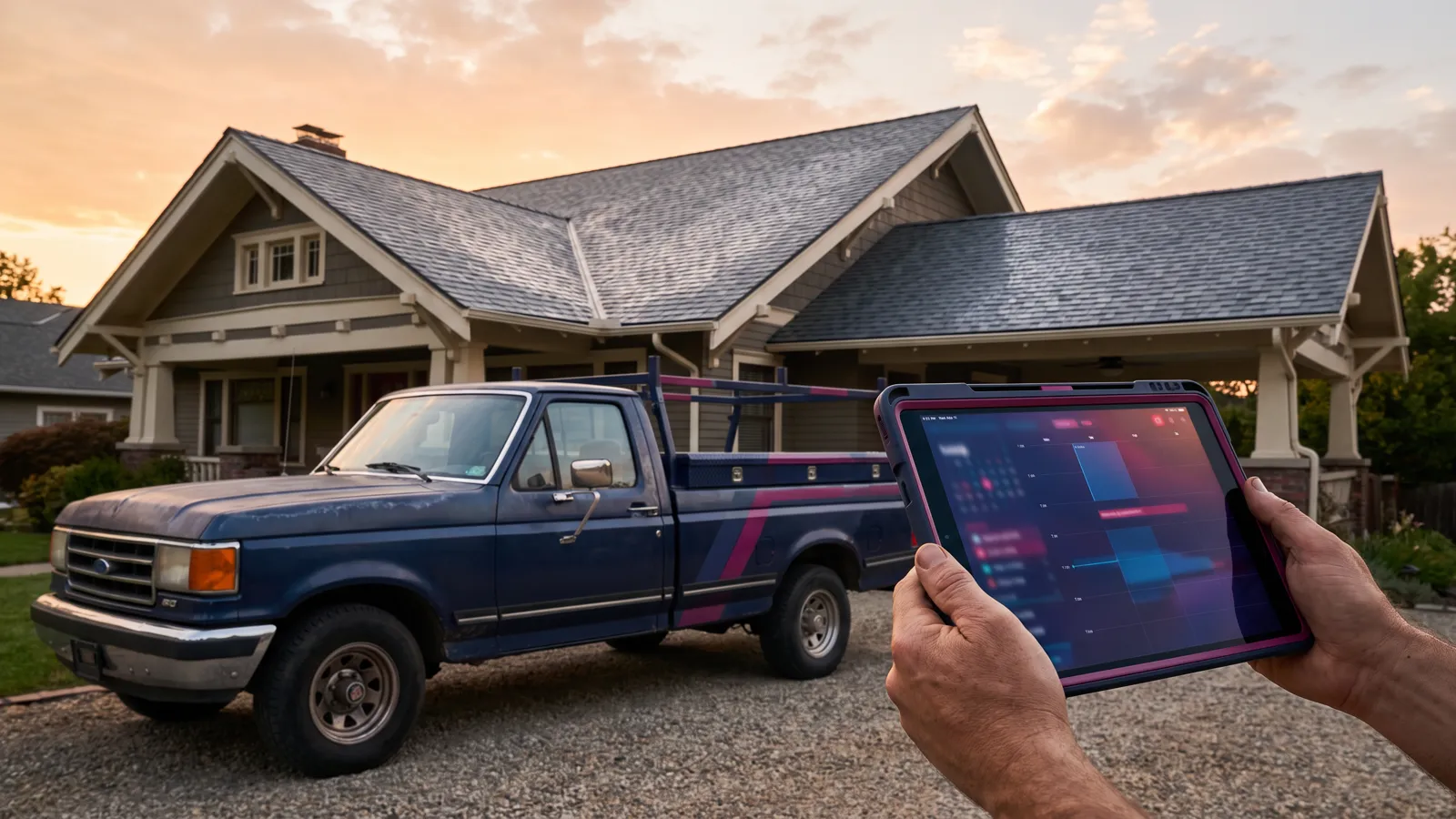
Before, during and after the storm
- Before: storm landing pages ready to switch on, Google Ads campaigns built and paused, a past-customer list segmented by neighborhood, and a review base that already shows years of local work.
- During the first 72 hours: emergency tarp and leak messaging, Maps posts with real availability, phones staffed or covered, and budgets capped to what your crews can inspect.
- First weeks after: inspection booking campaigns, outreach to past customers in affected areas, and a clear explanation of how the insurance process works with you.
- Months after: follow-up for homeowners who got an inspection but have not signed, plus review requests from every finished roof.
None of this works if inspections stall, which is why our roofing marketing agency builds the follow-up first. Every storm inspection request should get a call or text within minutes, a confirmed time and a reminder the night before. We build that follow-up in your CRM so it runs while your team is on roofs. An AI receptionist can catch the overflow and book inspections when the office line is buried.
Storm rule we follow: never promise free roofs, never imply the insurer will pay, and never chase a storm you cannot serve with local crews. All three destroy the trust that wins the next ten years.
03Why Unified
Why roofers choose Unified.
Trust is the product in roofing. Everything we build is meant to earn it.
Owned demand, not rented leads
We build Maps visibility, search pages, reviews and a past-customer list that belong to you. Over time, more of your inspections come from channels you own, so you stop racing three competitors to the same shared lead and start setting your own schedule.
Storm-ready, not storm chasing
Your storm pages, ads and outreach are built before the weather turns, then switched on with budgets capped to what your crews can inspect. You show up fast and local while out-of-town crews look exactly like what the FTC warns homeowners about.
Claim-safe advertising
We read the rules before writing the ads. Claim-related copy carries the warnings your state requires, avoids incentive offers and explains your process rather than the homeowner's coverage. Your license number shows up wherever your state says it must.
Measured to the signed roof
Every call and form is tracked and scored in UnifiedIQ, so the monthly review covers inspections, signed roofs and cost per signed roof by channel. Budget moves toward what closes, not what produces the most form fills.
04Claims and rules
Insurance claim marketing and license rules roofers must follow
Roofing ads that mention insurance claims are under real legal scrutiny in some states. Florida is the clearest example. Its section 489.147 covers how contractors may solicit roof damage claims, and a roofing marketing agency that writes your ads without reading it can expose your license. This is not legal advice, so confirm details with your attorney, but here is what the statute text covers.
| Marketing element | What the Florida statute says | What we do |
|---|---|---|
| Ads about filing a roof claim | Must carry required warnings about the deductible and claim fraud, in a minimum type size | Build the warnings into every claim-related ad, flyer and email |
| Incentives | No gifts, cash, coupons or deductible waivers for an inspection or a claim | No incentive offers on claim-related campaigns |
| Explaining coverage | Contractors may not interpret policies or adjust claims without a public adjuster license | Copy explains your process, not the homeowner's coverage |
| Contracts tied to a claim | Specific notices in bold type, with cancellation rights in some cases | Flag for your attorney before forms go live on the site |
Put your license number everywhere it belongs
Florida's section 489.119 requires a contractor's registration or certification number in every advertisement, regardless of medium. In New Jersey, the Attorney General's office has cited home improvement contractors who advertised without displaying their state registration number. We place your number on the site, landing pages, vehicle wraps and printed pieces as your state requires, and we treat it as a selling point: it is the first thing a careful homeowner checks.
Reviews that hold up
Your reviews are the most important trust asset you own, so a roofing marketing agency has to keep them clean. Google's review policy bans incentives for reviews and bans selectively asking only happy customers. The FTC's 2024 rule on fake reviews and testimonials adds federal teeth. We ask every customer, never buy or filter reviews, and respond to every one. Our reputation management and review ask system show how.
05Channels
Maps vs Search vs Local Services Ads vs shared leads for roofers
Every roofer gets pitched the same options by every roofing marketing agency. Here is how we compare them, and why we push owned channels over rented ones. Our roofing marketing playbook goes deeper on tactics, and our Local Services Ads guide covers setup.
| Channel | You pay for | Strongest for | Weak spot | Our view |
|---|---|---|---|---|
| Google Maps | Nothing per click | Repairs, inspections, local trust | Slow to build, reviews required | The base every roofer needs |
| Google Search ads | Each click | Replacement, storm damage, commercial | Expensive clicks, junk calls | Tight keywords, strong negatives, tracked to signed roofs |
| Local Services Ads | Each valid lead | Leak repair and inspection calls | Limited control, verification time | Worth testing once reviews are strong |
| SEO service pages | Nothing per click | Retail replacement research, towns | Months to mature | One page per service and town with demand |
| Shared lead services | Each lead, sold to several roofers | Filling gaps fast | Race to the bottom, low close rates | Use sparingly, never as the plan |
For Local Services Ads, Google's screening requirements for roofing include business and owner checks, state-level licenses where local law requires them, and general liability insurance for select users. Ranking depends on your bid, responsiveness, rating, review count and the verification checks completed, per Google's ranking explanation.
Maps is where a roofing marketing agency builds lasting value. Most roofers are service-area businesses, and Google's profile guidelines say to hide your address and keep keywords out of your business name. We handle the profile through our local SEO and Google Business service, with job photos tagged by neighborhood and posts after every storm.
A website that closes the trust gap
A homeowner researching a roof replacement will read your site several times before calling. A hand-coded site from our web design team shows a project gallery by town, roofing systems you install, warranty and manufacturer details, financing information, your license number and a simple inspection booking form. Campaign traffic lands on dedicated landing pages, and call tracking ties every inspection to its source in UnifiedIQ.
| Metric | Why it matters |
|---|---|
| Inspections booked by channel | The real top of the roofing funnel |
| Inspection-to-signed rate | Shows sales follow-up quality |
| Cost per signed roof | The number that decides the budget |
| Reviews per month and rating | Feeds Maps and every buyer decision |
| Share of leads from owned channels | Less dependence on shared leads |
06Hiring
Choosing a roofing marketing agency: 90 days, questions and red flags
A roofing marketing agency should hand you a dated plan, not a lead count projection. Here is the 90-day sequence we run, built so tracking, reviews and compliance are in place before the storm season tests them.
- Days 1 to 14: tracking on every channel, Business Profile cleanup, license display check, claim-ad review against your state's rules, review request process live.
- Days 15 to 45: Google Ads rebuilt by lead type, inspection landing pages, storm campaigns built and paused, Local Services Ads verification if reviews support it.
- Days 46 to 75: service and town pages, project gallery, replacement follow-up sequences, past-customer outreach plan by neighborhood.
- Days 76 to 90: cost per signed roof by channel, budget shifted to winners, written storm-season plan.
Questions to ask any roofing agency
- Do you sell leads to other roofers in my area?
- Will you report signed roofs and cost per signed roof, not just leads?
- How do you make sure claim-related ads follow my state's rules?
- What happens to my campaigns in the first 72 hours after a storm?
- Do I own the ad accounts, profile, website and tracking numbers?
- How do you get reviews without gating or incentives?
Red flags
- Free roof or deductible-waiver offers in ad copy.
- Leads resold to several roofers. The FTC acted against a large lead seller over misleading lead quality claims.
- Purchased or gated reviews.
- Storm campaigns aimed at areas your crews cannot serve.
We have no roofing case study yet and will not invent one. The proof we can show is the system: local search that put the Center for Spiritual Living #1 on Google and Maps in Fort Lauderdale, and 1,645 tracked inquiries in 12 months for Nusbaum Medical Centers. Talk to us before the next storm.
07How we work
How a roofing engagement runs.
Trust and tracking first, then storm-ready demand.
- Step 01
Trust audit
We review your reviews, Maps listing, site, license display, claim-related ads and follow-up, then call you as a homeowner would. You get a ranked list of what is costing you inspections and what could create legal trouble.
- Step 02
Track and clean up
Call tracking, form tracking and conversion tracking go live, the Business Profile is cleaned up, the review process starts and claim-related copy is brought in line with your state's rules.
- Step 03
Build demand
Google Ads by lead type, inspection landing pages, service and town pages, a project gallery and storm campaigns built and ready. Local Services Ads join once the review base supports them.
- Step 04
Tune and prepare
Weekly budget tuning, monthly reporting on signed roofs, and a storm-season plan reviewed with you before the weather arrives. Past-customer outreach and replacement follow-up run in the background.
08What you get
What you get.
- 01
Storm response kit
Ready-to-launch landing pages, paused ad campaigns, Maps post templates, past-customer outreach and inspection follow-up, all built before the next storm.
- 02
Maps and local SEO
A complete Business Profile, job photos by neighborhood, posts, service-area pages and citation cleanup that build calls you do not pay for per click.
- 03
Google Ads by lead type
Separate storm, repair, replacement and commercial campaigns with tight keywords, negatives, and offline conversions tied to signed roofs.
- 04
A hand-coded roofing site
Project gallery by town, roofing systems, warranty and financing pages, license display and an inspection booking path on every screen.
- 05
Review and reputation system
Review requests to every customer, responses to every review and no gating, buying or filtering, in line with Google and FTC rules.
- 06
Tracking and reporting
Call tracking and UnifiedIQ scoring on every channel, with monthly reporting on inspections, signed roofs and cost per signed roof.
09Results
Proof, not promises.
Verified results from live client builds: rankings, AI citations and tracked inquiries, not projections.
-
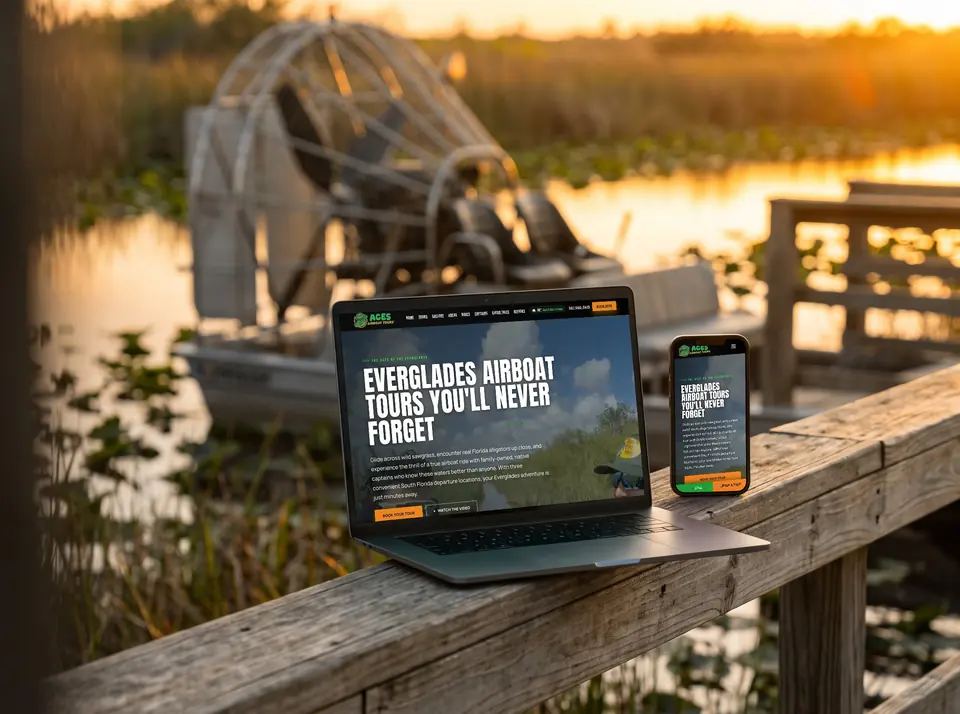 Tourism · Custom Theme + Local SEO + AdsAces Airboat Tours
A cinematic, booking-first site built to win travelers in the moment they search.
334pages live369booking-button clicks in the first 2 months
Read the case study
-
 Medical · Custom Theme + SEO + AdsNusbaum Medical Centers
A 3,000-page medical authority that Google ranks first and ChatGPT recommends by name.
3,066pages live1,285search terms ranking on Google
Read the case study
-
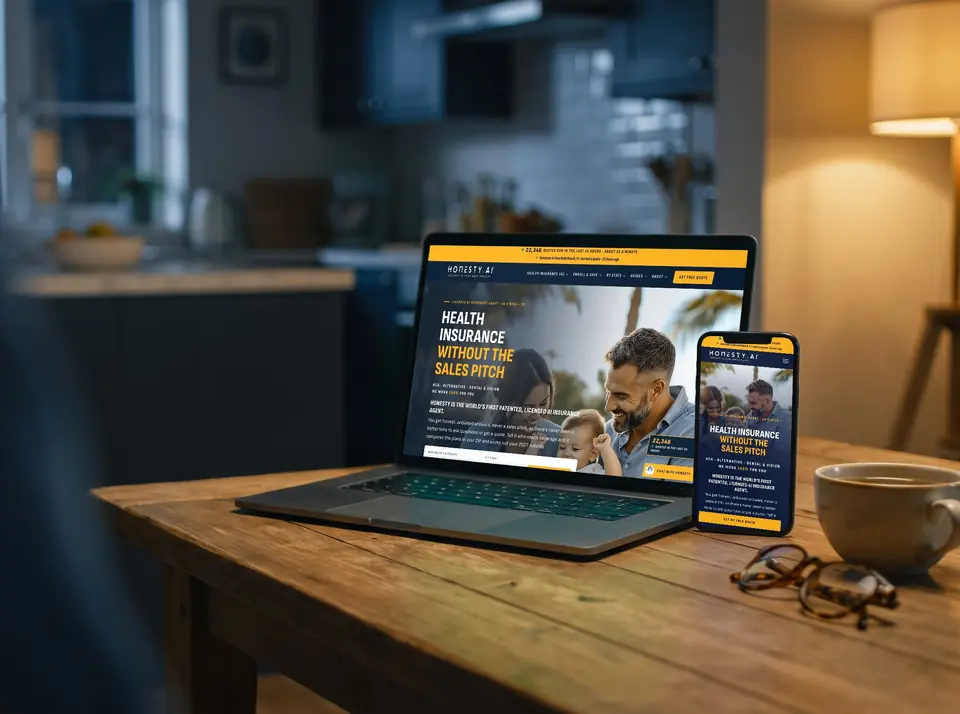 Insurance · AI Search Site + Live ChatHonestyInsure.com
A health insurance site written to be the answer AI search gives, with an AI agent that enrolls you right on the page.
144pages and guides indexed31states with their own local pages
Read the case study
10Questions
Roofing marketing questions, answered.
What does a roofing marketing agency do?
It brings in inspection requests and signed roofs and proves where they came from. That covers Google Maps, Google Ads, sometimes Local Services Ads, the website, reviews, storm response campaigns and follow-up for replacement estimates. A good one also checks your ads against state rules on license display and insurance claim solicitation.
Should roofers buy shared leads?
Sparingly, if at all. Shared leads go to several roofers at once, so you race on price and speed, and close rates suffer. They can fill a gap, but they should never be the plan. Owned channels like Maps, search pages, reviews and your past customers build demand that only calls you.
How should we market after a storm?
Have pages, ads and outreach ready before the storm, then switch them on with budgets matched to how many inspections your crews can handle. Look local and licensed, answer fast and explain your inspection process. Avoid free roof offers and any claim language your state restricts.
Can our ads mention insurance claims?
Often yes, but carefully. In Florida, the contractor statute requires specific warnings in written or electronic ads about filing roof damage claims and bans incentives for inspections or claims. Contractors also may not interpret policies without a public adjuster license. Check your state's rules with your attorney, and we will build the ads to match.
Are Local Services Ads good for roofers?
They can be, especially for leak repair and inspection calls. Google screens roofing companies with business and owner checks, licenses where required and insurance for select users. Ranking leans on reviews and responsiveness, so we usually strengthen your review base before relying on them.
How long until marketing produces signed roofs?
Google Ads can produce inspection requests within weeks once tracking and landing pages are live. Maps and SEO take months to build. Signed roofs follow the inspection, so retail replacements can take longer to show up in the numbers. We report inspections early and signed roofs as they close.
Do you have roofing case studies?
Not yet, and we will not make one up. Our published proof comes from other local businesses, like the local search work that took the Center for Spiritual Living to #1 on Google and Maps in Fort Lauderdale. We can walk you through how that same system would work for your service area.
Pairs well with.
- Local SEO and Google BusinessOwn the Maps pack in your service area
- Google AdsStorm, repair and replacement campaigns
- Online reputation managementReviews that hold up to Google and the FTC
- Roofing marketing playbookMore inspections, fewer shared leads
- Google Local Services Ads guideSetup, ranking and lead quality
- Nusbaum Medical Centers case study1,645 tracked inquiries in 12 months
One team. Every channel.
Websites, search, ads, content, CRM and AI software built by one in-house team, so every piece works with the others.
Be the roofer they call first.
Tell us your service area and how storms hit your business, and we will show you where inspections are slipping away. Call (954) 758-7200 or book a strategy call.