

Industries · SaaS
Pipeline you can trace.
 Reviewed by Adam Segall, Founder & CEOUpdated
We help software companies turn search, content and paid campaigns into trials, demos and revenue, and show which channel produced each deal.
01Overview
What a SaaS marketing agency should own
A SaaS marketing agency earns its fee in one place: qualified pipeline that turns into revenue. Traffic, followers and signups are inputs. If a channel brings a thousand trials that never activate, it has cost you sales time and polluted your data. If it brings forty demos that close, it is worth more than anything on a traffic chart.
A SaaS marketing agency also has to plan for problems most other industries never see. The sales cycle runs from a few days for self-serve plans to months for enterprise deals. The buyer often is not the user. Most visitors are not ready to buy on the first visit. And the product itself is a marketing channel, because what happens inside a trial decides most of the outcome. Good SaaS marketing plans for all four.
We know this from the inside
We do not only market software. We build it. Our team built HuntReserve, a SaaS platform for guided-hunt outfitters, with a custom CRM and booking platform, nine drag-and-drop pipeline stages and digital waivers that replaced paper entirely. Building a product teaches you what onboarding friction feels like, why activation matters more than signups, and how a CRM pipeline should be structured so marketing can be measured against it.
- Pipeline first. Every campaign has a target stage: trial, activated trial, demo booked, opportunity, closed.
- Product-led content. Content that shows the product solving a real job, not generic thought leadership.
- Attribution that survives a long cycle. First touch, lead source and ad click IDs stored in the CRM, so a deal that closes in four months still gets credited.
- One team. Strategy, content, design, web development, ads and analytics under one roof.
Our first question to any software company: of the customers who signed last quarter, which channel found them first, and which one convinced them? If nobody can answer, measurement is the first project, before any new spend.
02Channels
SaaS channels compared: what each one feeds
No honest SaaS marketing agency will name a single best channel for software. It depends on whether people already search for your category, how big each deal is, and whether a trial can sell the product on its own. This is the map we start from.
| Channel | Best at | Common mistake | Pipeline stage it feeds |
|---|---|---|---|
| SEO and product-led content | Capturing buyers searching for the problem, the category and comparisons | Top-of-funnel posts nobody in the market reads | Trials and demos, compounding |
| AI search (ChatGPT, Gemini, AI Overviews) | Being named when buyers ask an assistant for tools | Ignoring it, or chasing it with thin pages | Shortlist and demos |
| Google Ads | High-intent category, competitor and use-case searches | Bidding on broad terms and optimizing for signups | Demos and trials |
| LinkedIn and paid social | Reaching a defined account list or job title | Targeting too wide and judging on clicks | Awareness and demos for larger deals |
| Comparison and alternative pages | Buyers already evaluating options | Unfair claims about competitors | Late-stage demos |
| Email and in-app onboarding | Turning trials into active users | Generic drips that ignore what users did | Activation and conversion |
| Partners and integrations | Borrowing trust from tools buyers already use | Listing pages with no content | Qualified trials |

Product-led content and SEO
The content that works for software answers the questions buyers ask while they evaluate: how to solve a specific job, how your product compares, what it costs to switch, how the integration works. Google's guidance on creating helpful, people-first content says trust is the most important part of E-E-A-T, which favors pages written from real product experience. Our content marketing team writes that way, with screenshots and workflows from the product itself, and our SEO team builds the site structure around it.
Our content marketing strategy guide explains how we pick topics by buyer stage. More software buyers now ask an AI assistant for a shortlist, so we also work on AI visibility. Our guides on AI SEO and how to rank in ChatGPT cover what makes a product get named and cited.
Paid search and paid social
Our Google Ads work for SaaS targets category, use-case and comparison searches, then sends each to a page built for that intent, not your home page. Our landing page design team builds those pages. For larger contracts, paid social on LinkedIn lets you reach a named list of companies: LinkedIn's company and contact targeting help describes building audiences from lists of priority companies, with a minimum audience of 300 members.
03Why Unified
Why software companies choose Unified.
Growth work since 2006, 1,100+ businesses served, and a team that builds software as well as markets it.
We build SaaS too
Our team built HuntReserve, a booking and CRM platform for outfitters, plus custom web apps for clients. As a SaaS marketing agency we understand onboarding, activation and pipeline from the product side, not just from an ad account.
Pipeline is the score
We set every campaign against a pipeline stage and report on qualified demos, activated trials, opportunities and revenue by channel. Traffic and signups are inputs we watch, not the results we sell you.
Attribution that lasts
We store source data and click IDs in your CRM and set up offline conversions, so a deal that closes months after the first touch still credits the channel that found it.
Content from the product
Our writers learn your product and write use-case, comparison and how-to pages from real workflows, which is what buyers and search engines both reward.
04Trials, demos, attribution
Trials, demos and attribution that holds up
Trial or demo: pick the motion per segment
Self-serve trials work when a user can reach value alone in a session or two. Demos work when the buyer needs to see the product mapped to their process, or when several people have to agree. Many companies need both: a trial for small teams and a demo path for larger accounts. We set the call to action by segment and by page, so a solo user is not forced into a sales call and an enterprise buyer is not dropped into an empty account.
Activation is a marketing job too
A trial that never reaches the first moment of value is a lost customer. We work with your product team to define that moment, then build onboarding emails and in-app prompts triggered by what each user has or has not done. Marketing that stops at the signup form leaves the most important part of the funnel to chance.
Attribution for long cycles
The click that started a deal often happened months before the contract. If that click is not stored with the lead, the channel that found your best customers looks like it produced nothing. Google's offline conversion import documentation explains how a Google Click ID saved with each lead can be sent back to Google Ads when a sale closes later. We set that up, store source data in your CRM, and report on opportunities and revenue by channel.
Our CRM implementation team structures the pipeline so every stage is measurable, and UnifiedIQ, our own platform, tracks calls and forms back to their source, scores every page for SEO and can send offline conversions to Google Ads. When you need something custom inside the product, our web application development team builds it.
More proof of how we build
For HonestyInsure.com we built 144 indexed pages and guides, 31 state pages and a 24/7 AI agent chat in the hero, a content and conversion system that works like a product-led site. For Prolific Prep we built 107 player profile pages and one portal that runs rosters, games, stats and live scores.
05First 90 days
The first 90 days with our SaaS marketing agency
As your SaaS marketing agency, we start with measurement because every later decision depends on it. Then we fix the pages closest to revenue, then we build the content and campaigns that compound.
| Weeks | What we do | What you get |
|---|---|---|
| 1 to 2 | Audit analytics, CRM stages, lead source capture, ad accounts, site speed and the trial and demo paths. Interview sales on lost deals. | A baseline of pipeline by channel and a ranked fix list |
| 3 to 4 | Fix tracking and CRM source fields, set up offline conversions, rebuild pricing, demo and signup pages. | Clean data and higher conversion on the pages closest to revenue |
| 5 to 8 | Launch intent-matched search campaigns and landing pages, publish the first comparison and use-case pages, build onboarding emails. | More qualified demos and activated trials |
| 9 to 12 | Expand content by buyer stage, test LinkedIn for target accounts, report on opportunities and revenue by channel. | A pipeline plan you can budget against |
What we measure
- Qualified trials and demos booked, by channel
- Trial activation rate and time to first value
- Opportunities and closed revenue attributed to each channel
- Cost per qualified opportunity, not just cost per signup
- Organic signups from content and comparison pages
- Mentions and citations in AI assistant answers for your category
- Sales cycle length by source
We report monthly in plain language with the next month's plan. Your sales team should be able to read it and agree with it.
06Choosing an agency
How to evaluate a SaaS marketing agency
Software founders and marketing leads get pitched growth constantly. The good partners talk about pipeline, activation and attribution. Use these questions with any SaaS marketing agency, including us.
Questions to ask
- Which stage of our pipeline will you be measured on, and how will you see it?
- How will a deal that closes four months after the first click get credited?
- Who writes our content, and have they used our product?
- When would you recommend a trial and when a demo for our buyers?
- What would you not spend on in the first 90 days?
- Will our ad accounts, analytics and CRM data stay in our name?
Red flags
- Success measured in signups or traffic with no link to opportunities.
- Generic blog calendars unrelated to how buyers evaluate your category.
- Paid campaigns optimized for form fills from people outside your market.
- No plan for what happens after the trial starts.
- Promises of a ranking or a pipeline number by a date.
- Comparison pages that make claims about competitors you cannot back up.
If you want a straight read on your funnel from a SaaS marketing agency that builds software too, bring us your channel mix, trial and demo numbers and your CRM stages. We will show you where pipeline is leaking and the three changes we would make first. Talk to our team.
07How we work
How a SaaS engagement runs.
Measurement first, then the pages closest to revenue, then compounding content.
- Step 01
Audit the funnel
We audit analytics, CRM stages, source capture, ad accounts and your trial and demo paths, and talk to sales about lost deals. You get a pipeline baseline by channel and a ranked fix list.
- Step 02
Fix measurement and money pages
We fix tracking and CRM fields, set up offline conversions and rebuild your pricing, demo and signup pages. Clean data and better money pages make every later dollar work harder.
- Step 03
Launch and build
We launch intent-matched search campaigns with dedicated landing pages, publish comparison and use-case content and build onboarding emails tied to product behavior.
- Step 04
Report and scale
Each month you see opportunities and revenue by channel. We scale what produces pipeline, cut what does not and expand content by buyer stage.
08What you get
What you get.
- 01
Pipeline measurement
CRM source fields, click ID capture, offline conversions to Google Ads and a dashboard of pipeline and revenue by channel.
- 02
Product-led content
Use-case, comparison, integration and how-to pages written from your product, planned by buyer stage and built for search and AI answers.
- 03
Search and paid campaigns
Google Ads by intent, LinkedIn for target accounts where deal size supports it, and landing pages built for each campaign.
- 04
Conversion page rebuilds
Pricing, demo, signup and trial pages designed and hand-coded for clarity and speed.
- 05
Onboarding and activation emails
Behavior-triggered emails that guide trial users to first value, coordinated with your product team.
- 06
Monthly pipeline report
Qualified demos, activated trials, opportunities and revenue by source, with next month's plan in plain language.
09Results
Proof, not promises.
Verified results from live client builds: rankings, AI citations and tracked inquiries, not projections.
-
 SaaS · Booking & Operations PlatformHuntReserve
From a stranger's inquiry to a paid, waivered, licensed hunting party without a single phone call.
9pipeline stages, drag-and-drop1personal link per hunter: details, license, waiver
Read the case study
-
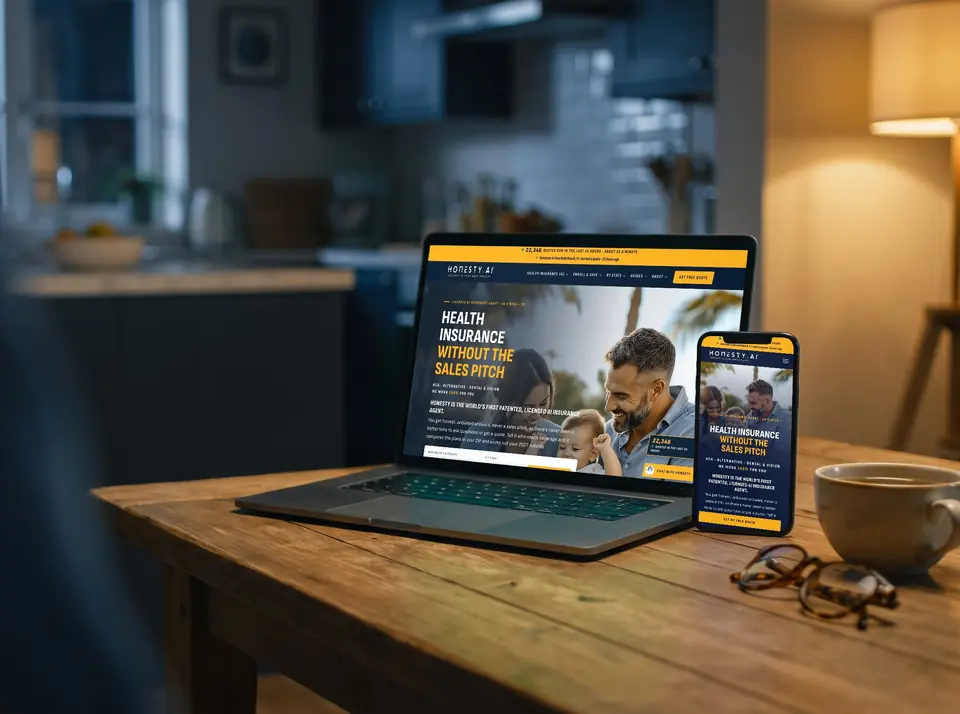 Insurance · AI Search Site + Live ChatHonestyInsure.com
A health insurance site written to be the answer AI search gives, with an AI agent that enrolls you right on the page.
144pages and guides indexed31states with their own local pages
Read the case study
-
 Sports · Custom Site + Staff PortalProlific Prep
A nationally ranked basketball program, run by its coaches from a portal we built for them.
107player profile pages, each built for search3teams: National, Florida and Regional
Read the case study
10Questions
SaaS marketing questions, answered.
What does a SaaS marketing agency do?
It builds a steady flow of qualified trials and demos and proves which channels turned into customers. That covers SEO and product-led content, AI search visibility, Google Ads, LinkedIn and paid social, landing and pricing pages, onboarding emails and CRM attribution. A good agency reports on opportunities and revenue, not only traffic and signups.
Have you worked with software companies?
Yes, and we build software ourselves. Our team built HuntReserve, a SaaS platform for guided-hunt outfitters with a custom CRM and booking platform, nine pipeline stages and digital waivers. We also build custom web apps and portals, such as the one running rosters, stats and live scores for Prolific Prep.
Should we offer a free trial or a demo?
It depends on the buyer. Trials work when a user can reach value alone quickly. Demos work when the product needs to be mapped to a process or several people must agree. Many companies need both, with a trial for small teams and a demo path for larger accounts. We set the call to action by segment and test it.
How do you attribute deals with long sales cycles?
We store first-touch source, lead source and ad click IDs in your CRM when the lead arrives. When a deal closes, that data credits the right channel even months later. We can also send closed deals back to Google Ads as offline conversions, so campaigns learn from revenue rather than form fills.
How long until content and SEO produce pipeline?
Conversion page fixes and intent-matched search ads can affect demos within weeks. Comparison and use-case pages can start pulling in qualified visitors within a few months. Broader content compounds over six to twelve months. We report monthly so you can see each layer start to contribute.
Do you help with AI search visibility?
Yes. More buyers ask ChatGPT, Gemini and Google AI Overviews for tool shortlists. We work on the content, structure and third-party mentions that make a product more likely to be named and cited, and we track mentions for your category over time.
What does it cost?
We scope each engagement after a first call around your stage, channels and goals, and we do not publish set prices. You approve the plan and ad budgets up front, spend runs in accounts you own, and the monthly report shows what each channel produced. Call (954) 758-7200 to start.
One team. Every channel.
Websites, search, ads, content, CRM and AI software built by one in-house team, so every piece works with the others.
Build pipeline you can trace.
Tell us about your product and funnel and we will show you where pipeline is leaking. Call (954) 758-7200 or send us a note.