


What We Solve · Doing the work
Software built around how you work.
 Reviewed by Adam Segall, Founder & CEOUpdated
You've tried the popular apps. Each one does most of what you need and none of what makes your business different.
01The problem
Workarounds are a warning.
A roofing contractor tracks inspections in a spreadsheet because the job software has no field for them. A boutique insurance agency keeps a paper checklist next to its CRM. A specialty clinic runs intake on three apps and a whiteboard. The software was supposed to make work easier, and instead the team built a pile of workarounds around it.
Mass-market software is designed for the average business, and your edge is usually the part that isn't average. So the details that set you apart end up in sticky notes, side spreadsheets and one person's memory. When that person is out, things slip. When you grow, the workarounds multiply.
Switching to yet another app usually trades one set of gaps for another. Hiring a big software firm for a full custom system can take a long time and lock you into their code. Most owners land in the middle, paying for software they only half use and patching the rest by hand.
02What changes
What changes when the tool fits the job.
Your process, not theirs
The tool follows the steps your team already uses, so there is little to relearn.
No more side spreadsheets
The details you track by hand get a proper home inside one system.
Less dependence on one person
How the work gets done lives in the tool, not in someone's head.
Room to grow
When your business changes, the tool can change with it instead of forcing a full switch.
03How we fix it
How we build software that fits.
A repeatable process, run by the same in-house team from kickoff to launch.
- Step 01
Watch the work
We spend time with the people doing the job and note every workaround, spreadsheet and paper form.
- Step 02
Find the real gap
We separate what your current tools already handle well from what truly needs building.
- Step 03
Build small first
We ship a focused first version your team can use quickly, then improve it based on how they use it.
- Step 04
Connect and support
We link the tool to your existing software and keep it secure, updated and monitored by UnifiedIQ.
04What you get
What you get.
- 01
A custom tool or portal
Software built for your workflow, whether that is an intake system, a job tracker, a client portal or an internal dashboard.
- 02
Connections to what you keep
Links to your CRM, calendar, payments or accounting so the new tool doesn't become another island.
- 03
Full ownership
The code, accounts and data belong to your business, with documentation handed over.
- 04
Care after launch
Updates, fixes and improvements as your team finds new ways to use it.
05Any industry
Works the same in any business.
- 01
Contractors
A job tracker with your own inspection steps, photo checklists and change orders in one place.
- 02
Insurance agencies
A quoting and follow-up tool that matches your carriers and your compliance steps.
- 03
Sports and education programs
A family portal for schedules, registrations and payments instead of scattered emails.
- 04
B2B service firms
A client portal that shows project status and files without a weekly update call.
06Results
Proof, not promises.
Verified results from live client builds: rankings, AI citations and tracked inquiries, not projections.
-
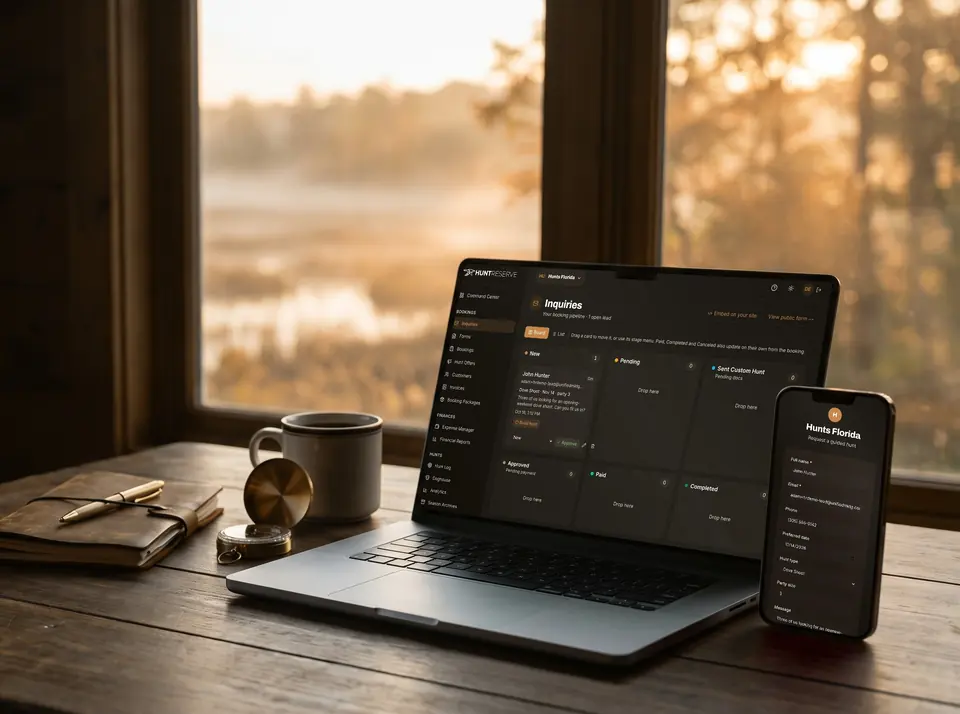 SaaS · Booking & Operations PlatformHuntReserve
From a stranger's inquiry to a paid, waivered, licensed hunting party without a single phone call.
9pipeline stages, drag-and-drop1personal link per hunter: details, license, waiver
Read the case study
-
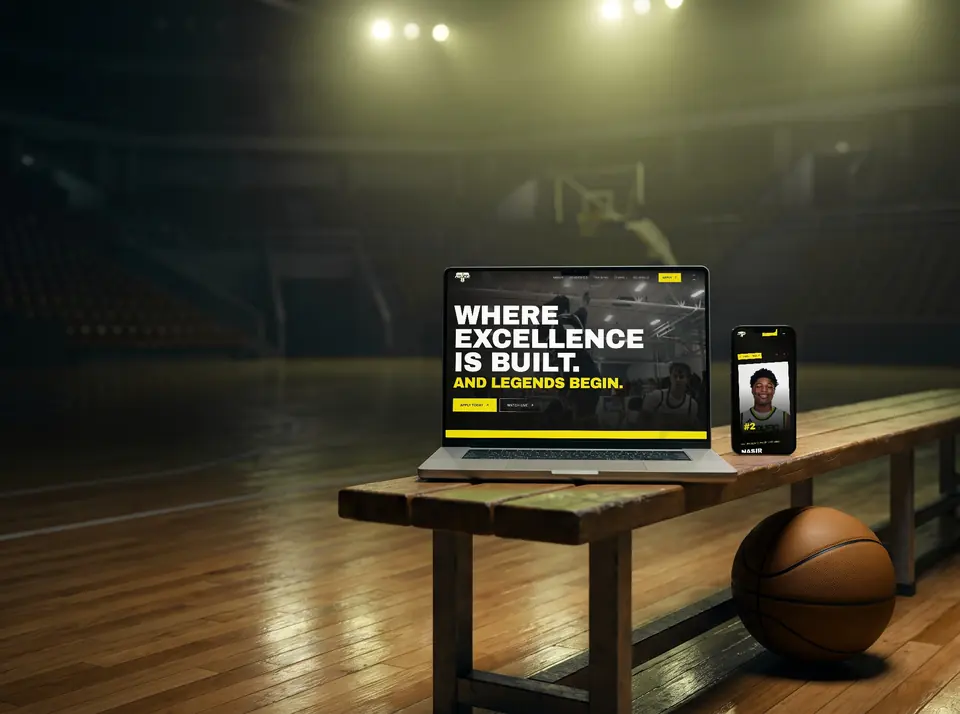 Sports · Custom Site + Staff PortalProlific Prep
A nationally ranked basketball program, run by its coaches from a portal we built for them.
107player profile pages, each built for search3teams: National, Florida and Regional
Read the case study
-
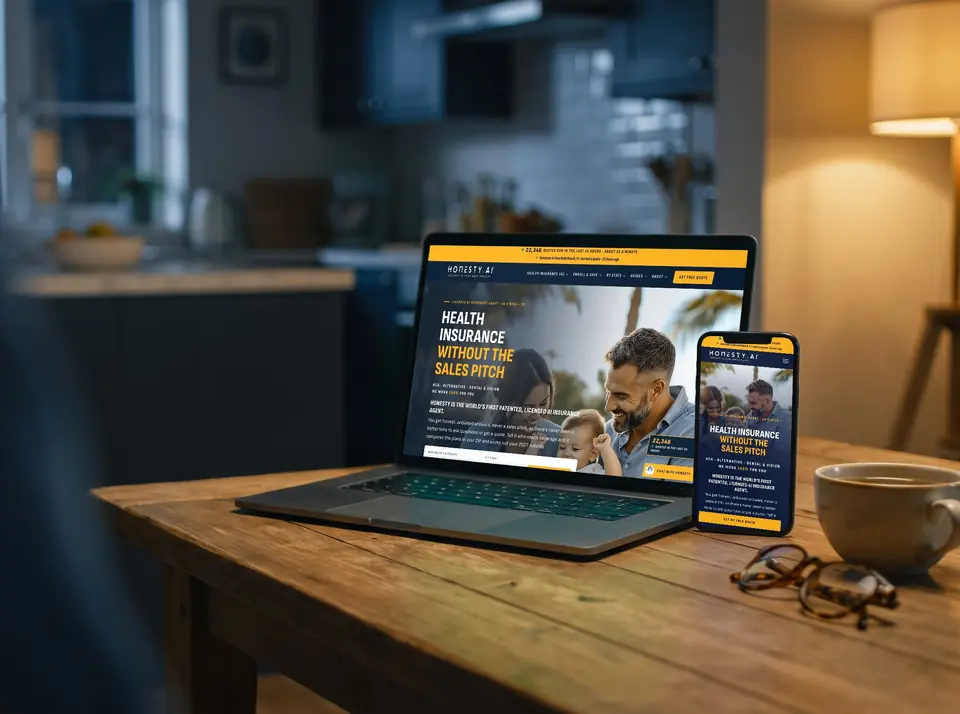 Insurance · AI Search Site + Live ChatHonestyInsure.com
A health insurance site written to be the answer AI search gives, with an AI agent that enrolls you right on the page.
144pages and guides indexed31states with their own local pages
Read the case study
07Questions
Questions about custom software.
Isn't custom software slow and risky?
It can be when it starts as a giant project. We build a small, useful first version, get it in your team's hands and grow it from there, so you see value early.
Does this work for my industry?
Yes. We start from how your business works, not from an industry template. We have built tools for booking platforms, insurance, academies, community groups and service companies.
Do we have to stop using our current software?
No. In most cases we keep what works and build only the missing piece, connected to the tools you already use.
Who owns the software?
You do. The code, the data and the accounts are yours, and you are never locked into us to keep it running.
What happens after it launches?
We keep it updated and secure, and UnifiedIQ monitors it around the clock. As your team asks for changes, we make them.
Other problems we solve.
- 01We type the same information in three placesWe connect the tools you already use so a customer's details are entered once and show up everywhere they need to be, without retyping.
- 02Customers can't find us on Google or MapsWe fix your Google Business Profile, local listings and service pages so nearby customers searching for what you do find you, trust you and call.
- 03ChatGPT and AI answers name our competitors, not usWe make your business clear, consistent and well documented across the web, so ChatGPT, Google's AI answers and other assistants have good reasons to mention you.
- 04Our website gets visits but nobody callsWe find where visitors give up on your site, then fix the pages, forms and calls to action so more of today's visitors call, book or request a quote.
One team. Every channel.
Websites, search, ads, content, CRM and AI software built by one in-house team, so every piece works with the others.
Stop working around your tools.
Show us the workaround that bugs your team most and we will sketch the tool that replaces it.